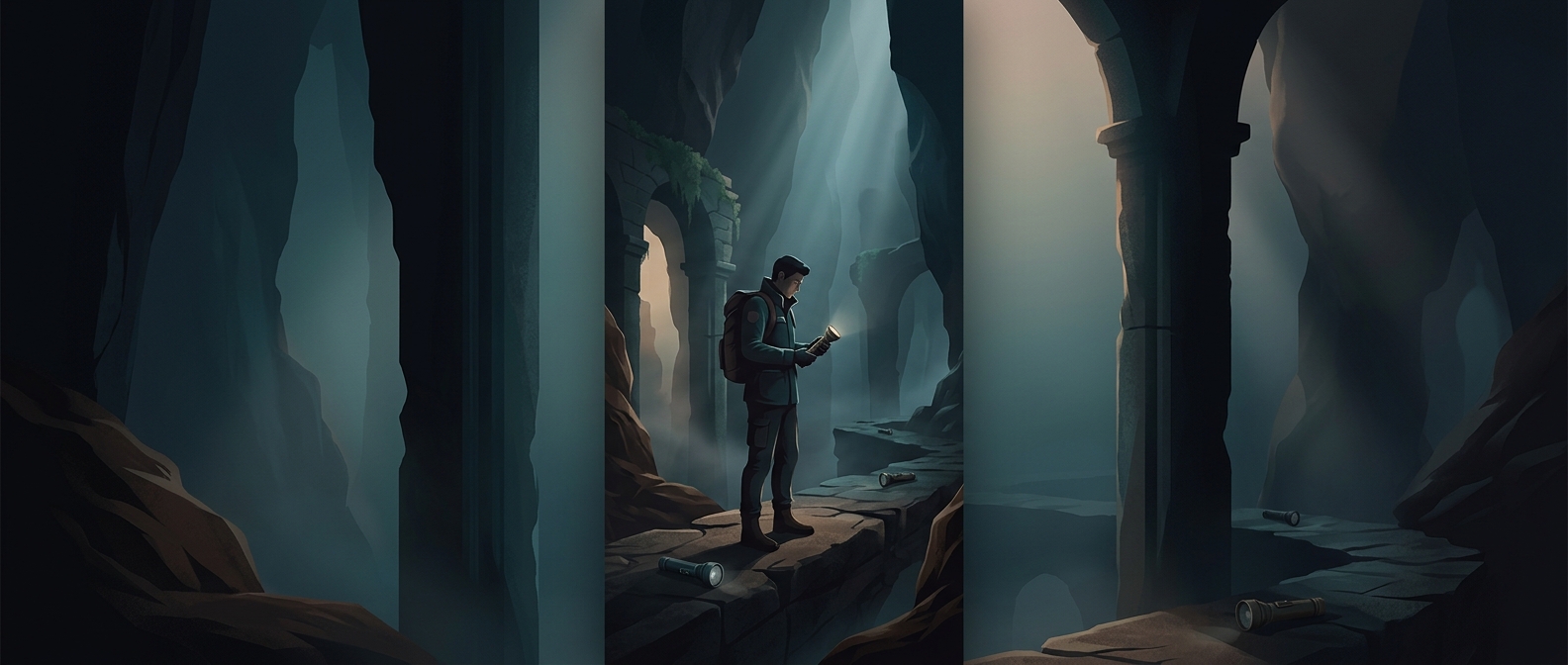
A dying flashlight turns darkness into a decision
In a game, a flashlight is more than a tool for seeing. It controls how much of the world the player can safely read. If its beam never weakens, darkness becomes decoration; if the battery runs low, every extra second of visibility has a cost. The player must choose whether to keep scanning a room, save power, or move ahead with less information.
That makes the warning flicker useful design: it signals danger without immediately taking control away. The player sees the problem coming and has a brief chance to react, which can make a familiar hallway feel tense rather than merely dark. The apparent inconvenience is doing gameplay work.
Why the recharge arrives just in time
A strict battery simulation could leave players stranded in pitch-black areas, unable to progress or understand what they are facing. Designers therefore often soften the constraint with quick recharges, replenishment points, or batteries that last long enough for the next encounter. The resource feels scarce, but the game can still guide the player through its intended sequence.
That balance is a tradeoff: too much light erases suspense, while too little can turn navigation into frustration. A flashlight that falters at a carefully chosen moment creates pressure; one that stays dead for too long risks blocking the story. Its most memorable “battery problem” is often less about hardware than about how much uncertainty the game wants the player to feel.