Why Space Games Give Starfighters Wings
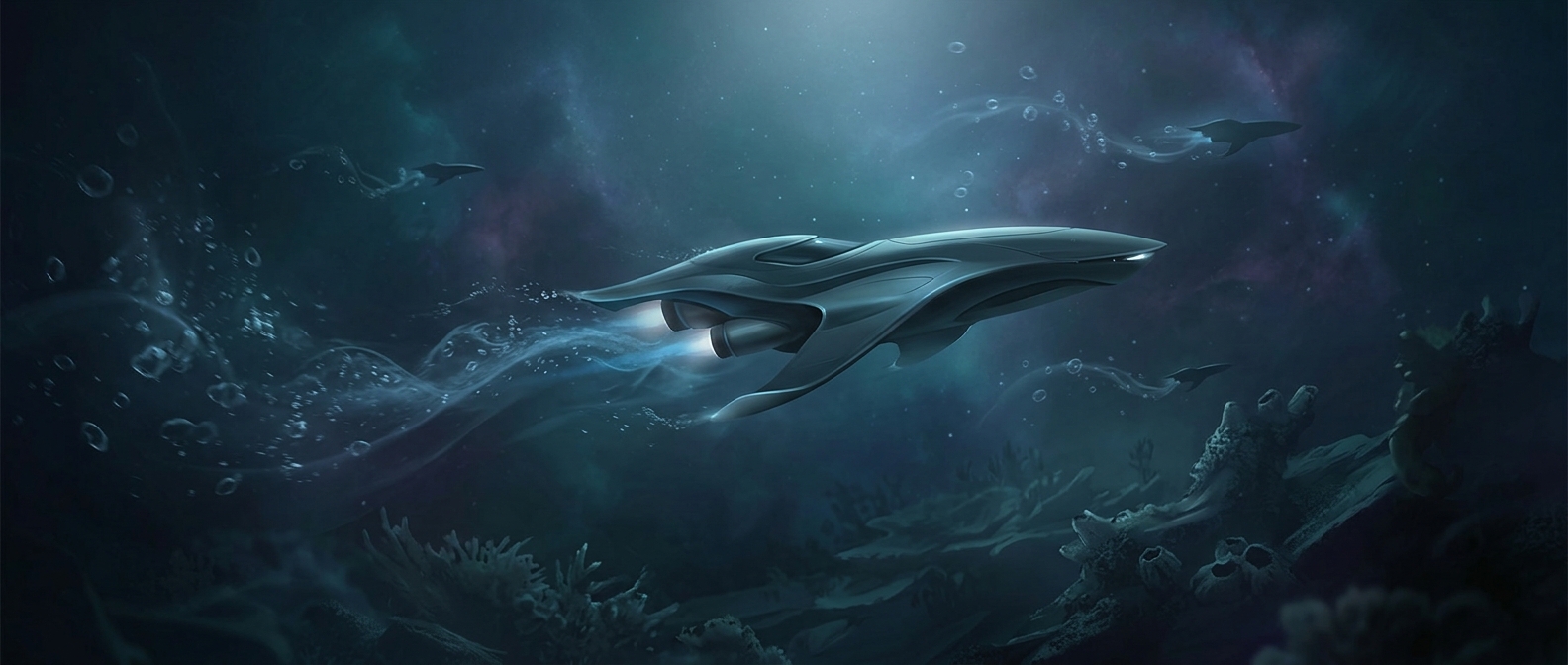
A spacecraft does not need to point in the direction it is moving. In space, a ship can thrust forward, then rotate to aim its nose elsewhere while momentum carries it along its original path. That freedom is called inertial flight. It is useful for spacecraft, but it can make a fast-moving dogfight hard to read: the ship’s nose, its path, and its target may all point in different directions.
Banking Makes Motion Legible
Games often borrow the visual language of airplane combat instead. When a fighter banks into a turn, its wings tilt and its nose follows a clear curve. The player can quickly tell where it is headed, and a camera can follow the action without making every pass look like a sideways slide. Banking also gives a turn a sense of weight and commitment, even when the game’s physics are simplified.
That simplification is a design tradeoff. More realistic momentum can reward players who learn to control drift and rotate independently, but it can also make aiming and steering less intuitive. Jet-like flight makes the controls feel familiar and keeps enemies’ movements easy to track. Some games blend the two approaches, allowing a ship to drift while still steering its nose toward a target.
The Sound of an Imagined Battle
The same readable, dramatic style shapes the sound. Sound waves need a material—such as air—to travel, so engines and explosions would not carry across empty space to an outside observer. Games nevertheless give ships a roar because sound helps players sense speed, power, and danger. It is an artistic cue, not a recording of what a space battle would sound like.
The result is a useful illusion: airplane-like turns show the action clearly, while familiar engine noise makes it feel immediate. In a space game, legibility and excitement often matter more than reproducing the silence and awkward geometry of real orbital motion.