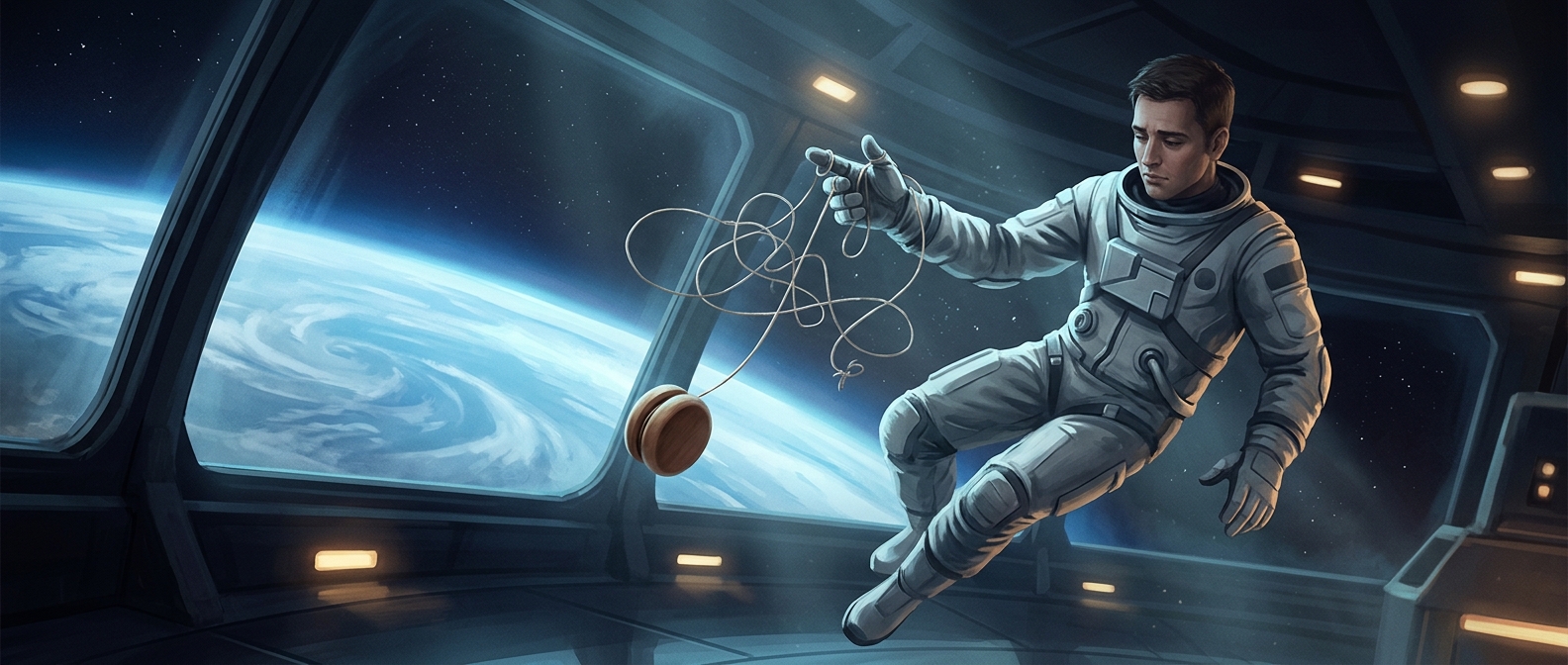
A yo-yo needs more than a string
On Earth, a released yo-yo descends because gravity pulls it downward. As it falls, the string unwinds from its axle and makes the body spin. At the end of the string, the spinning yo-yo can wind back up and climb toward the hand. The familiar trick depends on a controlled sequence: the body moves away, reaches the string’s limit, then reverses direction.
What changes in orbit
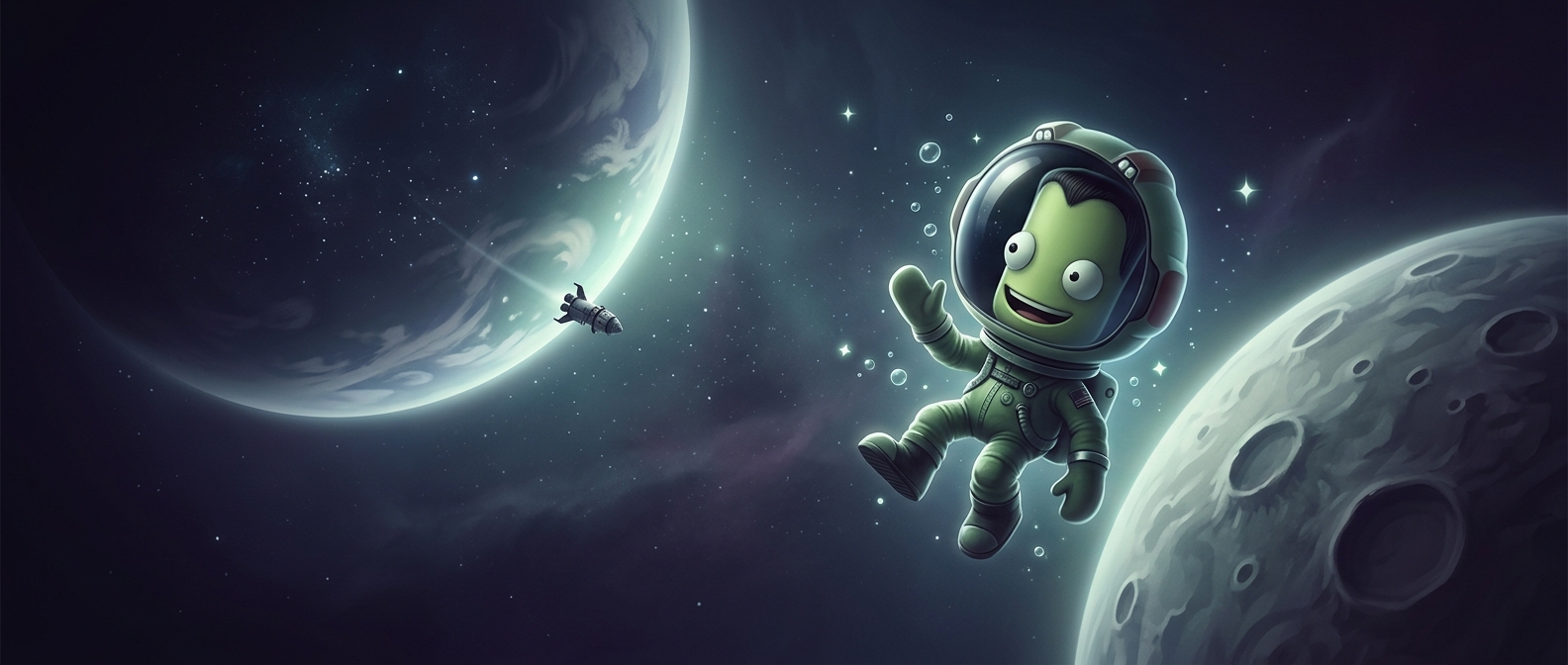
In weightlessness, the yo-yo and the person holding it are both falling around Earth together. The yo-yo has no steady downward pull to carry it away from the hand, so simply releasing it does not produce the usual drop. It can float nearby while the string slackens, leaving the axle without the taut line that helps guide its motion.
A yo-yo can still be set spinning or moved by a deliberate push. But without tension keeping the string aligned, the line may loop around the body or itself rather than unwind neatly. The challenge is not that spinning stops; it is that the familiar gravity-driven path and the tension that organizes the string are missing.
The trick becomes a different one
An astronaut could create motion by throwing the yo-yo or pulling the string, but would have to manage both the toy and the loose line. On Earth, gravity quietly supplies the first move and helps make the string taut. In orbit, that job falls to the player—so a casual release is more likely to produce a drifting toy and a tangle than a clean drop-and-return.