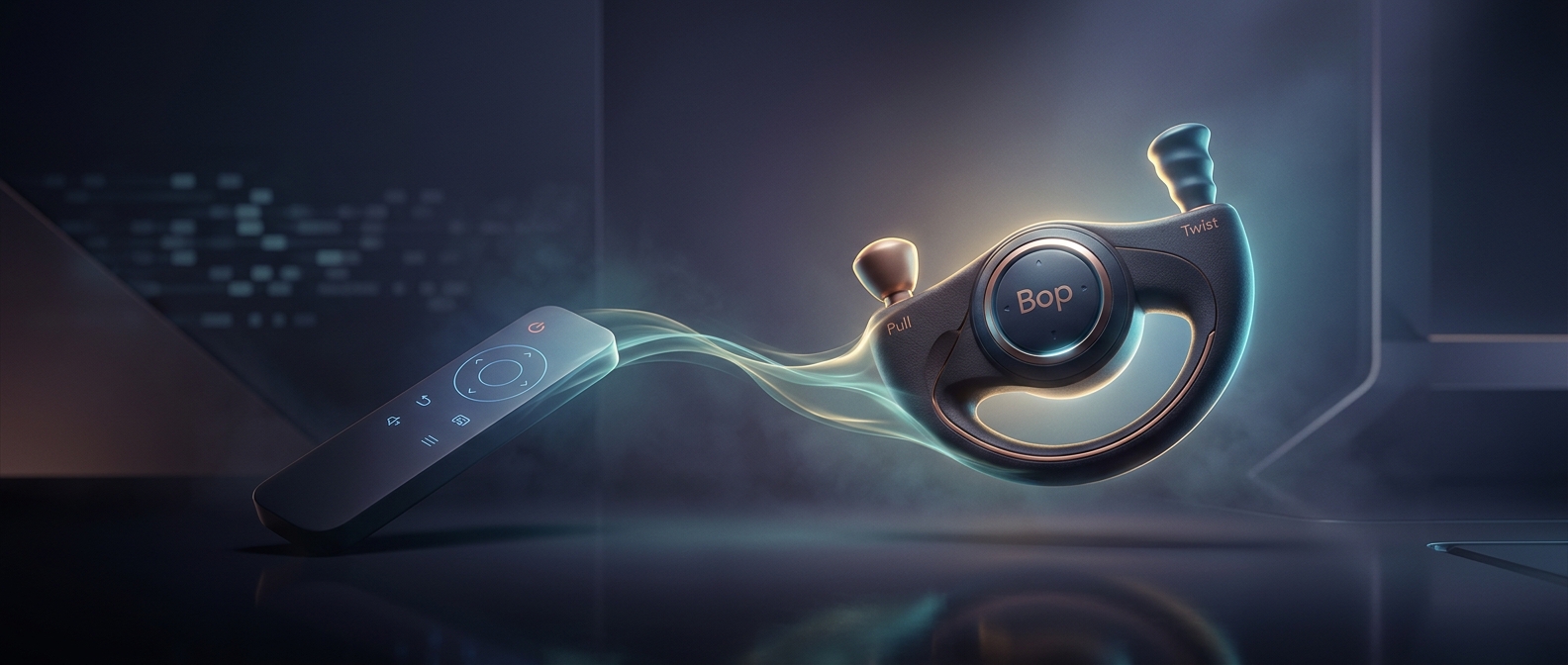
Turning Remote-Control Fidgeting Into a Game
A remote is meant to be used briefly, but its buttons and shape invite idle handling: people click, turn, or shift it around while relaxing. The toy’s design takes that small habit and gives each movement a clear purpose. Instead of pressing buttons at random, players hear a command and must make the matching motion—such as twisting, pulling, or tapping the device.
The Controls Become the Challenge
That change turns familiar hand movements into a test of attention. The player has to recognize the command, choose the right control, and act before the next instruction arrives. The controls are therefore not just a way to operate the toy; they are the game itself.
As commands come faster, there is less time to hesitate or correct a mistake. A motion that began as casual fidgeting becomes a sequence the player must follow accurately under pressure. The same physical gestures remain simple, but the timing makes them difficult.
The clever shift is from something people do without thinking to something they must do on cue. A hand that might otherwise keep clicking a remote now has a score—and a reason to pay attention.