How a boys’ game became girls’ play
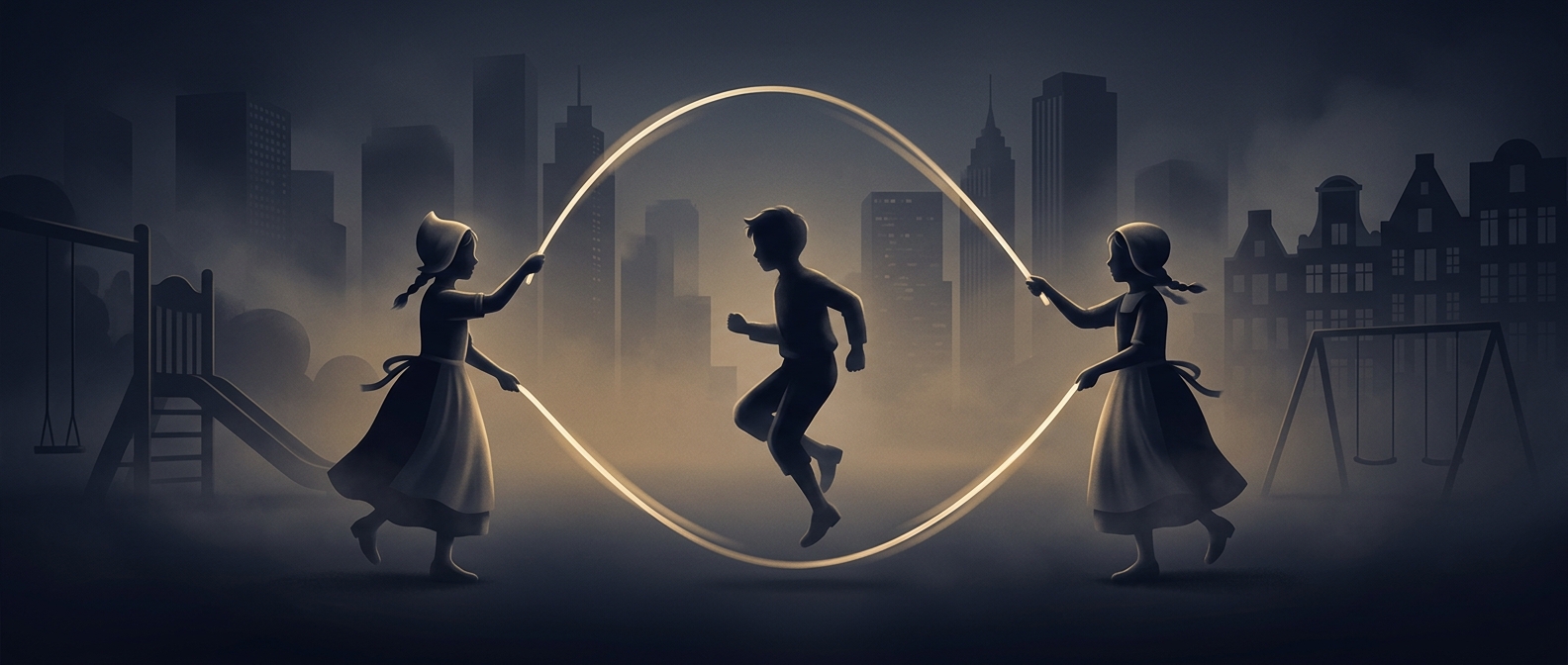
A jump rope has no built-in gender: it can be swung alone or turned by two people while others take turns jumping. What changes is who a community expects to play with it—and where. Before the 19th century, rope jumping was associated with boys and men. During the Victorian era, girls began adopting it, turning a familiar piece of play into a more visible part of girls’ recreation.
A game that could change with its players
The rope was easy to carry and needed little space, so it could be used in a street, yard, or school playground. That made it adaptable to different groups. Once several children took part, the game could become a social routine: two players kept the rope moving, while jumpers entered, left, and waited for a turn. Rhymes and counting could help set the rhythm and make the activity communal rather than merely athletic.
This kind of change did not require a new invention. It required a shift in social permission. Ideas about which activities suited boys or girls shaped children’s play, even when the activity itself demanded no special equipment or strength. As girls took up rope jumping, they made it part of their own play culture.
The meaning of a familiar pastime
The shift is a reminder that games are shaped not only by their rules, but by who gets to claim them. A rope could remain the same; the circle of children around it changed. Once girls were jumping, taking turns, and keeping time together, a game once treated as masculine could become an ordinary feature of girls’ play.