Why Twister Made Stores Uneasy
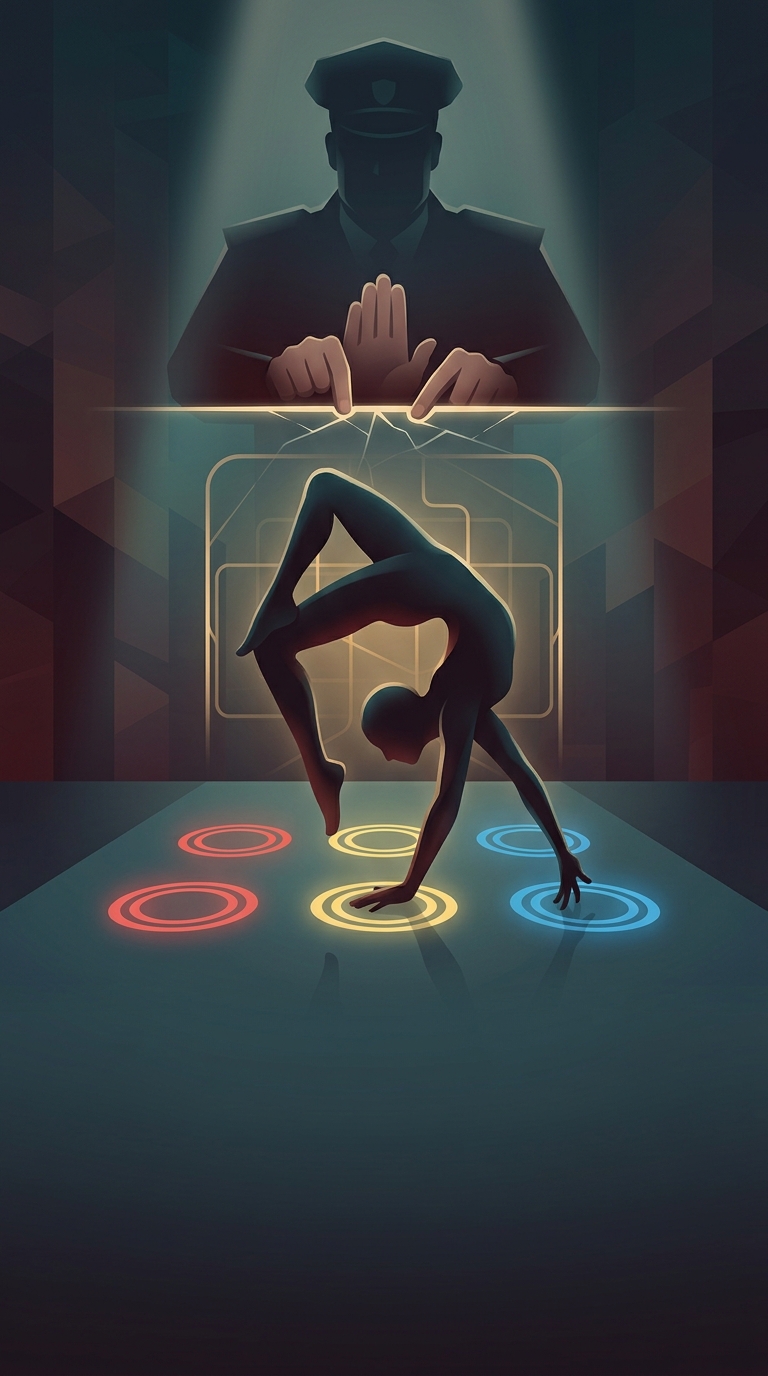
Twister looked unlike the board games retailers were used to selling. Instead of keeping players’ pieces on a board, it put the players themselves on a large mat, asking them to place hands and feet on colored circles. As the game progressed, people had to stretch across one another and hold increasingly awkward positions.
That physical closeness created the problem. To some retailers, the game’s mechanics looked suggestive: adults bending and reaching over each other could be read as sexualized rather than playful. The concern was not that the rules were hard to understand, but that the spectacle might embarrass customers or make a family retailer look inappropriate. Refusing to stock the game was a way to avoid that risk.
The Players Were the Game Pieces
Twister’s unusual design also explains why the controversy was difficult to separate from the product. The mat supplied the playing field, but the players’ bodies supplied the moving pieces. Every turn rearranged the group, turning balance, flexibility, and the chance of collapsing into one another into the central entertainment.
That same feature could make the game seem daring in a store and funny in a living room. The retailer’s objection and the game’s appeal came from the same design choice: people had to get physically tangled to play. What looked too awkward to display on a shelf became the reason Twister was memorable once people saw it in action.