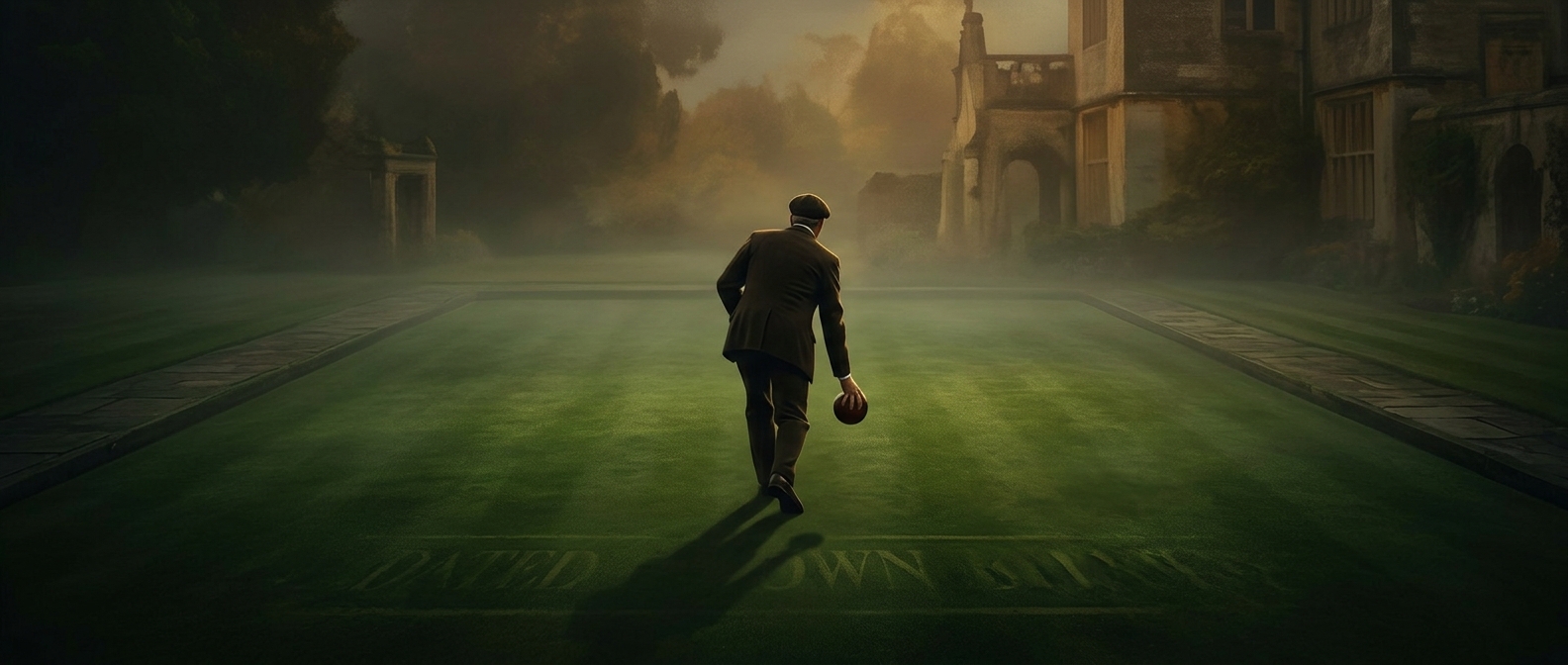
Why a Bowls Green Must Be So Precisely Kept
The ball in lawn bowls is not quite a sphere: its built-in bias makes it curve as it slows. Players use that curve to steer around other bowls and toward a small target ball called the jack. The green has to provide a consistent surface so that a bowl’s path reflects the player’s aim—not an unexpected bump or hollow.
That makes the turf part of the game’s equipment. A slight change in level can alter a slow-moving bowl’s line, while grass that is too long or uneven can make its pace unpredictable. Greenkeepers therefore have to manage the playing surface as a carefully controlled field, not simply keep a patch of grass looking neat.
Keeping a Historic Surface Playable
A green that has hosted play across centuries faces a particular balancing act: preserve the ground while maintaining conditions suited to a modern game. Turf changes with weather, wear, and seasons, so keeping it even requires ongoing attention. Players also concentrate repeated movement and rolling bowls on the same areas, creating wear that must be managed without compromising the surface’s consistency.
The remarkable part is not that the same blades of grass have survived for centuries. It is that generations have kept the place functioning as a green—an unusually durable piece of sporting infrastructure where the ground itself still helps decide every shot.