A camera that seemed to run itself
Before automated photography felt ordinary, a photobooth turned a familiar act—having your picture taken—into a small machine-run performance. A customer paid, stepped inside, and let the apparatus take the picture without a photographer standing behind a camera. The appeal was not only the resulting portrait. It was watching a machine carry out a task people associated with human judgment and skill.
That made the booth a natural neighbor for coin-operated fortune tellers. Both invited a simple bargain: put in a coin, and a device would produce something personal. One offered an image of your face; the other offered a prediction. In each case, the machine made an ordinary curiosity feel like an encounter with the future.
The attraction was the process, too
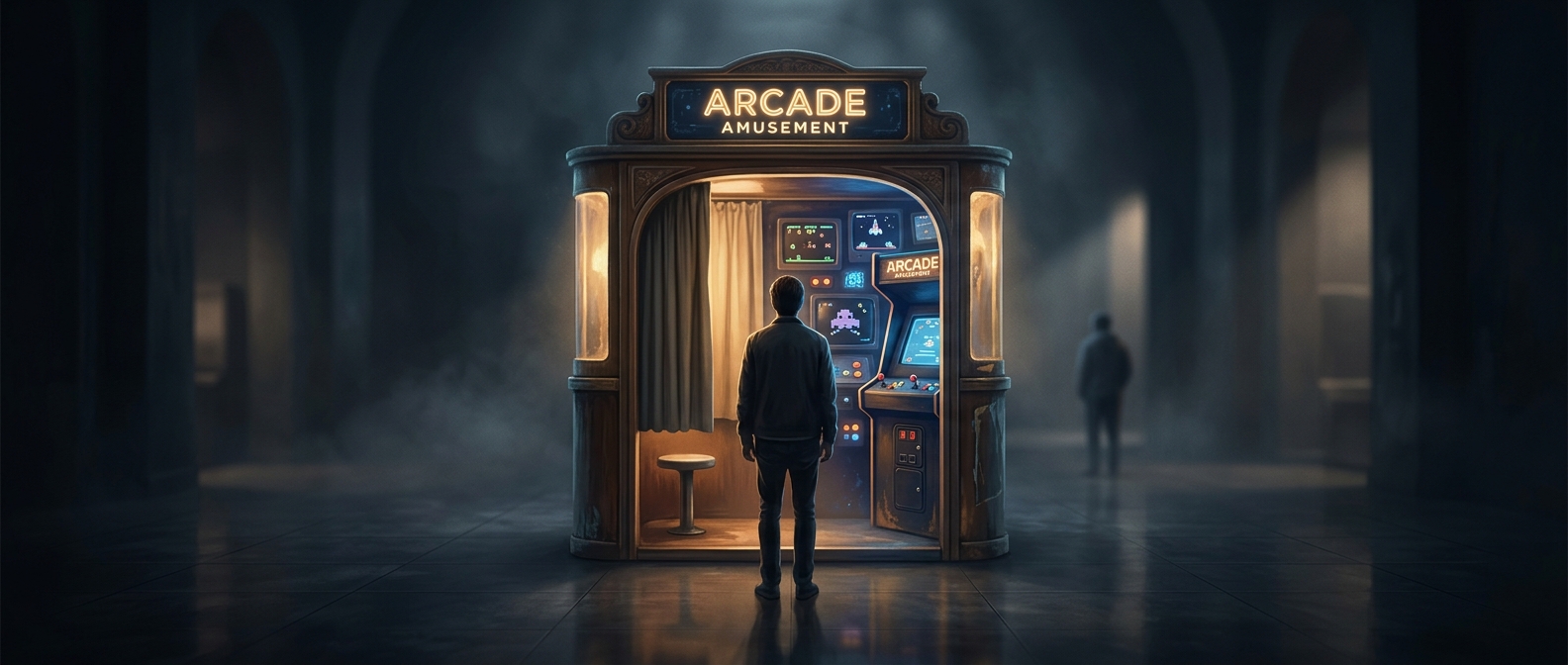
A photograph usually involved a person operating equipment and directing the sitter. The booth compressed that arrangement into a private, self-contained experience. Its enclosure gave customers a place to pose, while the machine’s timed operation supplied the ritual: pay, get ready, and wait for the result. Even a straightforward portrait could feel surprising when no photographer appeared to make it happen.
In an arcade, that sense of participation mattered. The booth was not just a service for preserving a memory; it was an attraction whose operation was part of the entertainment. The novelty lay in handing a personal task to a machine—and leaving with visible proof that it had worked.