A lobby becomes a stage
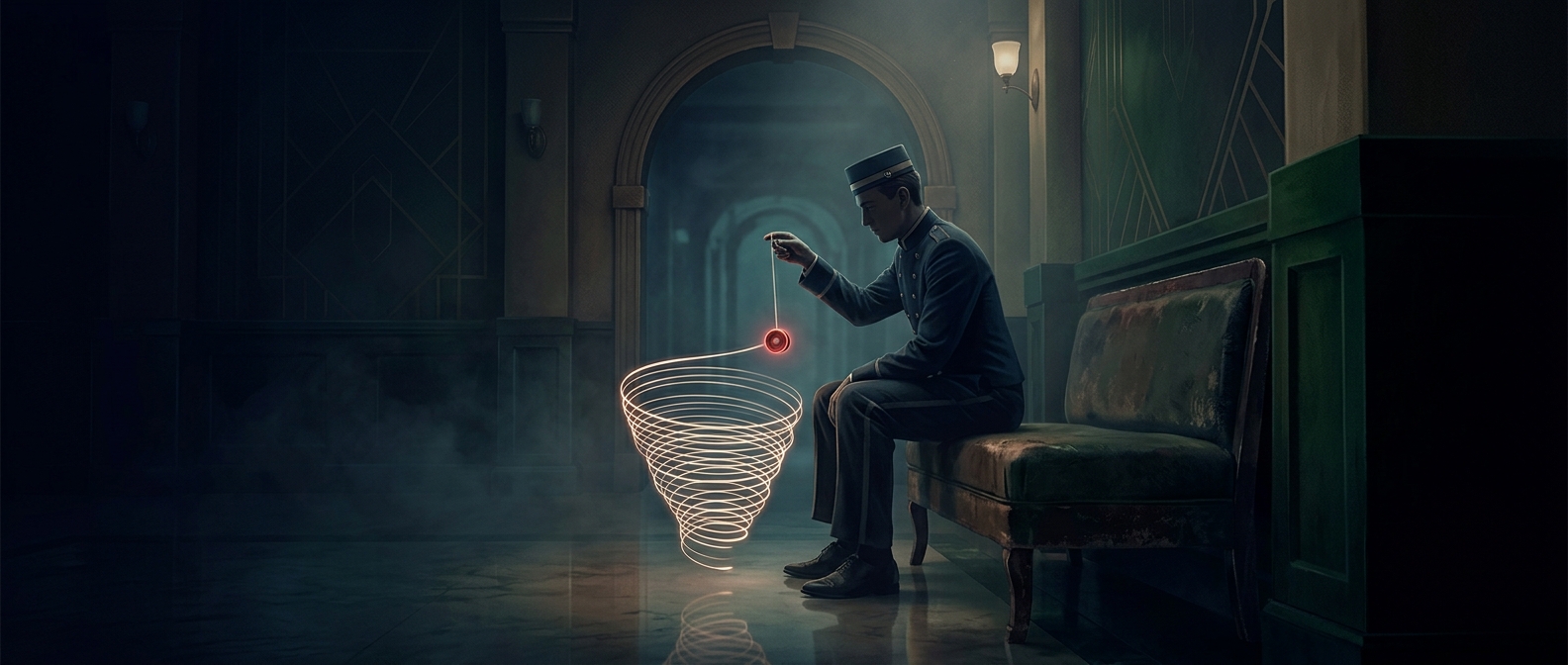
A spinning disk on a string is a simple toy, but its motion gives it a small, satisfying surprise: the disk drops, spins at the end of the string, then climbs back toward the hand. For guests waiting in a hotel lobby, that was more than something to look at. A bellhop could turn a few carved wooden disks into a demonstration, showing how a flick of the wrist made the toy travel up and down.
That public display mattered. A toy seen in motion is easier to understand—and more tempting—than one sitting still. Guests could watch, try the trick, and carry the idea beyond the lobby. The bellhop’s carving and play helped give the yo-yo visibility at a moment when a memorable demonstration could spread by word of mouth.
From hand-carved toy to craze
The trick depends on the string unwinding as the disk falls. If the disk keeps spinning at the bottom, a player can tug the string and make it climb again. That repeatable motion creates a natural invitation to practice: each attempt can be a little smoother, faster, or more dramatic.
Wooden disks made by hand could entertain a handful of people, but a craze required toys that many people could buy and learn to use. The bellhop’s role was not simply to make a new object; it was to make the object appealing in public. The lobby supplied the first audience, while the toy’s visible, repeatable trick gave that audience a reason to pass it on.