Two Different Ways to Make a Room Playable
Reyn Guyer’s creations addressed a quiet constraint of indoor play: a living room is not an open field. A game can ask people to move through the space—or make the objects they throw less likely to damage it. Twister and the first Nerf product took those routes in opposite directions.
Twister Turned Players Into the Equipment
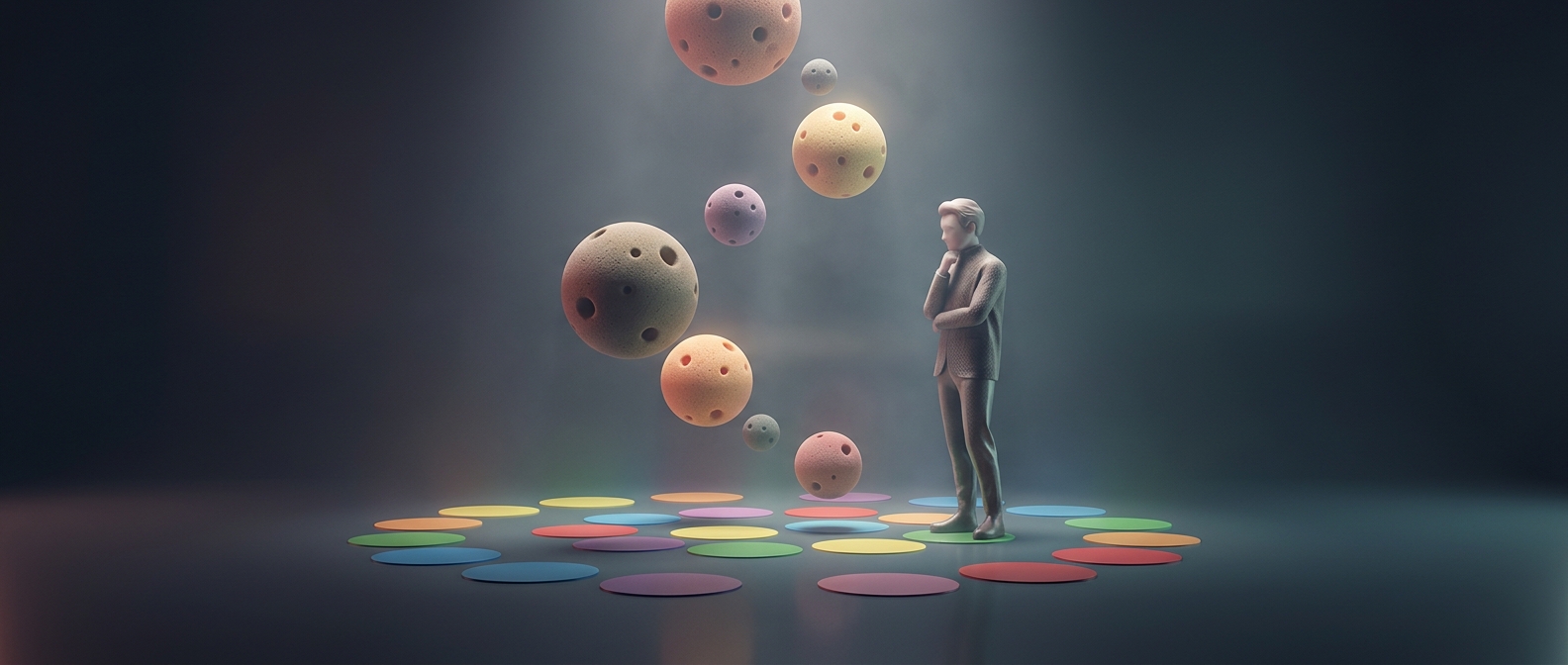
Twister’s mat made the floor itself the playing surface. A spinner tells each player which hand or foot to place on which colored circle. As the calls accumulate, players must reach around one another while keeping earlier placements, so the challenge grows from a simple instruction into a problem of balance, flexibility, and shared space.
That design makes the players—not pieces, cards, or a large apparatus—the moving parts. The mat can be rolled out in a room, and the game’s increasing awkwardness comes from people trying to occupy the same limited patch of floor.
Nerf Changed What a Throw Could Risk
The first Nerf product, a foam ball, approached the indoor problem through material. Foam compresses when it hits something, absorbing some of the impact instead of delivering it as a hard, rigid ball would. That made throwing and catching more practical around household objects, where a miss might otherwise mean a broken lamp or a damaged surface.
The contrast is the useful design lesson: Twister made a room entertaining by choreographing bodies in close quarters; Nerf made it more forgiving by softening the projectile. Both ideas reshaped play around the limits of a home—and made those limits part of the game rather than a reason to stop.