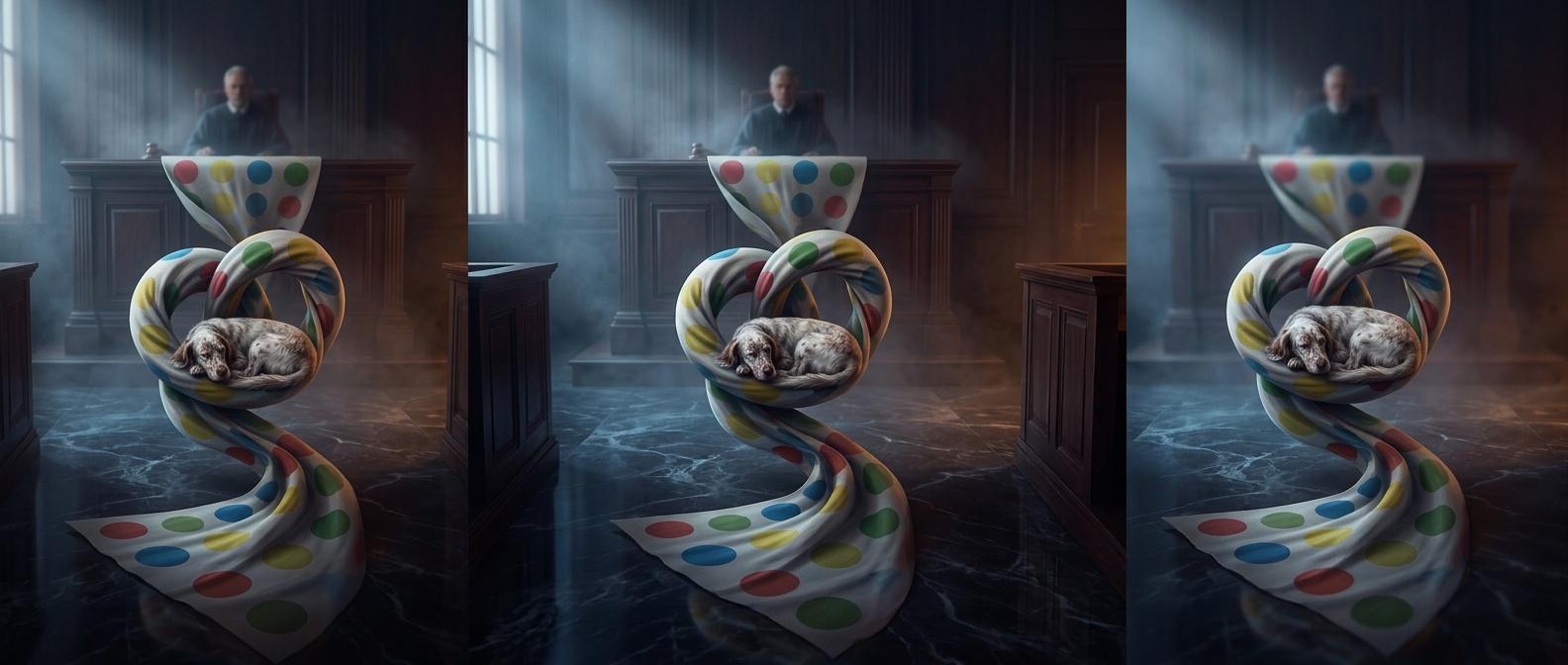
Why “Pretzel” Didn’t Stick
A game’s name has to do more than sound catchy: it also has to be usable without colliding with another company’s brand. In this case, Milton Bradley’s lawyers objected to “Pretzel” because another toy company had trademarked that name for a toy dog. A trademark helps identify the source of a product, so using the same name in the toy market could create a risk of confusion.
That concern changed the game’s public identity before the proposed title could become its lasting one. The replacement, Twister, points directly to what players do: bend, stretch, and turn their bodies to reach spots on the mat. “Pretzel” might suggest a shape—or the dog toy already associated with the name—but “Twister” makes the game’s physical action part of its pitch.
A Naming Problem Became a Design Clue
The episode shows how branding can shape the way a game is understood. Players encounter the title before they learn the rules, so a name can quickly signal what kind of experience awaits. Here, the legal objection closed off one option, while the final name gave the game an energetic, movement-centered identity.
The small change mattered: instead of being remembered by a name already tied to another toy, the game became known by a word that describes the contortions at its heart.