A flick sets the bottle in motion
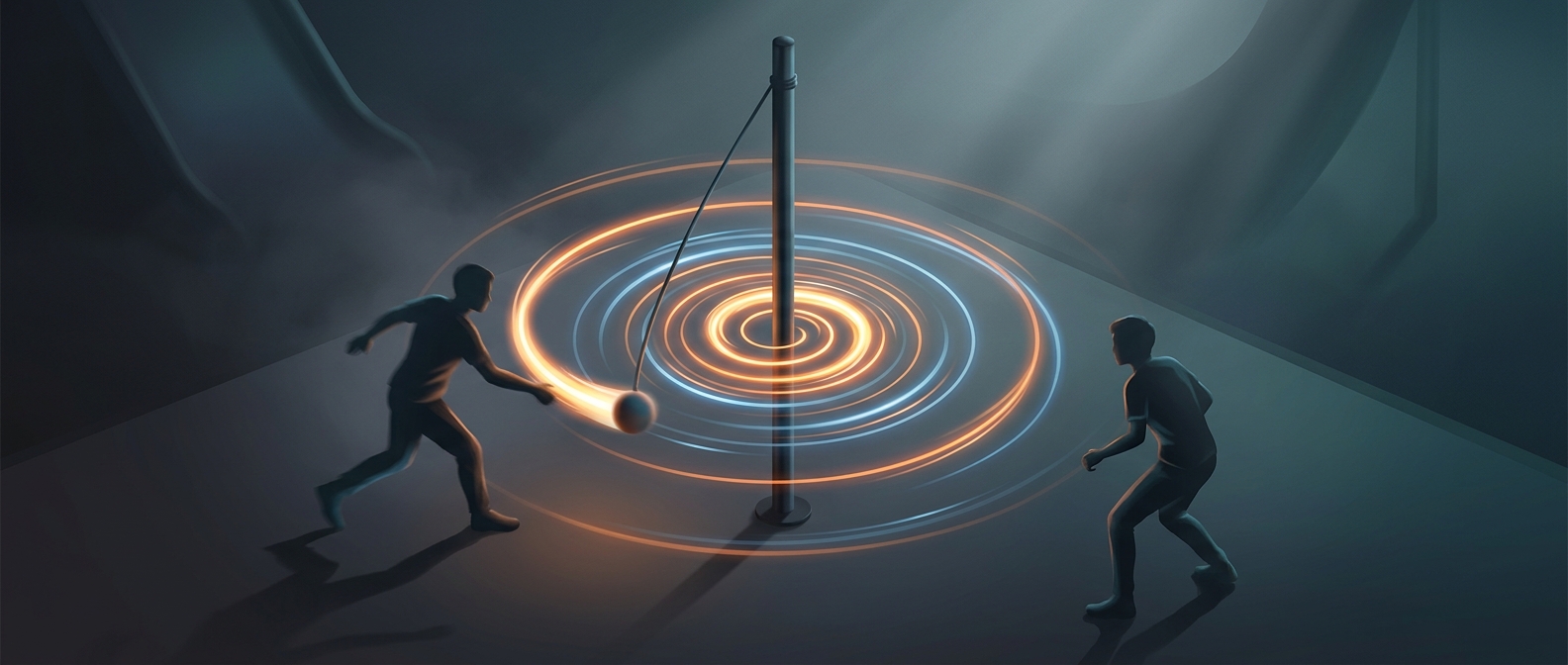
A bottle resists changes to its rotation because its mass is spread around an axis. That resistance is called rotational inertia: once a flick gets the bottle turning, it does not stop just because the hand lets go. The spin carries it onward, much as a rolling wheel keeps moving after a push.
The bottle’s rotation also has angular momentum—the turning motion it tends to maintain. Friction between the bottle and the floor gradually drains that motion. As the spin slows, the bottle may wobble or scrape, and those small contacts help determine its final direction.
Why the result feels unpredictable
The ending depends on details that are hard to control: where the flick lands, how fast the bottle starts, how level the surface is, and how the bottle’s base touches it. A tiny difference at the start can change which way it wobbles near the end. The stopping point is therefore not chosen by the bottle, but neither is it guaranteed to be perfectly random; it follows from the particular spin and the physical conditions around it.
That combination makes the game work. Players supply the initial push, then have to wait while friction and wobble turn that push into an answer. Even a slight tilt in the floor can quietly influence where the bottle finally points.