Why a Simple Command Becomes a Split-Second Test
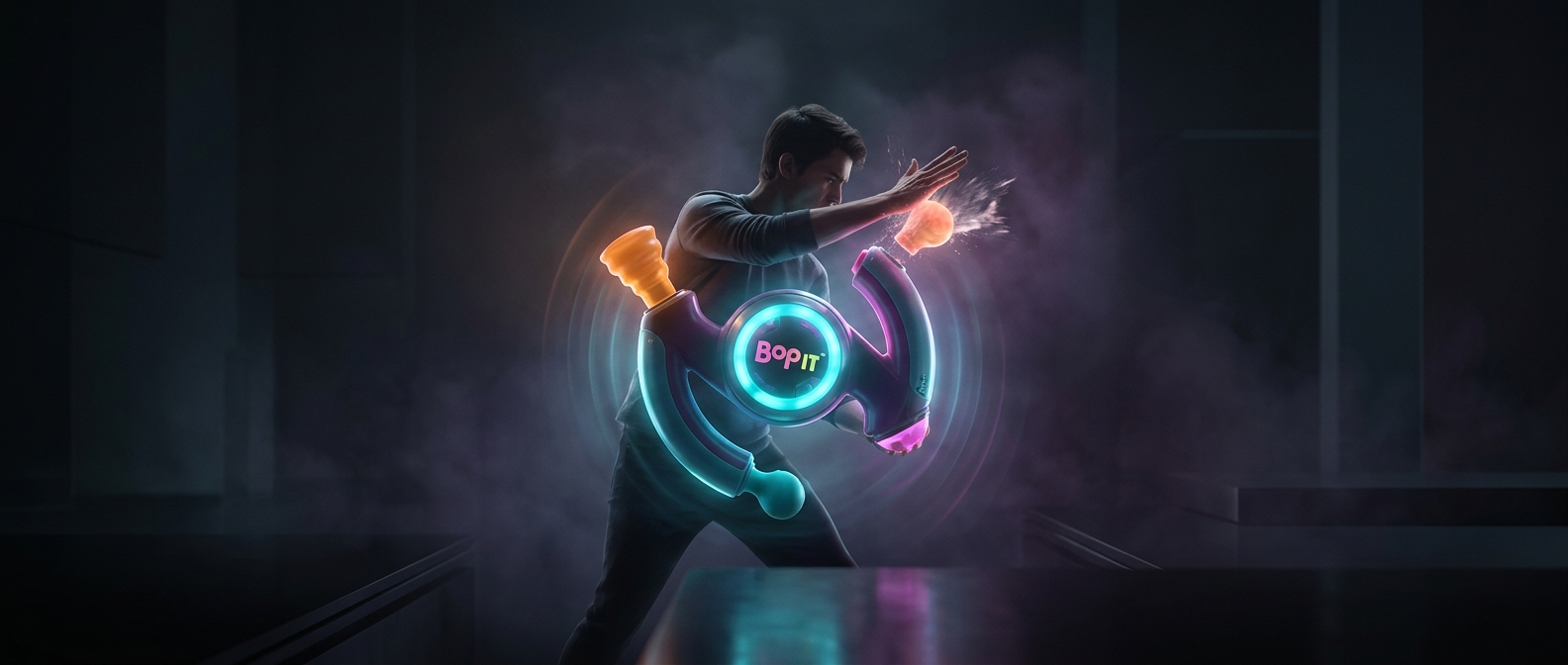
Bop It makes familiar actions—twisting, pulling, or hitting a control—harder by putting them on a clock. The player must hear a command, identify which action it names, and move before the next one arrives. Each step is simple on its own; the challenge is completing the chain quickly without mixing up the instructions.
The Game Crowds the Decision
A command can arrive while the player is still finishing the previous movement. That leaves little time to pause, check the controls, or talk through the choice. The player has to switch attention from listening to acting, then shift back to listening almost immediately.
This is why the game can feel like a test of composure as much as reflexes. Under pressure, a player may hear the right word but make the wrong movement, or hesitate just long enough to fall behind. The controls are deliberately distinct actions, but remembering their matches while commands keep coming is the real work.
The Fun Is in the Narrow Margin
Bop It turns a small set of actions into a tense loop: listen, choose, move, and get ready again. Its appeal comes from the gap between knowing what to do and doing it in time. A command that would be effortless in conversation becomes a miniature crisis when the game leaves no room for a second thought.