Why a Hand-Clapping Game Can Raise a Blister
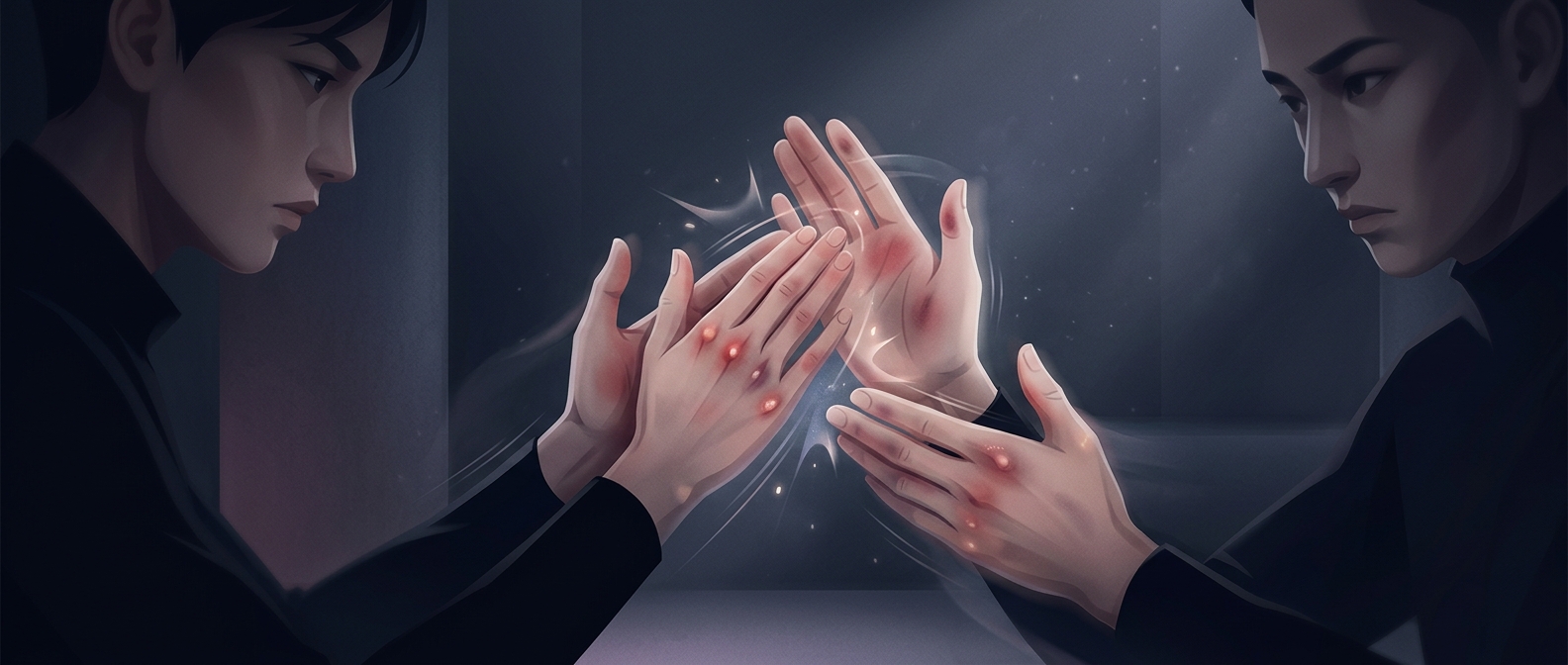
In rapid patty cake, each contact is brief, but the same patch of skin may be struck and rubbed again and again. A perfectly square slap mostly compresses the hand; a glancing one also drags the skin sideways. That sideways force is called shear. Repeated shear can stress the skin more than any single clap does.
From Stinging to a Fluid-Filled Pocket
The sting comes from impact activating sensitive nerves in the skin. If rubbing continues, friction and heat add to the strain. The outer skin can begin to separate from the layer beneath it, and the body’s response is to fill that gap with fluid. The result is a blister: a small cushion over irritated tissue, not simply a mark left by a hard hit.
How quickly this happens depends on the contact—how forceful and frequent the claps are, how much the hands slide, and whether the skin is already irritated. A sharp slap may hurt without causing a blister; persistent rubbing is the more direct route to one.
That is why a playful rhythm can become uncomfortable before anyone notices the damage building: the hands get no time to recover between repetitions. Slowing down or stopping when the sting persists gives the skin a chance to avoid further friction.