A rhythm game built around two kinds of timing
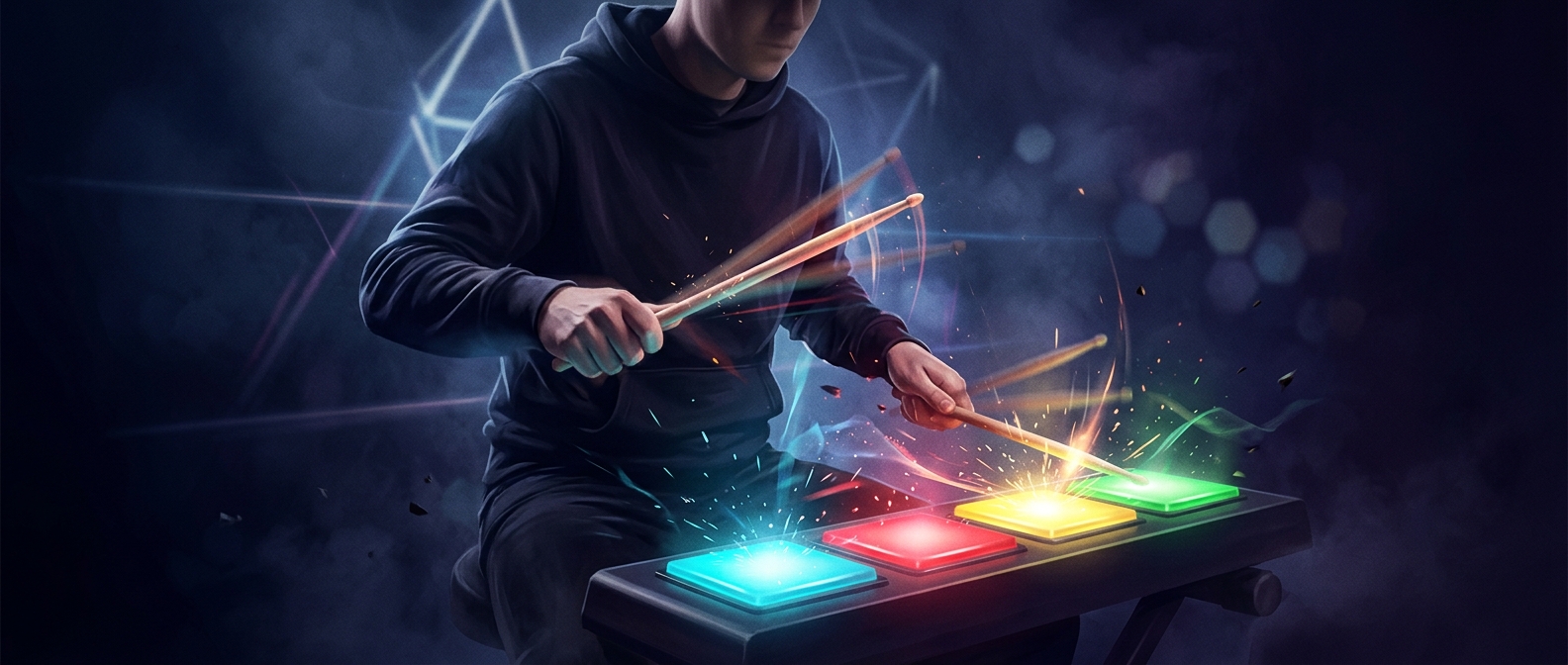
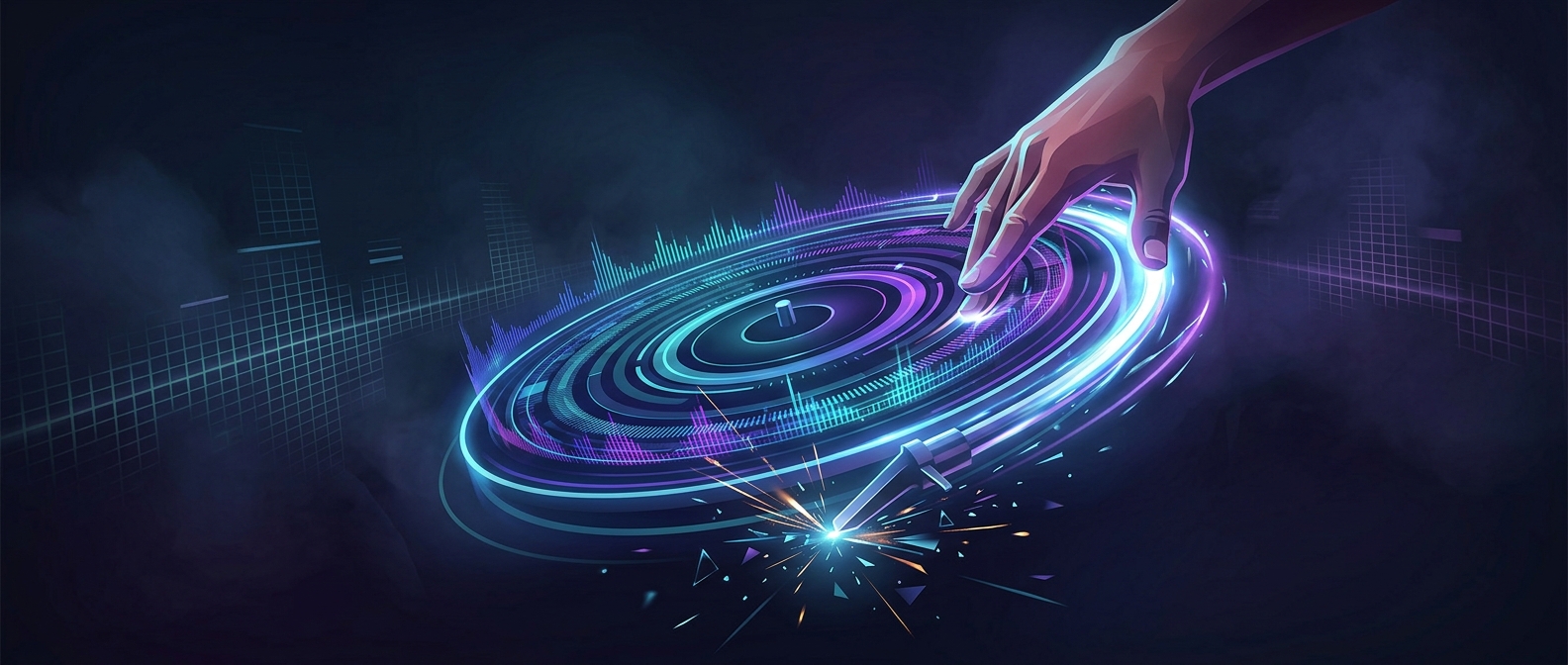
DJ Hero made the player coordinate a spinning platter with a set of colored buttons. The buttons handled notes that had to be hit in time with the music; the platter added a physical gesture, with short back-and-forth scratches cued by the game. Success depended not just on recognizing a beat, but on switching between finger presses and a moving hand without losing the rhythm.
That division mattered. Many rhythm games ask players to tap a sequence of buttons, so the challenge is largely about reading cues and responding quickly. DJ Hero added a control that could move continuously in either direction. A scratch was not a single press: the player had to move the disc through the indicated passage and keep the motion aligned with the track.
The controller made the performance visible
The peripheral turned an abstract timing task into a small physical routine. A player could watch the cues, press the buttons, and work the platter in the same moment—an arrangement that rewarded coordination as much as reflexes. Because the controller resembled a DJ setup, those movements also gave the game a performance-like quality: players were not merely tapping along to a song but acting out a simplified version of mixing and scratching.
That translation had limits. The game reduced a complex musical craft to a set of readable cues and repeatable gestures, so the goal was not to reproduce the freedom of a live DJ set. Its distinctive appeal came from making those gestures playable at home. The turntable was not decoration; it changed what a player’s hands had to do, and made keeping the beat feel like a physical performance.