A drum part reduced to five inputs
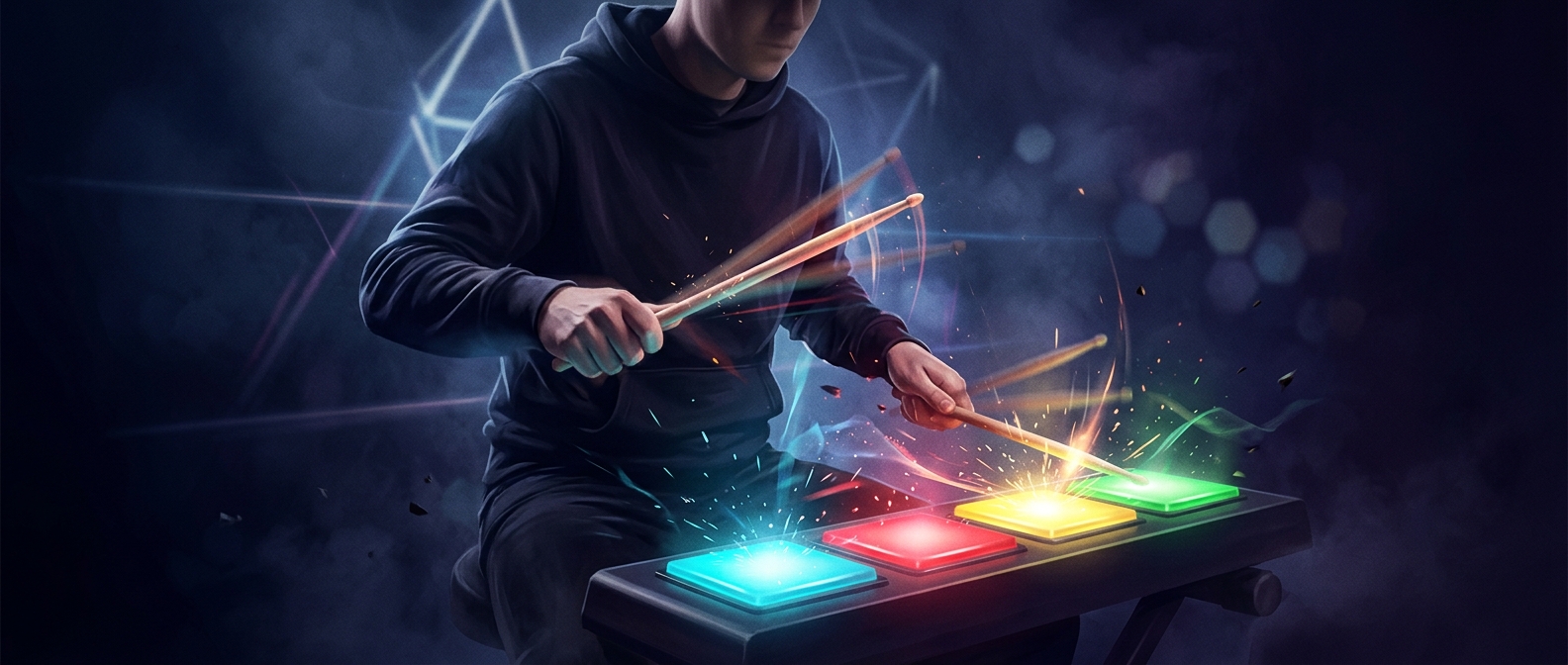
Rock Band’s kit translated a complicated instrument into a small, readable set of actions. Four colored pads represented the main drum lanes, while a separate pedal stood in for the bass drum. On-screen notes traveled toward a target line; players struck the matching pad or pressed the pedal as each note arrived.
That arrangement was a design compromise. A real drum kit has many drums and cymbals, and skilled players can strike them in countless combinations. The game instead preserved the most recognizable challenge—keeping a beat while coordinating different limbs—without requiring a full instrument or lessons in technique.
Why difficulty feels physical
A song’s drum chart is a timed sequence of notes, not a simulation of every movement a drummer would make. Easier charts leave more space between hits. Harder ones add denser patterns, quick changes between pads, and combinations that demand hands and foot in close succession. The player has to read the approaching sequence, anticipate it, and execute it before the next notes arrive.
The plastic pads make that timing tangible: a missed beat is not just a mistake on a screen but a strike that lands late, early, or on the wrong target. As patterns speed up, repeated hits can tire the hands, while the pedal adds a separate coordination problem. The result is a controller that turns musical timing into movement—and makes a difficult song feel like a physical task even though the game is simplifying the instrument.