Why an orchestra changes a game’s sound
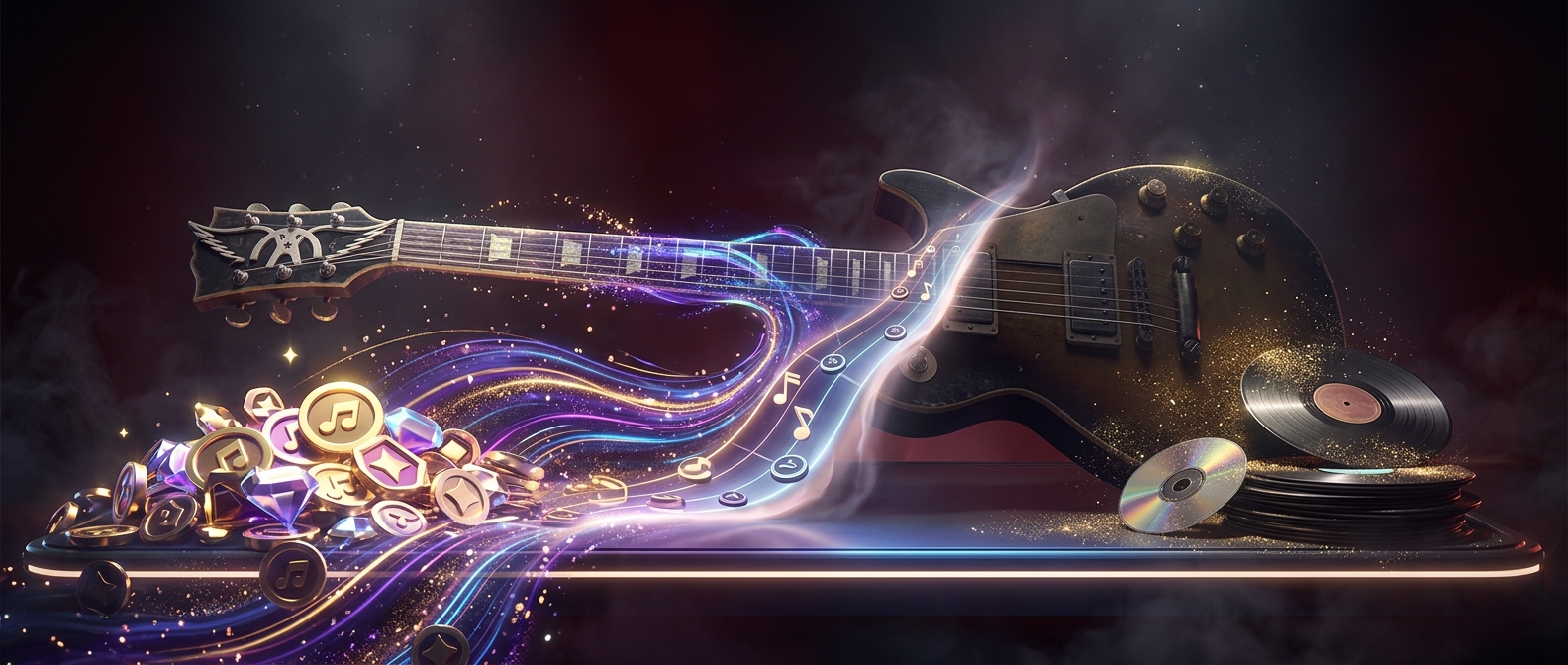
A platform game’s music has a practical job: it must keep moving while a player jumps, misses, explores, and tries again. A live orchestra adds a different kind of motion to that job. Strings can sustain a rising line beneath the action; brass can make a brief flourish feel weighty and grand. The result is music with a wider, more cinematic range than a small set of synthetic sounds alone might suggest.
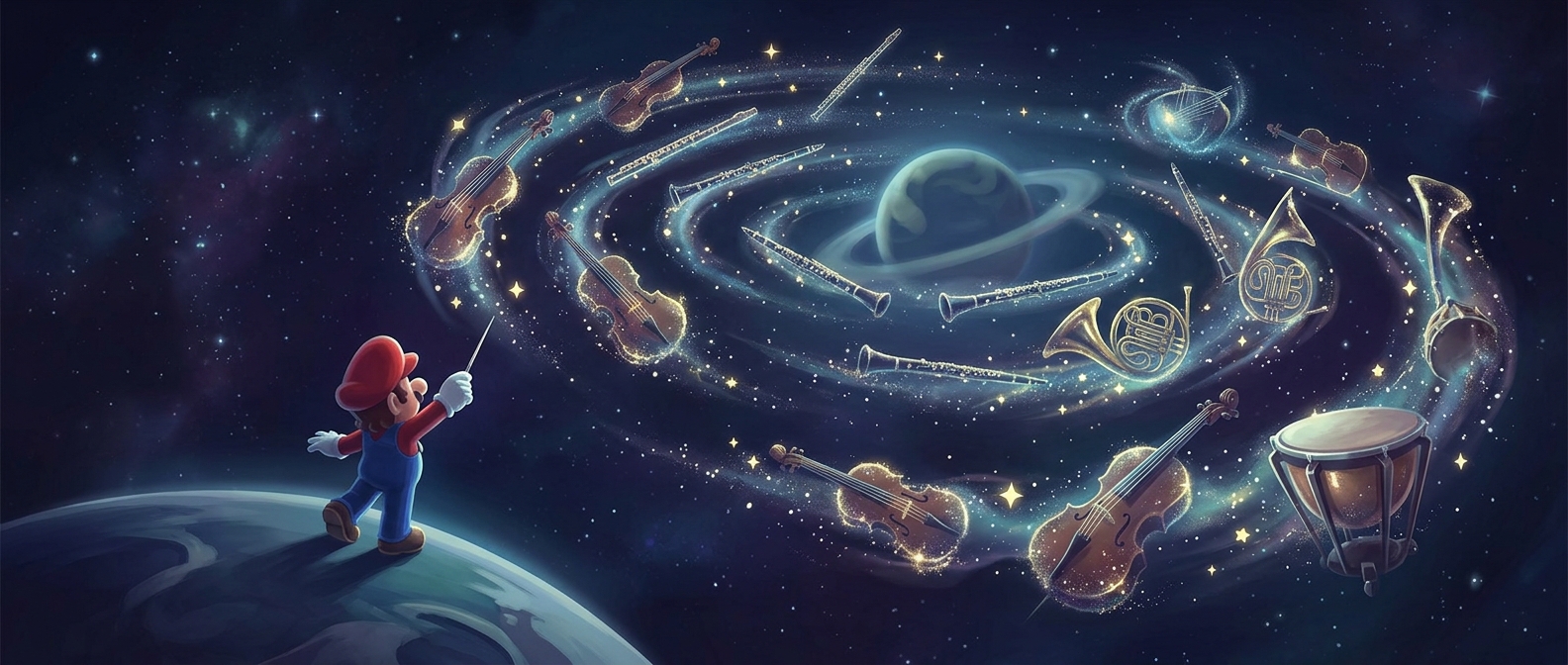
That contrast matters in Super Mario Galaxy. Its play is built around quick, playful movement, but its settings reach into space, where the scale can feel vast. Orchestral colors let the score shift between nimble energy and expansive drama without changing the game’s basic sense of fun.
From performance to playable music
A recording session captures musicians performing the score together, with their timing and dynamics shaped in real time. Those recordings can then be placed into the game as audio: the game triggers music during play rather than requiring an orchestra to perform live for each player. The arrangement therefore has to work both as a musical performance and as part of an interactive experience that may repeat as a player moves through a level.
The orchestra’s impact is not simply that the sound is larger. A swelling phrase or a coordinated burst from the brass gives the player’s movement a sense of momentum and scale. In a game about leaping between small worlds, that musical breadth helps make each journey feel like an adventure across the cosmos.