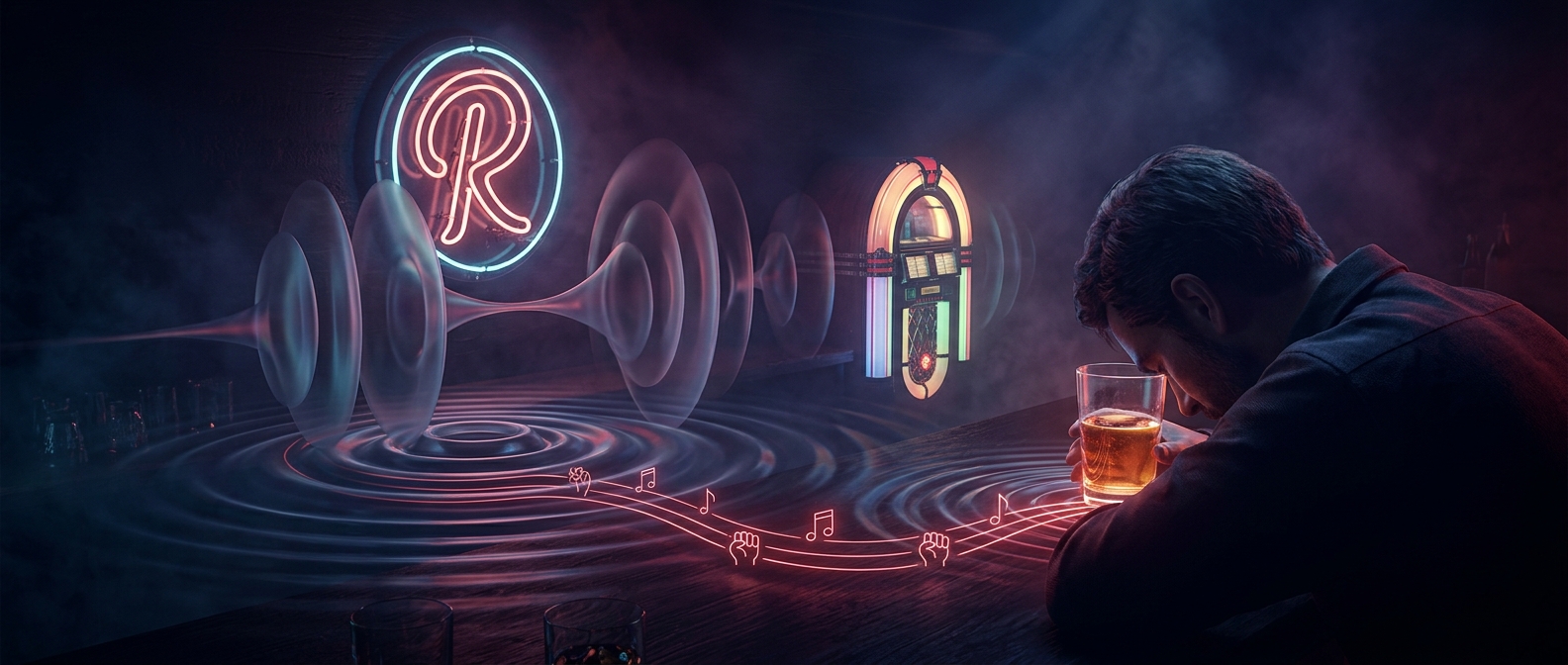
A lyric becomes the rule
The game turns a familiar song into a sequence of triggers: players take a drink when they hear either “Roxanne” or “red light.” The rule is easy to remember, but it asks everyone to listen closely. Instead of drinking on a timer or taking turns, players react to words embedded in the song.
That makes the track’s repeated phrases do the work of a game mechanism. Each cue briefly shifts attention from singing or chatting to listening for the next trigger. Because everyone is responding to the same recording, the song also sets the group’s pace: the drinks arrive when the lyrics do, not when a player chooses to call a round.
The song sets the tempo
The appeal is partly the mismatch between a simple instruction and a lively, familiar track. A cue may feel obvious when the group catches it together; a missed word can leave someone a beat behind, while other players’ reactions make the moment hard to ignore. The fun comes from recognizing the pattern and reacting in sync—not from complicated scoring or strategy.
The same design creates a practical catch: the pace depends on how often the chosen cues recur, and the rule offers no natural pause between them. A nonalcoholic drink, or simply treating each cue as a point instead, keeps the shared listening game intact without letting the song dictate how quickly anyone drinks.