When a Horror Soundtrack Followed Barbie to the Mall
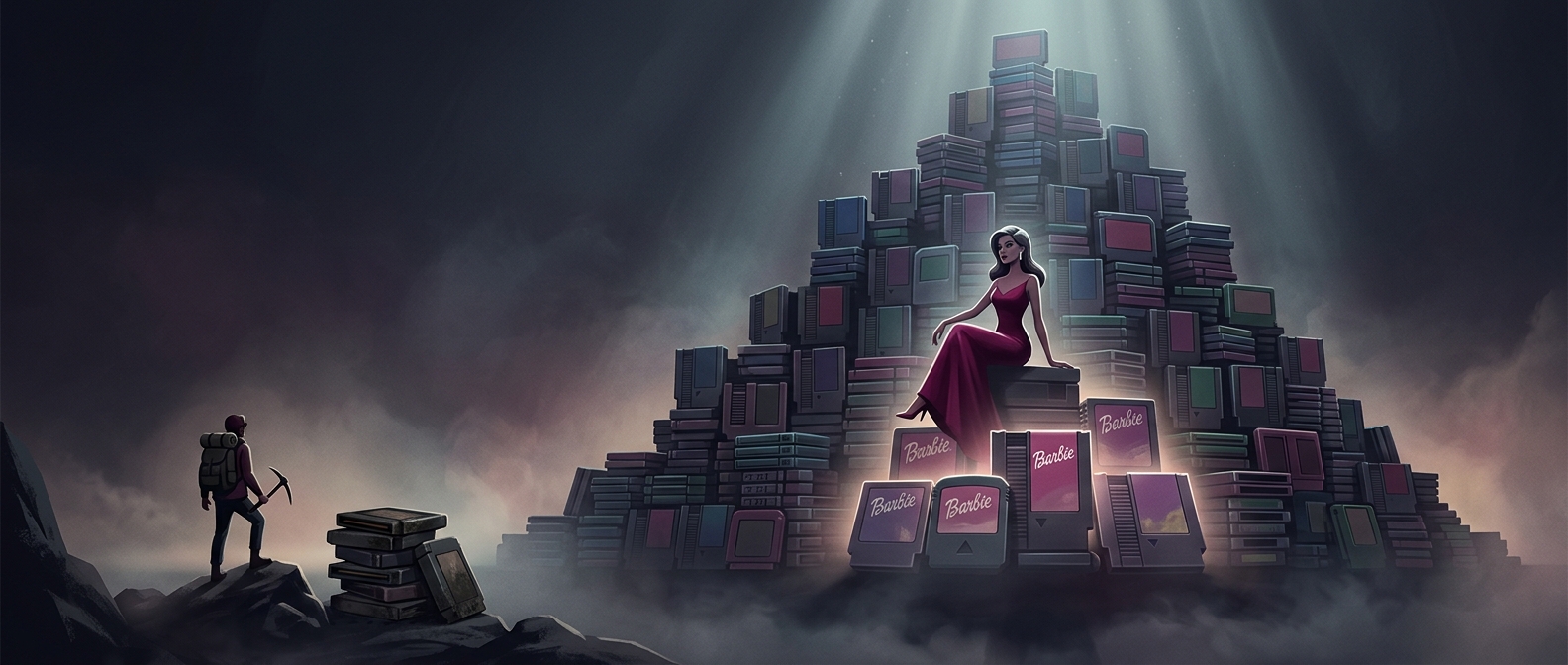
The surprise in Barbie’s NES soundtrack is not just that it sounds ominous. The music had already been written for A Nightmare on Elm Street, a game built around fear, and it was reused in an adventure centered on shopping for outfits. That puts the same composer’s horror-game material beside a very different kind of play: browsing and dressing up rather than surviving a nightmare.
Why the Contrast Lands
Game music helps tell players how to feel before anything happens on screen. Dark, tense-sounding music can make a space seem threatening; in a fashion-focused game, that emotional signal clashes with the activity. The mismatch can make an ordinary trip through the dream mall feel oddly suspenseful, as if the game’s soundtrack has wandered in from another story.
That effect is especially noticeable on the NES. Its sound chip produced music through a small set of electronic voices rather than recordings of full instruments. Composers shaped melody, rhythm, and tone within those limits, creating synthetic sounds that could feel playful, stark, or eerie. The medium did not require horror music to stay in horror games: a tune could be carried into a new setting and acquire a different meaning there.
A Reuse With an Unusual Afterlife
The available fact establishes the reuse, not why it happened. Whatever the production reason, the result gives Barbie an unexpected tonal edge. Instead of simply underscoring a dream world, the music brings along associations from a game about a killer haunting its players. A mall adventure about outfits thus gets a soundtrack with a history in horror—a reminder that in games, a familiar melody can change character as dramatically as the scene around it.