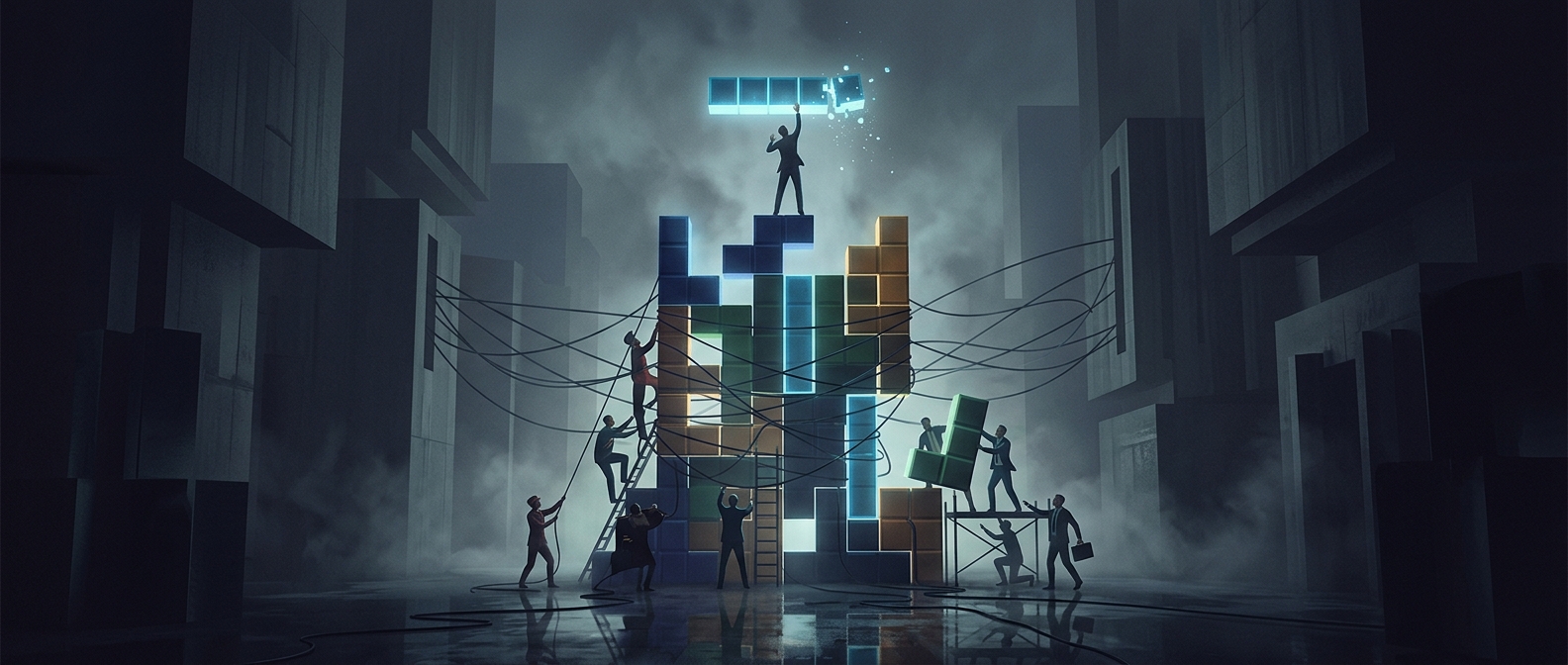
How a folk tune became Tetris’s musical signature
The melody’s path into the Game Boy version of Tetris runs through a much older story. “Korobeiniki” is based on a nineteenth-century Russian poem about a peddler and a young woman bargaining over his wares. Over time, the verses became a folk song, and its quick, regular tune proved easy to recognize and repeat.
That Russian association gave the music a natural role in a game created in the Soviet Union. For players, the melody did more than signal a level or fill silence: it tied the abstract falling blocks to the place where Tetris began.
Why it works while you play
A good game loop has to survive repetition. “Korobeiniki” has a steady pulse and a compact, recurring phrase, so it can cycle beneath a long run without requiring the player to follow a complicated musical structure. Its brisk pace also sits neatly alongside the game’s central tension: blocks keep descending, and each decision makes room for the next.
The Game Boy’s simple sound hardware shaped how the song could be presented. Rather than reproduce a full folk performance, the game rendered the tune as a lean electronic arrangement. That spare sound became part of its identity: a Russian folk melody reduced to a few bright, insistent notes, repeating as the stack rises.