A Small Contact Point Can Change the Fall
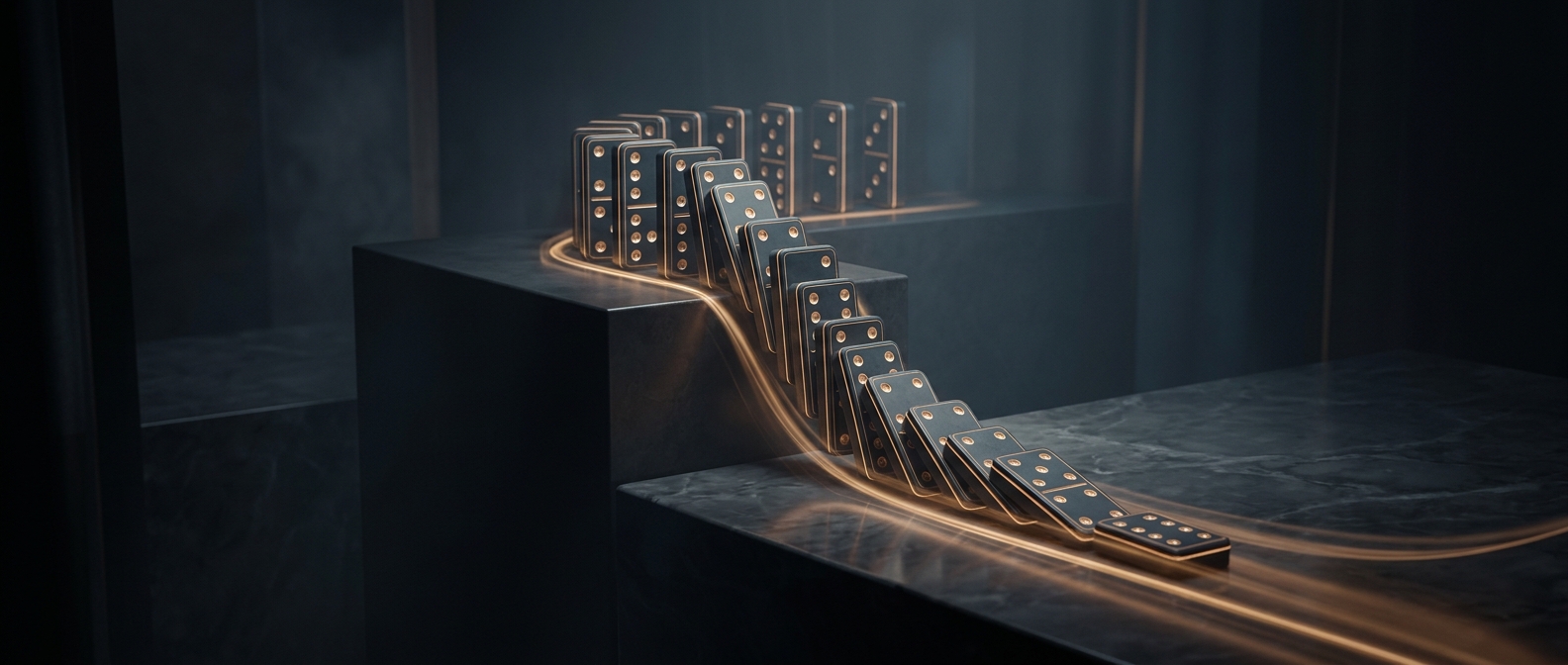
A domino has to rotate when it tips. On a smooth, level surface, its bottom edge can serve as a fairly predictable pivot. On a rough surface, bumps and gaps can interrupt that motion, so a small metal pin can provide a more dependable point around which the piece turns.
The same point can create trouble in a stack. If the pin catches against a surface or another piece, it may hold one part still while the domino continues moving. That makes the pin a fulcrum: a support point that lets a force on one side produce rotation on the other.
Why a Tiny Pin Can Topple a Tower
A carefully balanced tower has little margin for disturbance. As one piece rotates around a caught pin, it can press or pull on neighboring pieces. That shifts their weight; if a piece’s center of mass moves beyond the small area supporting it, gravity carries it onward into a fall.
The pin does not need to be large or forceful. Its effect comes from where it makes contact and how that contact redirects the domino’s motion. A feature that helps a piece pivot across an uneven floor can therefore turn into an unintended lever inside a closely balanced stack.