Each domino needs time to fall
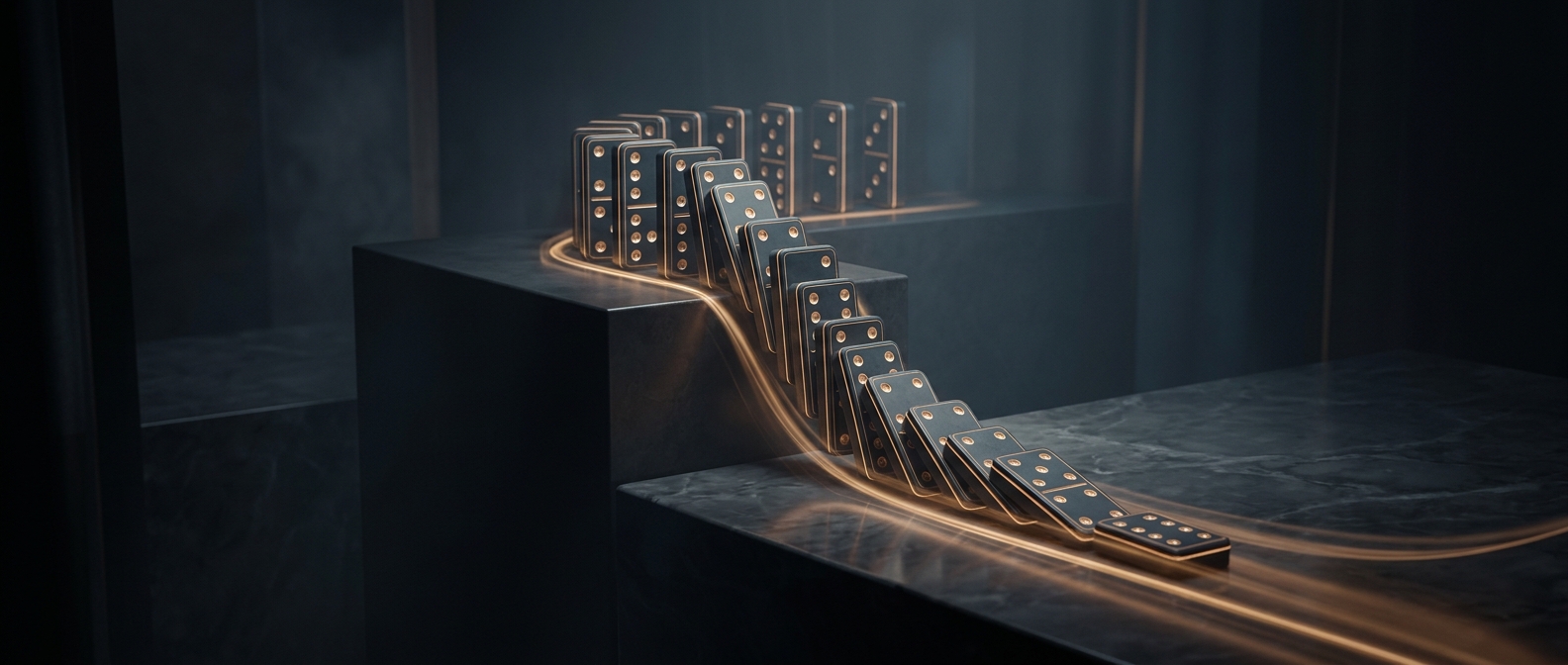
A domino does not pass motion down the line like a signal in a wire. It has to rotate, strike its neighbor, and give that neighbor enough of a shove to begin tipping. Gravity supplies the energy as the first tile falls, but gravity cannot make a tile rotate instantly; each link in the chain takes time.
The collision also has to be effective. The falling tile must hit high enough on the next one to create a turning force, rather than merely nudging it sideways. Friction between the dominoes and the floor helps keep their bases from skidding, so the shove can produce a tip.
Spacing sets the rhythm
The gap between tiles matters. If dominoes are too far apart, a falling one may not reach the next. If they are packed too tightly, they can collide in a way that wastes motion or disrupts the clean sequence. Height, shape, and surface conditions also affect how quickly one fall triggers another.
Designers can tune a line to make the cascade faster or slower, but every domino still has to complete a physical fall before the next link can take over. That repeated rotation and impact puts a practical ceiling on the wave’s speed—roughly no faster than a brisk walk. A topple may look like one continuous rush, but it is really a row of separate, timed collisions.