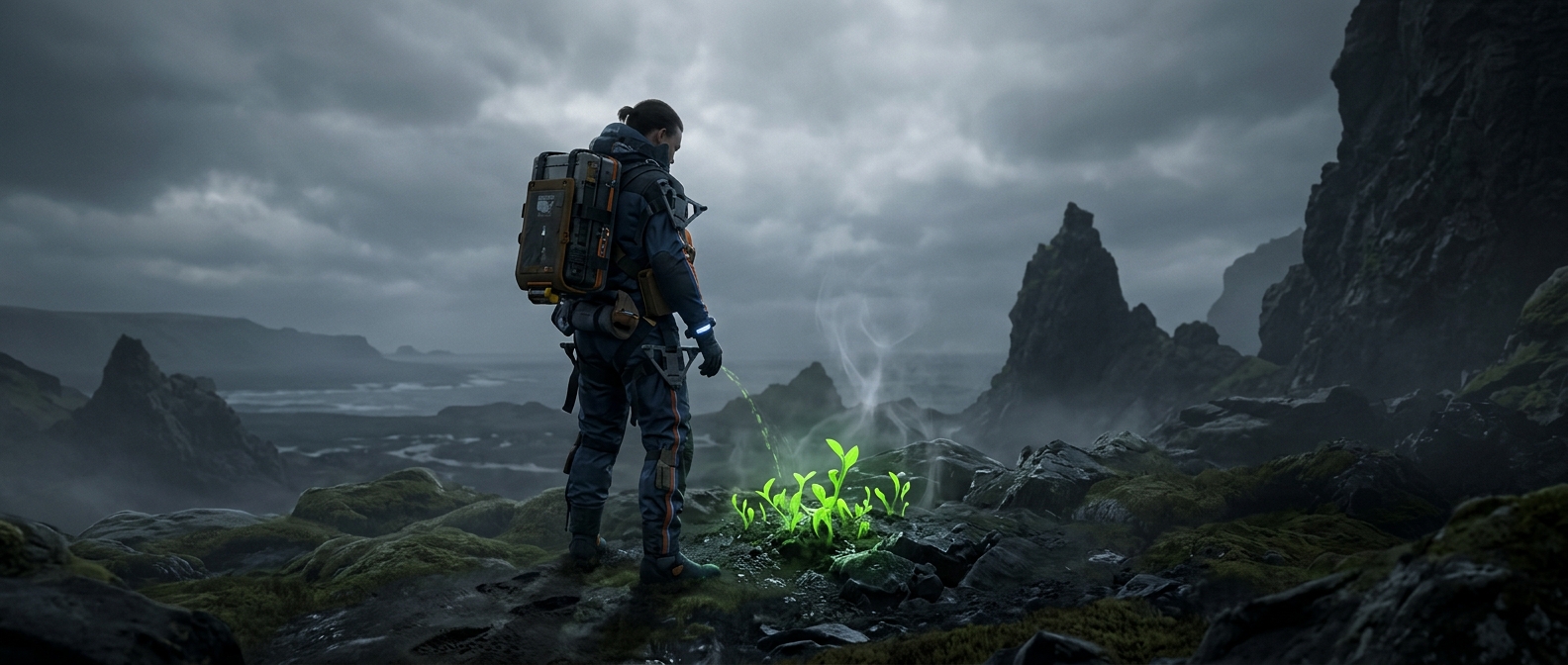
A bathroom break leaves a mark in the shared world
When Sam urinates outdoors in Death Stranding, a small mushroom appears where he stood. It is not just a private animation: the game can show traces left by other players in its asynchronous online world, where people do not meet directly but can encounter one another’s structures and signs. A mushroom can therefore turn an ordinary bodily need into a visible record of someone else passing through.
That makes the gag part of the game’s central design idea: travel is difficult, and even small actions can leave something behind for later travelers. The mushroom is a modest landmark in a landscape where players are constantly reading the terrain for clues, routes, and evidence of help.
A joke that fits the game’s systems
The mushroom suggests fertilizing a barren landscape, but its more important role is social. Death Stranding makes bodily functions, equipment, and other mundane details part of its world rather than hiding them behind a conventional action-game interface. Urinating produces a tangible consequence, and the online layer gives that consequence a chance to outlast the player’s visit.
The result is an unusually memorable kind of trail marker: not a sign planted on purpose, but a small fungal reminder that somebody stopped here. In a game about connecting isolated people, even a bathroom break can become a trace another traveler might find.