Turning a Movie Stunt Into a Player’s Move
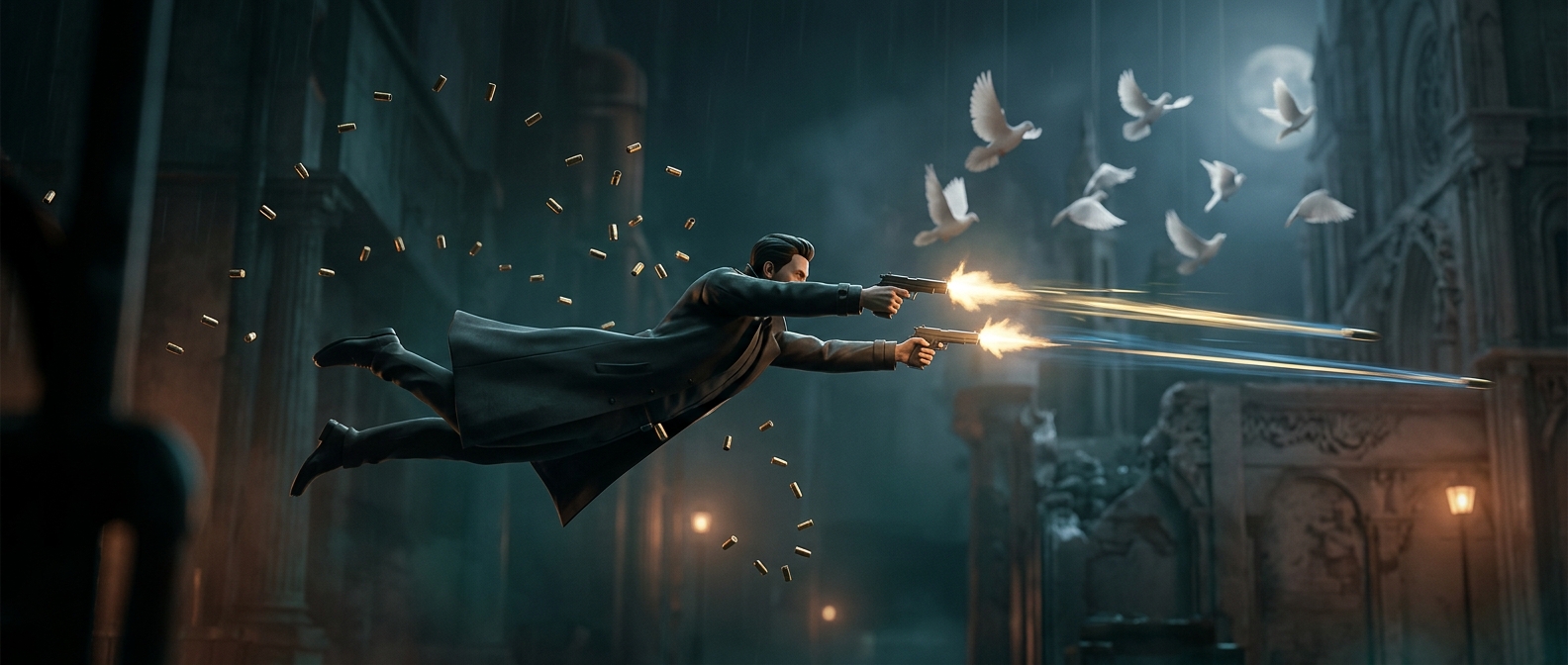
A Hong Kong action-film dive is more than a way to dodge bullets: it turns a fight into a brief, readable tableau, with the hero suspended in motion while shots cross the frame. Max Payne made that image interactive. Instead of watching a cutscene, players could launch Max sideways through a gunfight and choose where to aim as he fell.
That choice changes the meaning of the dive. In an ordinary shooter, jumping or dodging mainly helps a character escape danger. Here, the slowed action gives the player a short window to line up shots while Max is exposed and moving. The move is both evasive and aggressive—a risky attack staged to look like an action-movie moment.
Why Slow Time Matters
The slowdown bridges two demands that normally clash. A fast dive can look dramatic, but leaves little time for a player to react; a deliberate aiming window can feel tactical, but lose the sensation of a split-second stunt. By stretching the moment, the game lets players follow the action and make decisions inside it.
That is the key design translation: the cinematic pose becomes a usable combat choice, not just a visual reference. The player is not simply seeing Max perform a hero’s dive; they are responsible for turning that exposed midair moment into a burst of aimed fire.