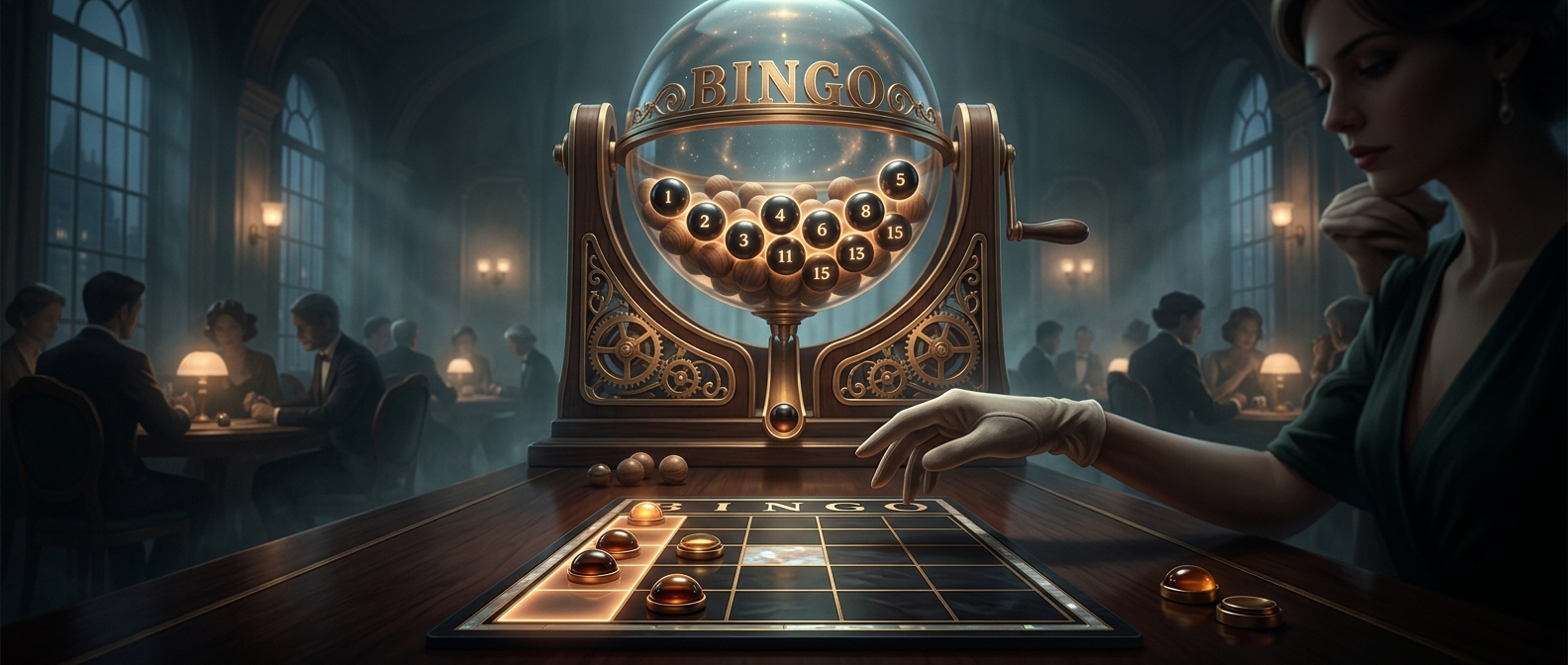
How a blast of air becomes a jumble
Inside a bingo blower, moving air does more than push every ball in one direction. Air enters the chamber in streams, and those streams break into shifting swirls around the balls and the chamber’s walls. A ball caught in one current may rise; another may be swept sideways or dropped into the path of its neighbors.
Each bump changes the motion again. A collision can send a ball spinning, redirect it, or knock another ball into a different current. Because the balls keep changing the paths around them—and because small differences in position alter which swirl catches them—the motion quickly becomes hard to predict. That is the practical meaning of localized turbulence: the air’s movement varies from place to place instead of forming one steady, orderly flow.
Why the motion matters
The chamber turns a simple airflow into repeated mixing. The balls are continually lifted, scattered, and returned to the moving air, rather than sitting in a pile where one could be selected easily by position. The blower must move them enough to keep them circulating, while the chamber contains the bouncing mass.
The result looks chaotic, but it has a clear mechanical cause: air currents start the motion, and collisions keep reshuffling it. When a ball is eventually drawn out, its path has been shaped by many changing interactions—not by a smooth, predictable ride around the chamber.