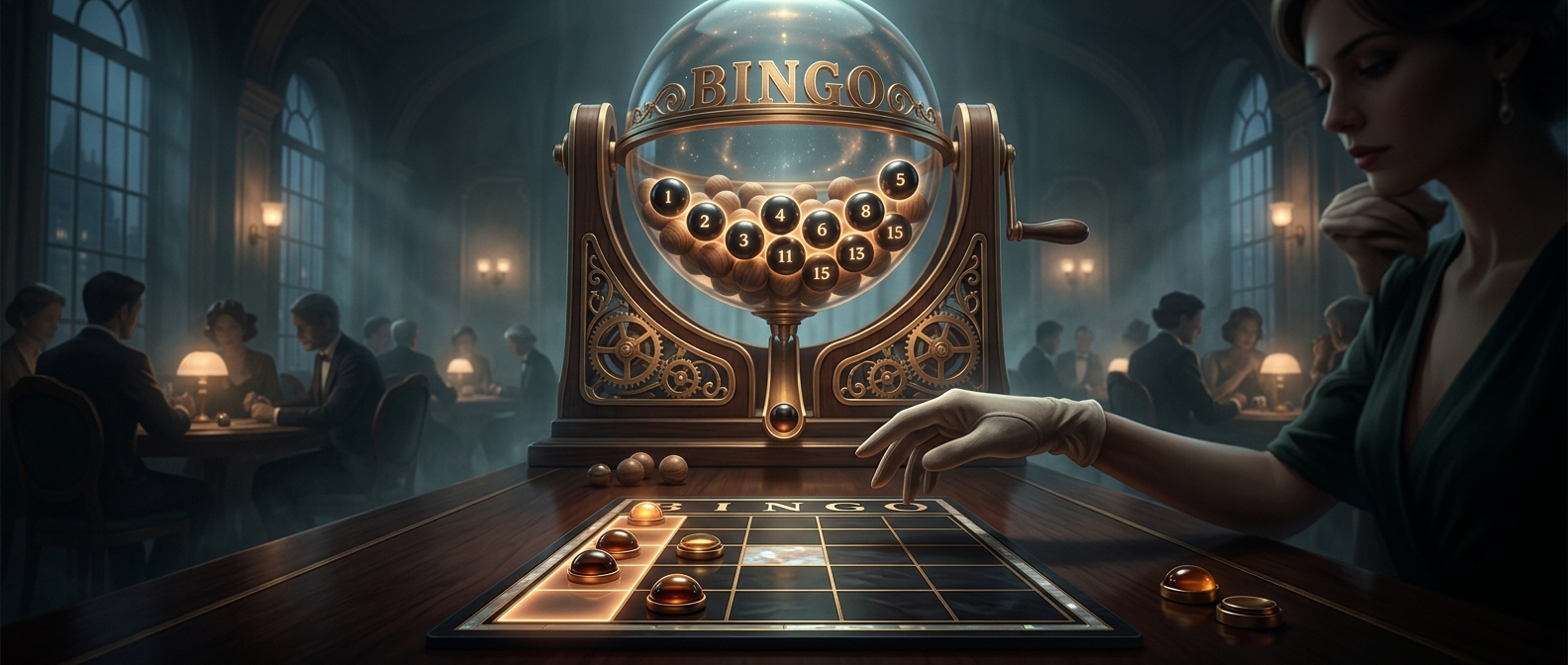
Why Bingo Calls Pair a Letter With a Number
In standard 75-ball bingo, the card’s five columns divide the numbers into fixed bands: B covers 1–15, I 16–30, N 31–45, G 46–60, and O 61–75. Each card draws its numbers from those bands, so a number’s letter tells players where to look before they check the number itself.
That pairing also makes calls easier to follow. Instead of scanning the whole card for a number, players can focus on one column. The letter acts as a quick routing cue, while the number identifies the specific square.
The Format Makes an Out-of-Range Call Obvious
A call such as “B-42” cannot occur in this format: 42 belongs in the G range, not B. The mismatch is easy to catch because the letter and number are tied to the card’s layout. That built-in structure helps keep a fast-moving game legible—and makes clear why bingo played with different card or ball formats may use different ranges.