A Familiar Room Becomes an Uncertain Map
In blind man’s bluff, a blindfold removes the quickest way to judge distance: sight. The seeker must build a rough picture of the room from footsteps, voices, and the occasional touch. But sound gives clues, not coordinates. A player who seems close may be across the room, and a small turn can send the seeker in a different direction than intended.
That mismatch is the game’s central tension. Players move through a space they can see but the seeker cannot, while the seeker tries to locate them by listening and reaching. The same chair that is easy to avoid in ordinary play becomes an unseen obstacle when attention is fixed on a voice or a shuffle.
The Room Is Part of the Game
Furniture changes the challenge from simple pursuit into navigation. Corners and legs interrupt a seeker’s path, while echoes and overlapping sounds can make it harder to tell where another player is. Even a familiar room can feel unfamiliar when its layout must be inferred one step at a time.
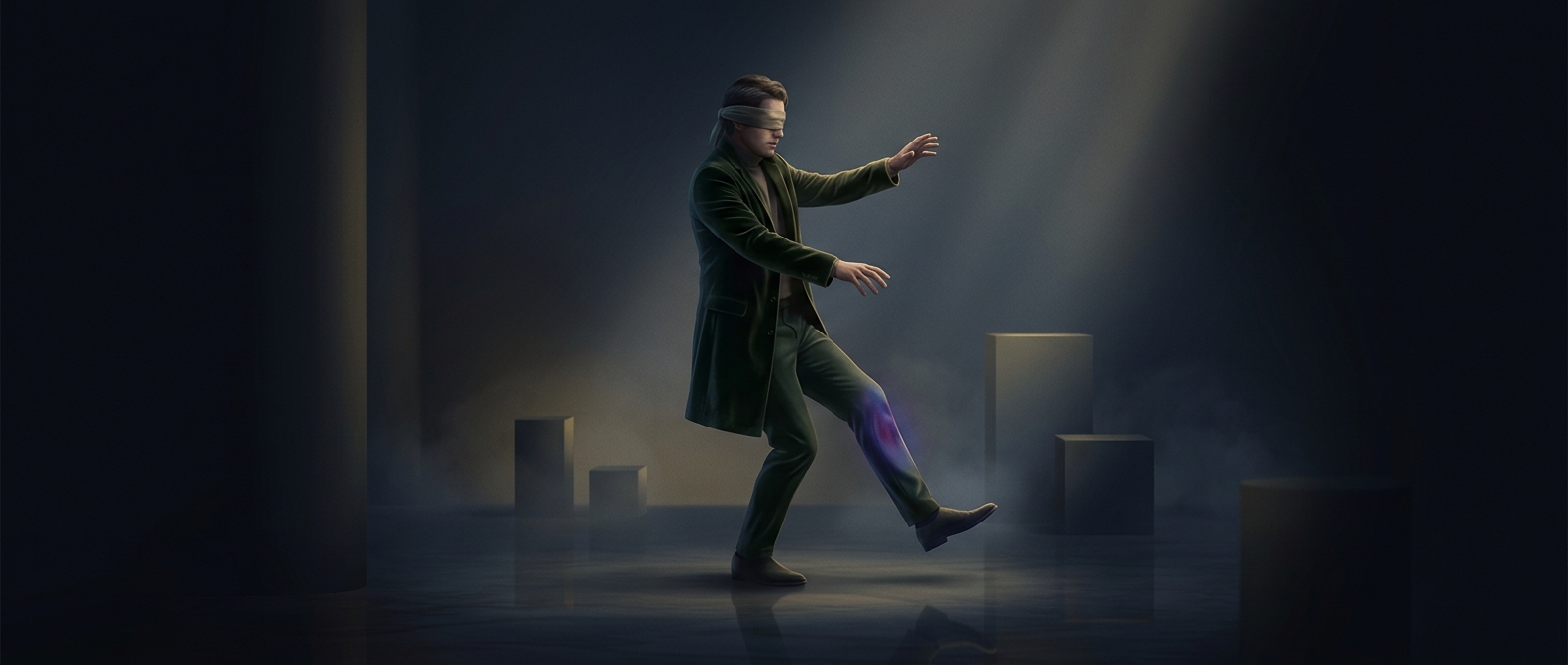
That is why the setting matters as much as the blindfold: open space makes movement easier to manage, while clutter adds risks that have nothing to do with finding the other players. In a room with a table just beyond reach, the seeker’s next clue may arrive only after a shin has already found the furniture.