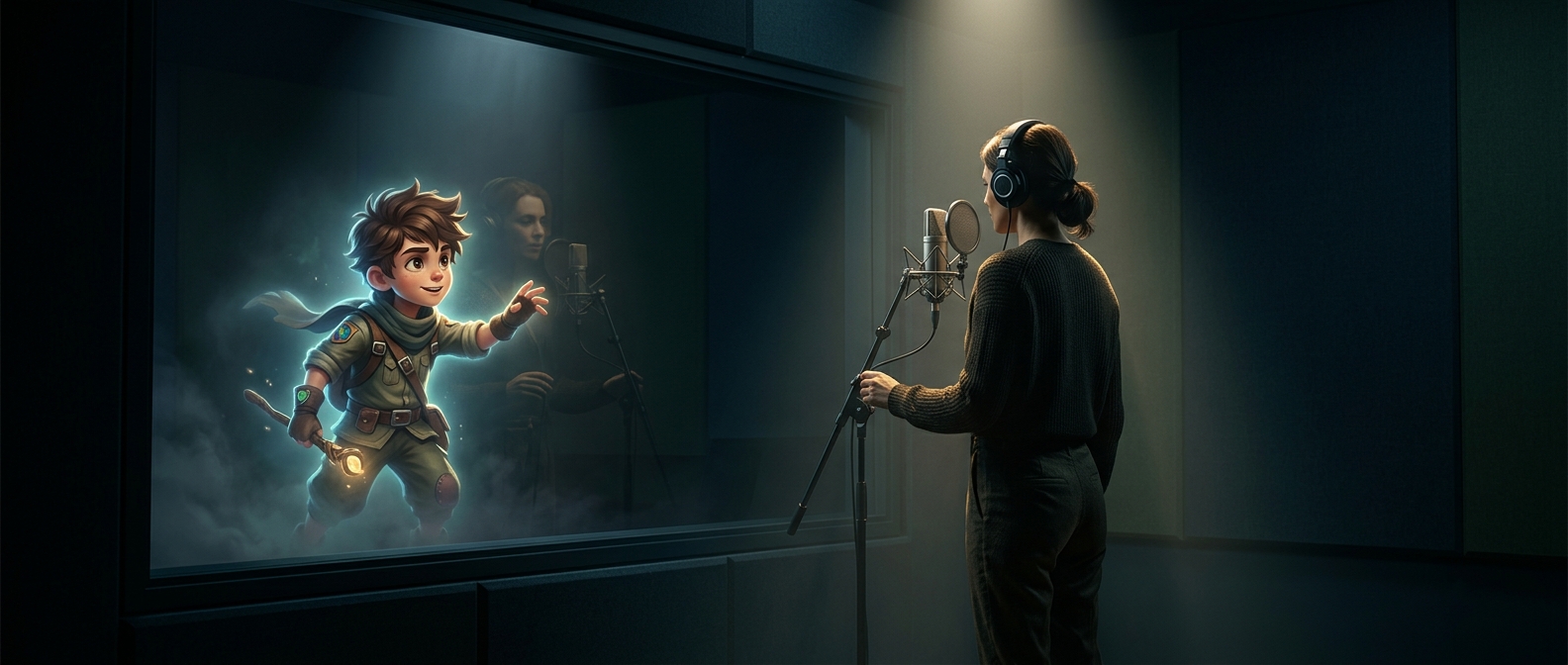
How adult performers make a child character sound convincing
A youthful voice is not simply an adult voice pitched higher. Performers shape its rhythm and texture: a child character may speak quickly, stress unexpected words, or let excitement spill into a line. The voice still needs to stay clear enough for players to understand over music, effects, and gameplay.
That balance takes control. An actor may need to sound curious in one line, frightened in the next, and mischievous a moment later while keeping the character recognizable. A skilled performer can adjust those qualities on cue without relying on an actual child’s voice to carry the scene.
Consistency matters after recording
Game dialogue is often recorded in pieces rather than as one continuous scene. Lines may be captured separately and assembled later, so the voice has to match across different emotions, locations, and recording sessions. An adult performer can repeat a vocal choice and respond to direction, helping the character sound like the same person throughout the game.
Casting adults also makes scheduling more manageable when production involves many lines or repeated recording sessions. The practical result is not merely a childlike sound: it is a performance designed to remain expressive, understandable, and consistent wherever the game places the character.