A creature’s voice can begin with a human one
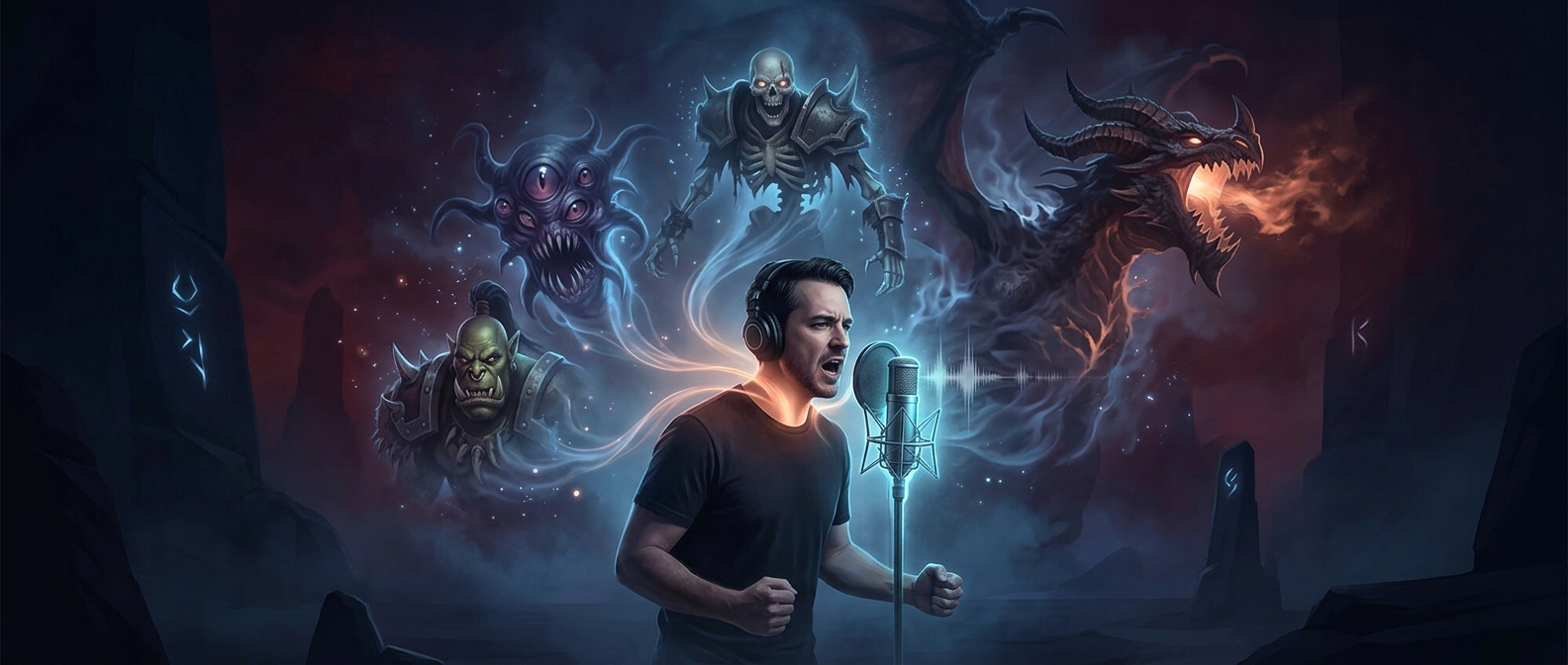
A monster does not need a separate performer for every growl, squeal, or snarl. A voice actor can shape the same voice into very different sounds by changing pitch, breath, and the way the throat resonates. Those small changes can make a vocalization feel heavy, frantic, or animal-like—even when it comes from one person.
That range is why Frank Welker’s work can turn up in creatures as well as familiar animated characters. The connection is not that a raid boss is secretly Scooby-Doo; it is that both kinds of performance draw on a voice actor’s control over unusual sounds.
Why the familiar voice still fits a monster
In a game, players often hear a creature before they get a clear look at it. A rough bellow can signal size or aggression; a quick, high-pitched cry can make a smaller enemy seem nervous or unpredictable. The sound gives the creature character and helps the encounter feel alive.
Recognizing the performer can add a second layer: behind an otherworldly threat is a human voice, deliberately shaped into something strange. One actor’s range can populate a world with many distinct-sounding beings, while leaving players with the faint sense that they have heard some of those vocal textures before.