Why a Bite Can Sound Better Than a Sound Effect
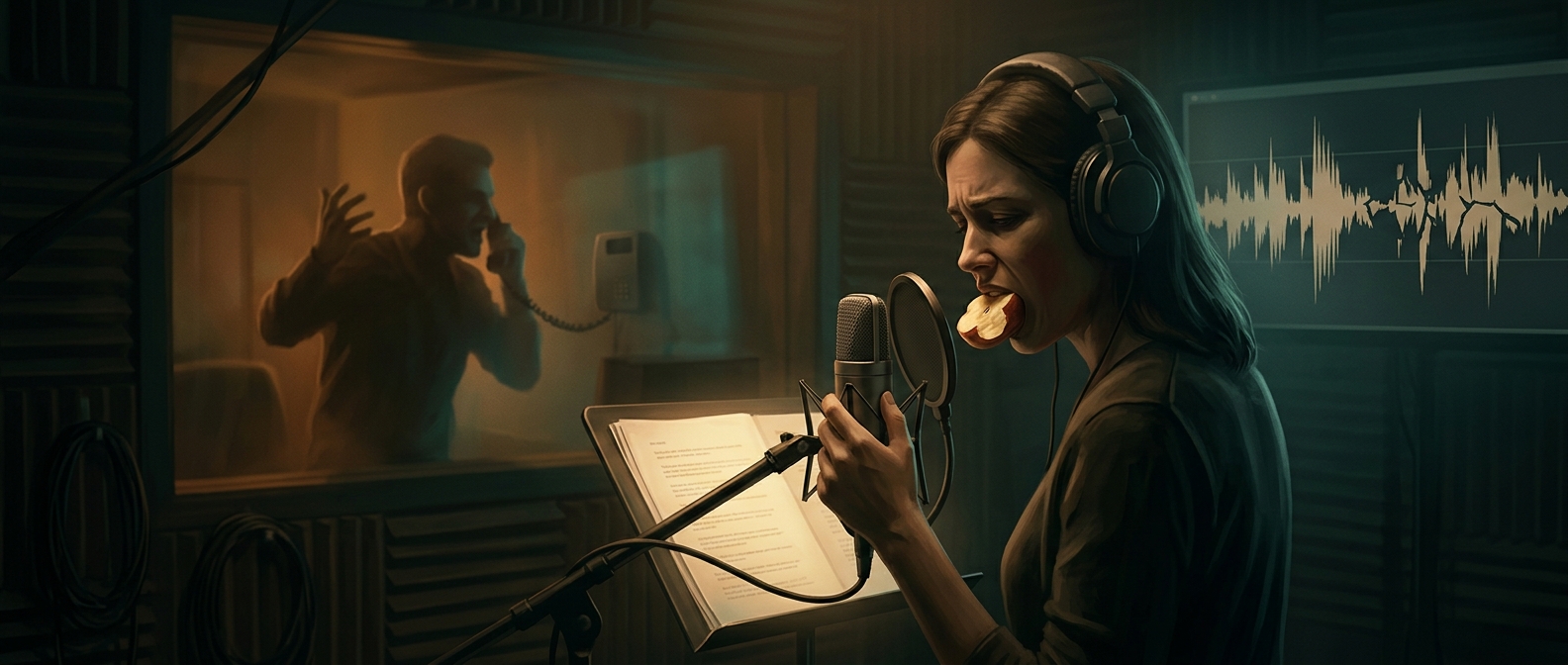
A close microphone makes tiny movements unusually audible. It can pick up the wet click of lips, a crunch, or the shifting of food in the mouth—details that would disappear in an ordinary room recording. Real food also produces irregular sounds: a crisp bite is followed by softer chewing, and each mouthful is a little different. That variation can make a character’s eating feel present rather than mechanically repeated.
The Performance Has to Fit Around the Food
The challenge is not simply making noise. The actor has to preserve the character’s voice and timing while chewing, and the recording must capture the specific texture the scene needs without drowning out the words. A crunchy food may read clearly in a quiet pause; during dialogue, softer sounds may be more useful. The actor can also record the bite or chewing separately, giving the sound team room to place it between lines or adjust its level.
That flexibility matters in games, where dialogue and sound effects are often assembled into a scene after recording. A small, carefully timed crunch can suggest that a character is eating without making every line hard to understand.