A cup turns airflow into an eerie resonance
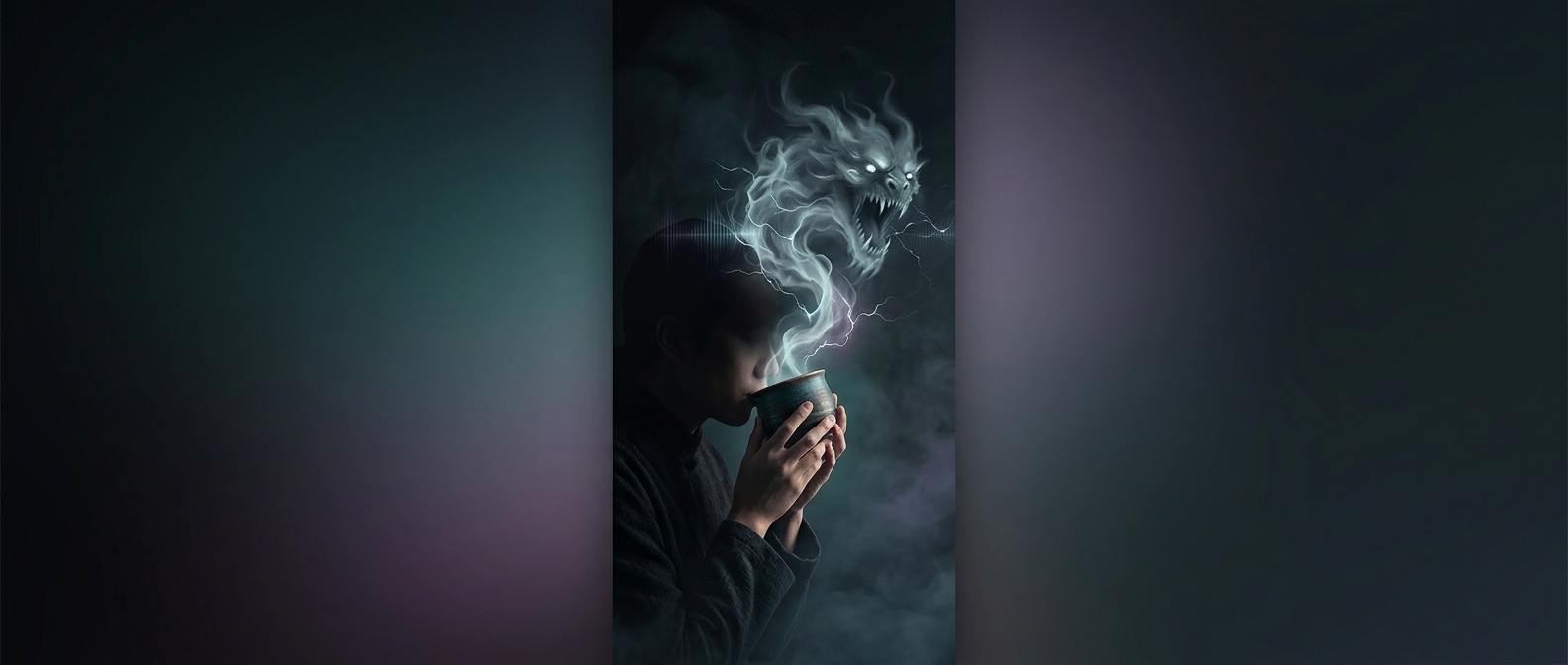
A whisper is mostly quiet turbulence: air moving past the mouth without the strong, regular vocal vibration of ordinary speech. Pointed into a paper cup, that airflow meets a small hollow chamber. The cup reflects and colors the sound, emphasizing some frequencies and weakening others. Its thin walls can also vibrate slightly, adding a papery, muffled edge.
That change gives a recording a useful starting texture. It is no longer simply a person whispering; it has the hollow, close-up quality of breath passing through a space. Small changes in how the cup is held or how the air is released can shift the result, so the designer can record several versions and choose the one that suggests the creature.
Distortion pushes the sound beyond human
Distortion alters a recording’s waveform, often adding roughness and extra high-frequency content. Applied to a soft, breathy sound, it can make the airflow rasp, crackle, or seem unnaturally forceful. The goal is not to make the source louder alone: it is to change its character until the listener reads it as an imagined body exhaling.
That approach suits games, where a sound may need to communicate a creature’s presence before it is clearly seen. A familiar object provides the raw material, while recording and processing supply the transformation. The surprising part is how little the original sound has to resemble a monster: the cup contributes a hollow resonance, and distortion makes that resonance feel threatening.