A Pool Turns a Roll Into a Room-Filling Sound
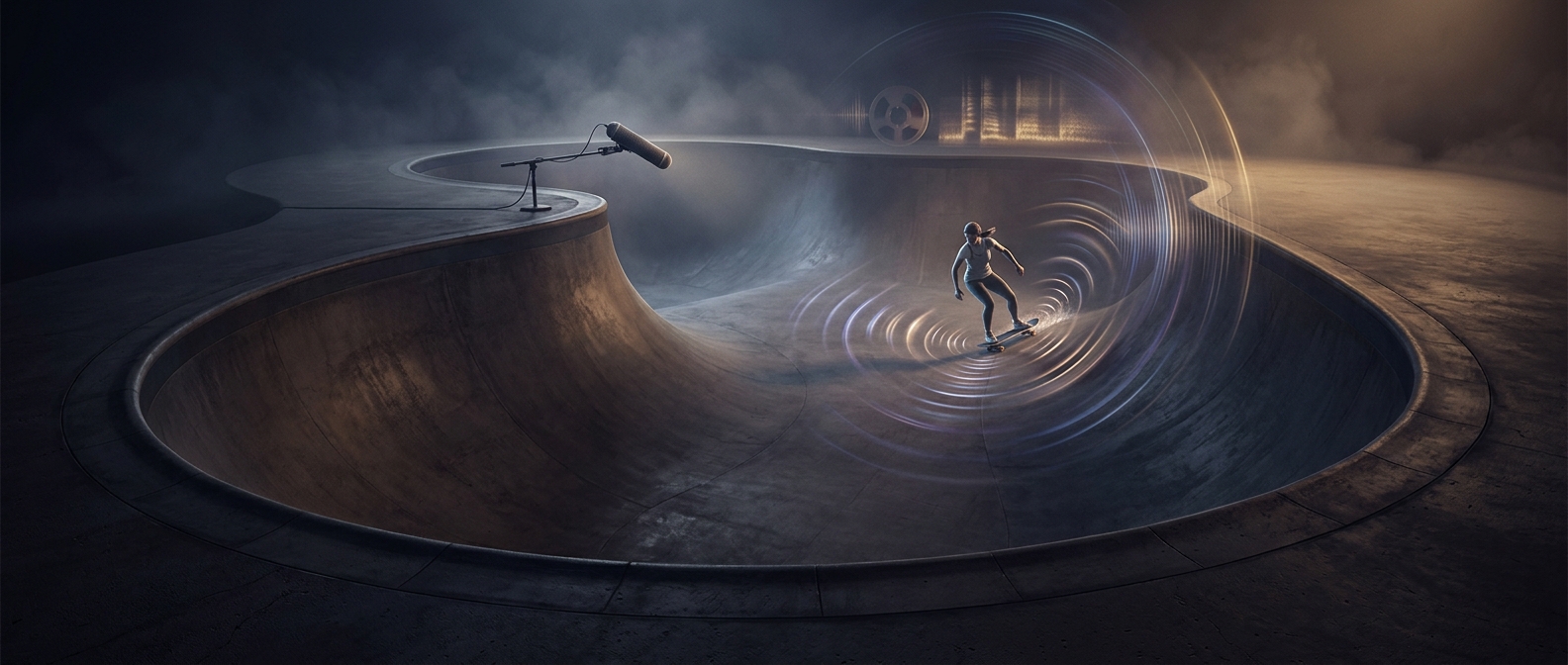
A skateboard rolling across concrete makes sharp, irregular noise: wheels chatter over the surface, while the board and trucks add clacks and scrapes. In an empty swimming pool, those sounds do not simply disappear into open air. The hard concrete walls bounce them back, layering quick reflections over the original noise. The result is a hollow, resonant quality that is difficult to reproduce by recording a skateboard on an ordinary flat stretch of pavement.
Why Record the Real Space?
A sound designer can add artificial echo later, but an actual pool shapes sound in a more complicated way. Its curved basin sends reflections back from different directions and at different times, blending the wheel noise with the space around it. That gives a recording a sense of physical scale: the skateboard seems to move through a bowl, not just across a surface.
The recording also preserves the small variations that make the sound convincing. A wheel’s contact changes with the concrete and the rider’s movement, so each roll and scrape has its own texture. Capturing those details in the setting helps the sound feel connected to the action rather than like a generic effect layered on afterward.
The Space Becomes Part of the Performance
For game audio, this is useful because a familiar action can become more vivid through its acoustic setting. The pool is not just a backdrop for the skateboard; its shape and hard surfaces contribute to what the listener hears. Even without seeing the scene, that hollow echo can suggest a broad, empty basin around the board.