Why a towel can sound heavier than it is
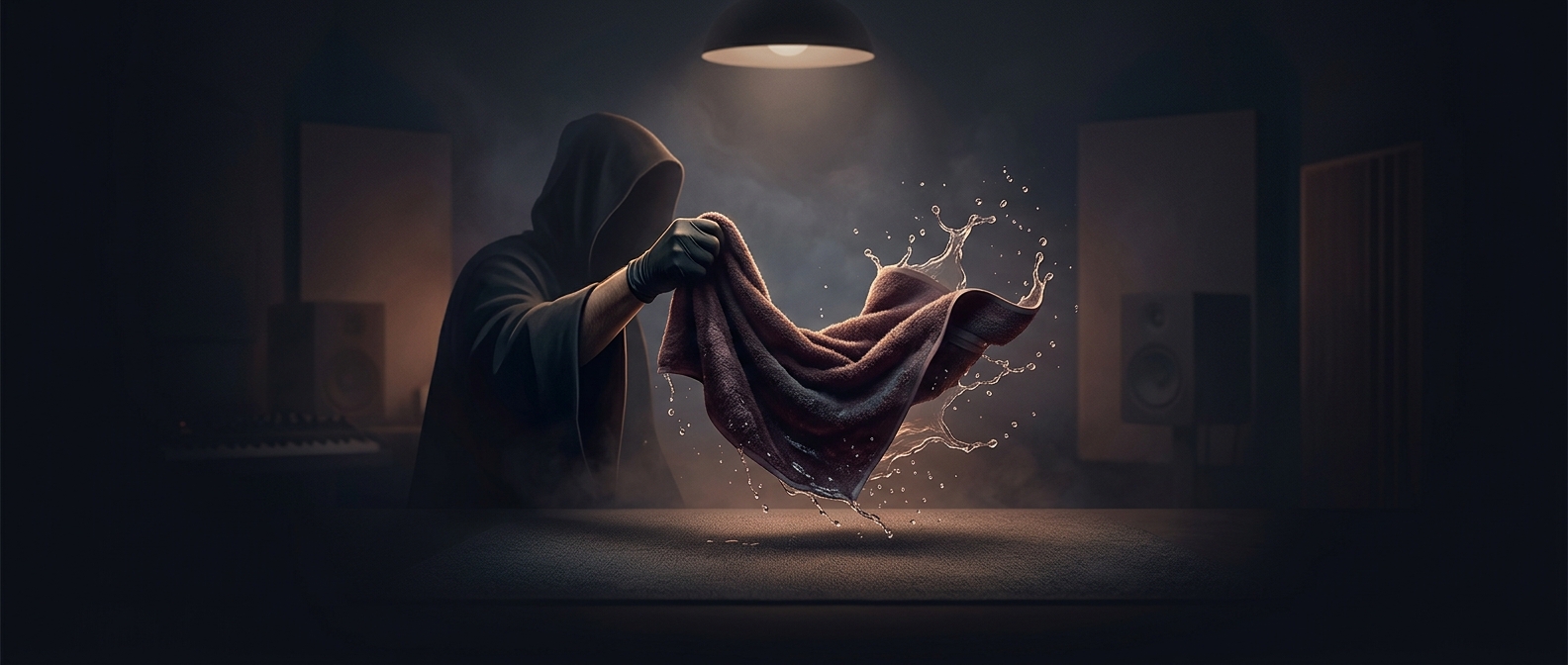
A body hitting pavement is not one neat noise. The ear hears a quick attack—the instant of contact—followed by a lower, softer burst as the body’s weight settles. A bare slap can sound too sharp and papery; a towel soaked with water moves and lands with more mass, producing a broader, damped impact. The trick is not to reproduce a human body literally, but to make the sound’s timing and texture suggest one.
The performance is part of the effect
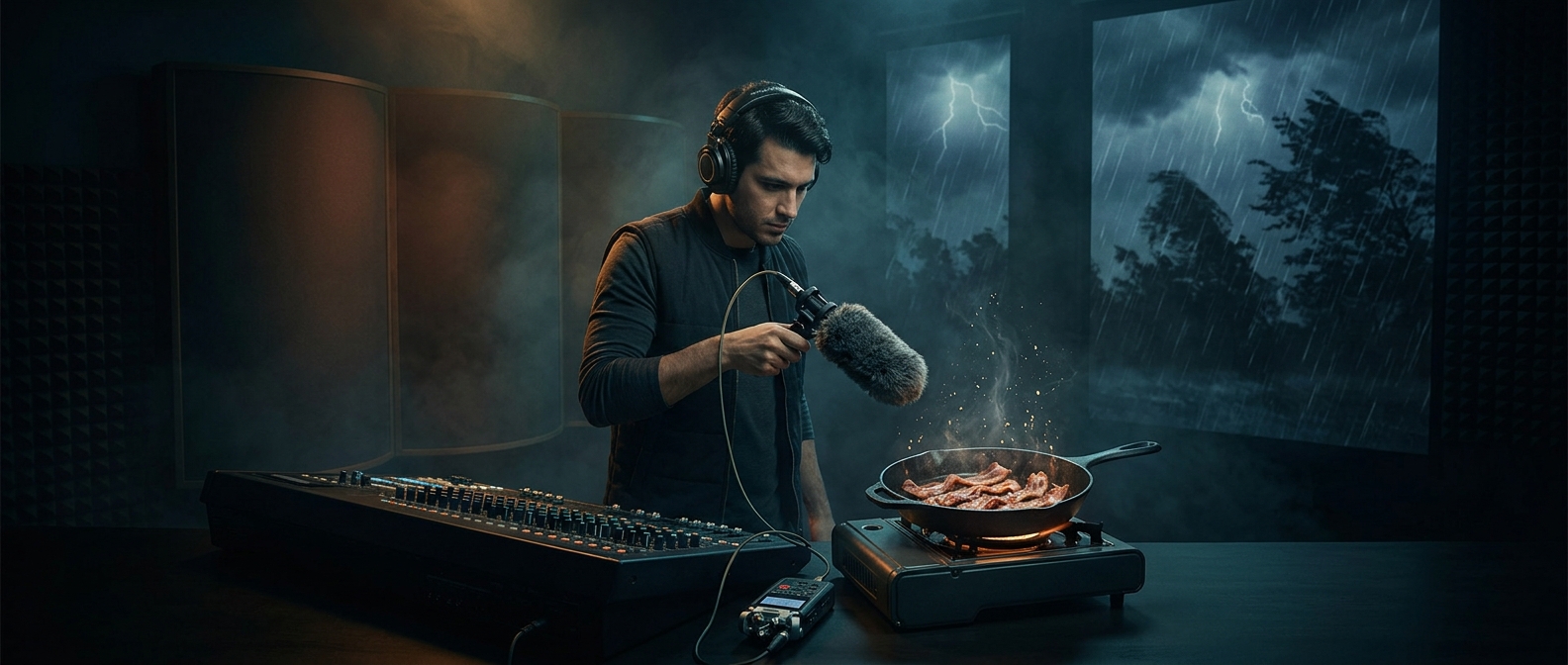
In a Foley studio, a sound artist performs noises to match the action on screen. The artist can change how the towel is folded, how hard it is swung, and what surface it strikes. Those choices alter the result: a compact hit can feel abrupt, while a heavier, slower one can imply a larger fall. Recording the sound in a controlled room also makes it possible to choose the take that fits the scene rather than accepting whatever a location microphone happened to capture.
One impact, shaped for the scene
The towel is a starting point, not a universal pavement sound. A finished mix may combine it with other recorded or designed elements to bring out a sharper contact, a deeper body-weight thump, or the room’s reverberation. In a game, the same idea can be adapted to different surfaces or repeated impacts so the effect responds to what the player does.
That flexibility is why an ordinary bath towel can stand in for a dramatic collision: it gives the sound team a controllable, repeatable impact whose character can be tuned until the audience feels the landing.