A Manuscript That Gets Ahead of Its Author
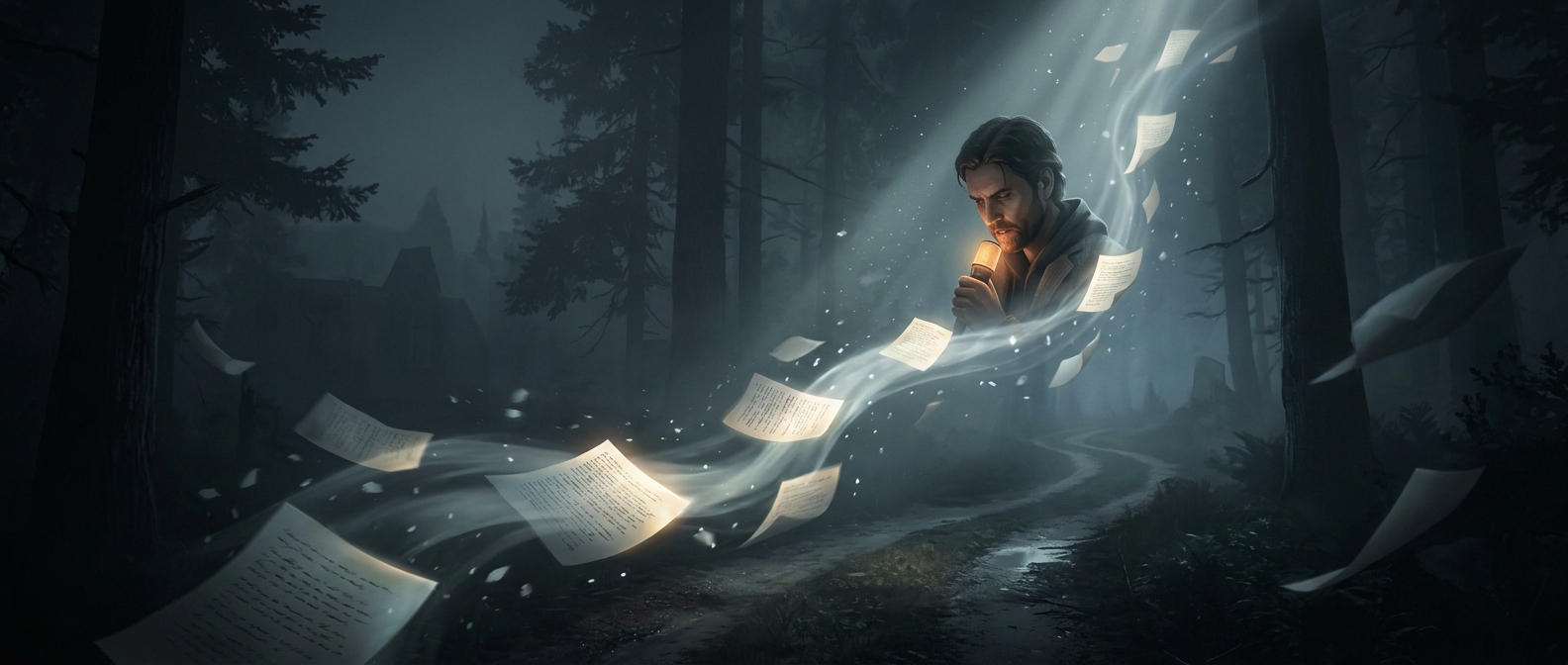
In Alan Wake, manuscript pages are more than scraps of backstory. Alan finds pages from a story he has been writing, and his voice reads them aloud as the player explores. Some describe events that have already happened; others seem to anticipate dangers still to come. The result is an unusual split: Alan is both the person living through the horror and the narrator whose words offer a glimpse of what may happen next.
Turning Story into a Game Clue
The pages let the game deliver information without stopping the action for a conventional explanation. A voiceover can describe a threat while the player is moving through a location, making the prose part of the atmosphere rather than a separate cutscene. When a page points toward an approaching danger, it also changes how the player reads the environment: a dark stretch of road or an empty building may feel less like scenery and more like a warning.
Finding the pages adds a small investigative task to exploration. Players who search more carefully can uncover extra pieces of the story, while the spoken narration helps connect those fragments to Alan’s immediate predicament.
The Uncertainty Is the Point
Because Alan does not simply read a finished account of events, the pages blur the line between prediction and control. Is he discovering what is about to happen, or are his words somehow shaping it? The game uses that uncertainty to make narration itself feel ominous. A page can function at once as a collectible, a clue, and a reminder that Alan may not be the sole author of his own story.