A crunch is a performance, not a recording
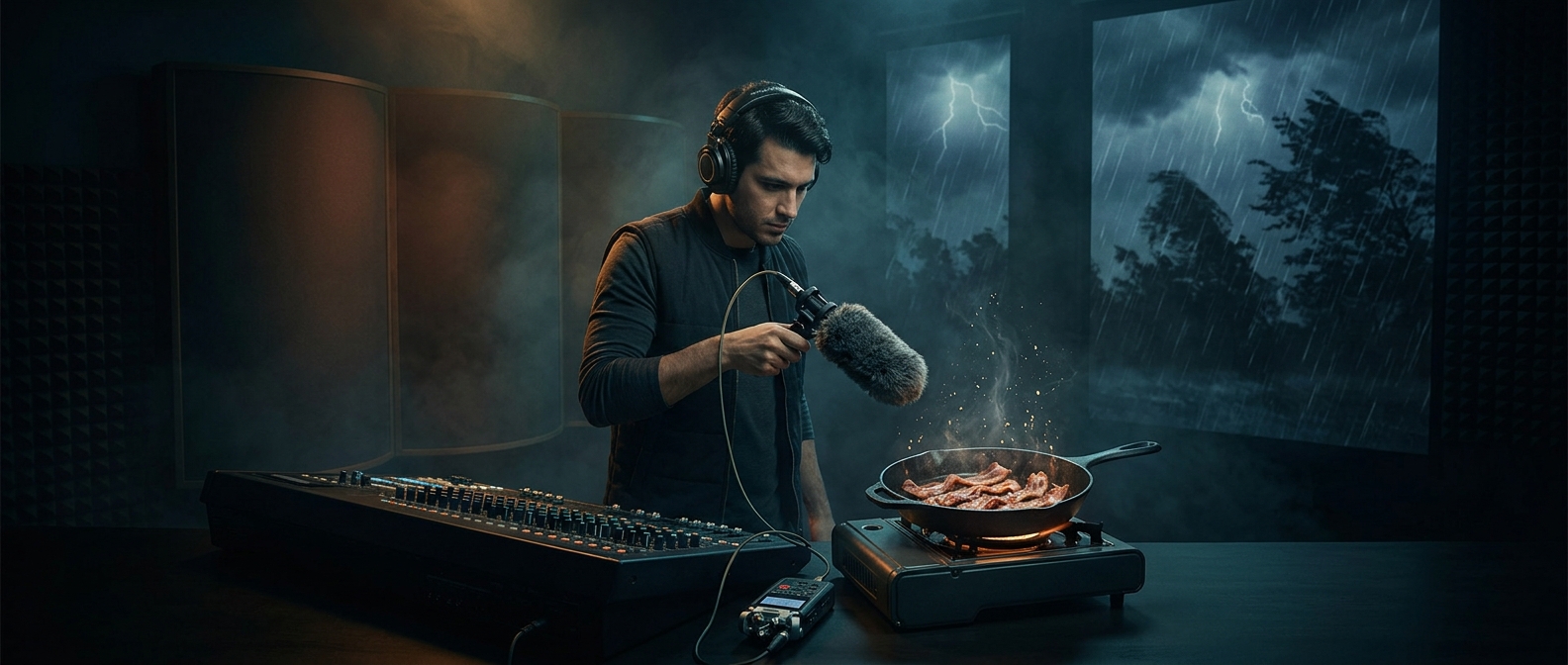
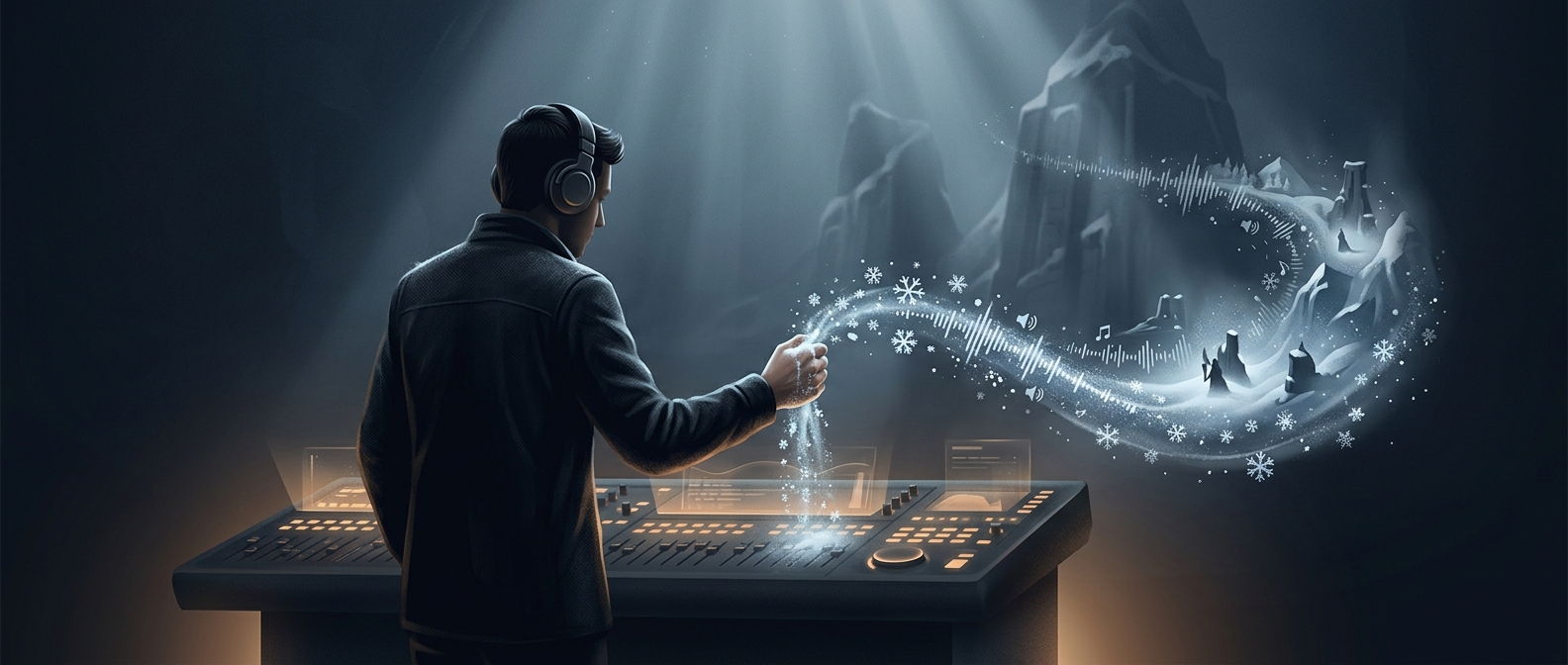
In film sound, Foley is the craft of recreating everyday noises in a studio and matching them to the action on screen. A performer watches the scene and makes each footfall at the right moment; the microphone captures a clean sound that can be adjusted separately from the picture.
For snow, the sound team wants a dry, brittle crunch. Compressing fine powder inside a soft pouch makes tiny particles rub and shift against one another, producing a crisp rasp. The pouch gives the performer control: a light squeeze can suggest a shallow step, while a harder one can make the same movement sound heavier. Changing the rhythm helps distinguish a careful footstep from a sudden stomp.
Why not just record snow?
Real snow does not make one dependable sound. Its texture and the pressure of a step change the noise, and an outdoor recording may also capture wind, traffic, or other unwanted sounds. A studio substitute is easier to repeat, which matters when a scene needs several matching takes or the footsteps must line up precisely with an actor’s movement.
The result is not a literal sample of a boot on snow; it is a deliberately shaped cue. A small change in pressure can make a character seem cautious, burdened, or in a hurry—so the crunch helps tell the story, not just locate the scene.