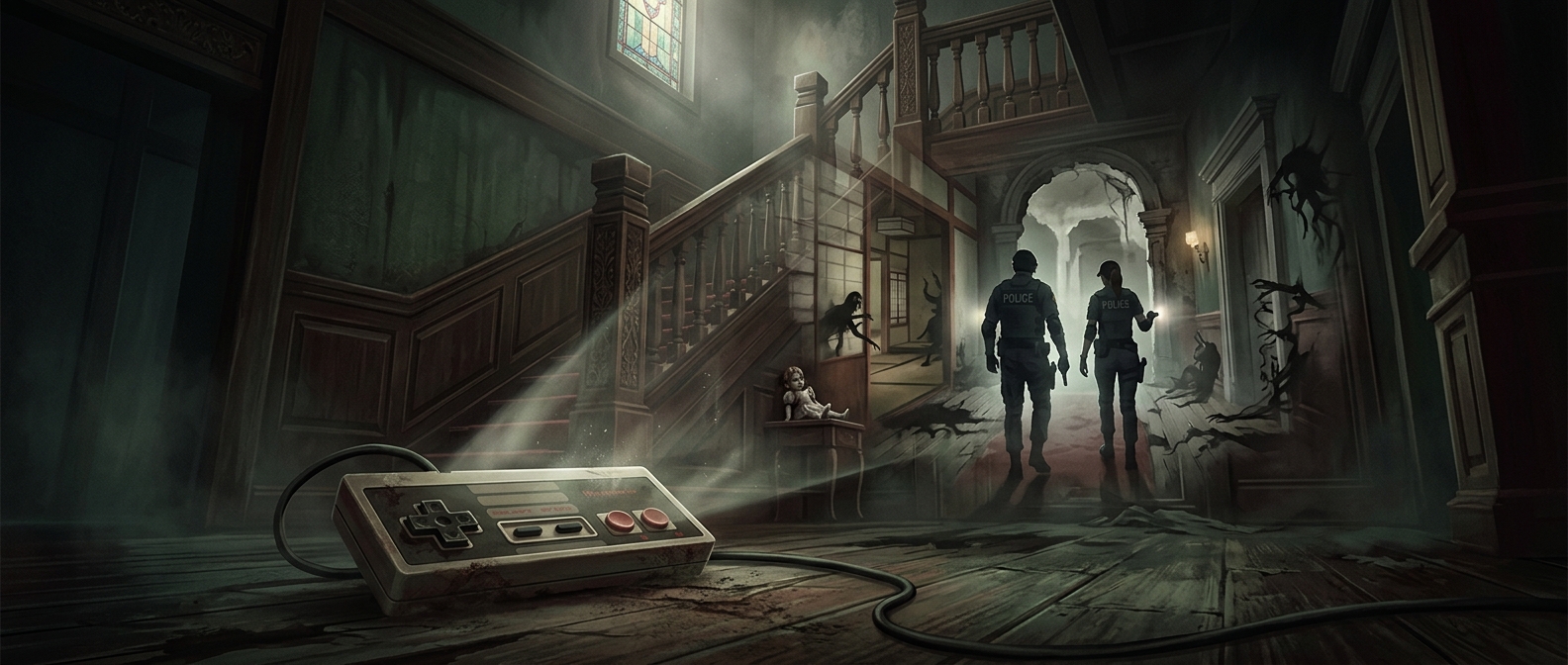
Why Resident Evil’s English Dialogue Sounds So Strange
The original Resident Evil was developed in Japan and then given an English-language script and voice track for release abroad. That localization—the work of adapting a game for another language—was handled under tight constraints. English dialogue was recorded quickly, with inexpensive, non-union performers, leaving little time or money for repeated takes and careful direction.
That matters because voice acting is not just a matter of pronouncing the words correctly. A performer needs to understand what a character means, where the emphasis belongs, and how a line fits the scene. If the script is awkward and the director cannot judge the subtleties of English, a technically complete recording can still sound stiff, oddly stressed, or unintentionally funny.
A line-by-line chain of misunderstandings
The Japanese developers were working through a language they did not know well, while the English performers were reading dialogue that could be unnatural even before it reached the microphone. With limited time to clarify intent or try alternate deliveries, the recording process had little room to catch mismatches between a line’s intended meaning and the way it sounded aloud.
The result was dialogue that often feels disconnected from the scene around it. The famous “Jill sandwich” line is memorable not because it was crafted as a joke, but because its peculiar wording and delivery make a dramatic moment land in an unexpectedly comic way. The production’s constraints turned ordinary localization problems—translation, casting, direction, and retakes—into conspicuous features of the finished game.
When a flaw becomes part of the game’s identity
The awkward performances helped give the original game an unmistakable tone. Players could take its monsters and danger seriously while also laughing at lines that sounded as if no one had quite understood them. That contrast became part of the experience people remembered and repeated, making a rushed English recording one of the game’s most enduring signatures.