A title built around the mansion
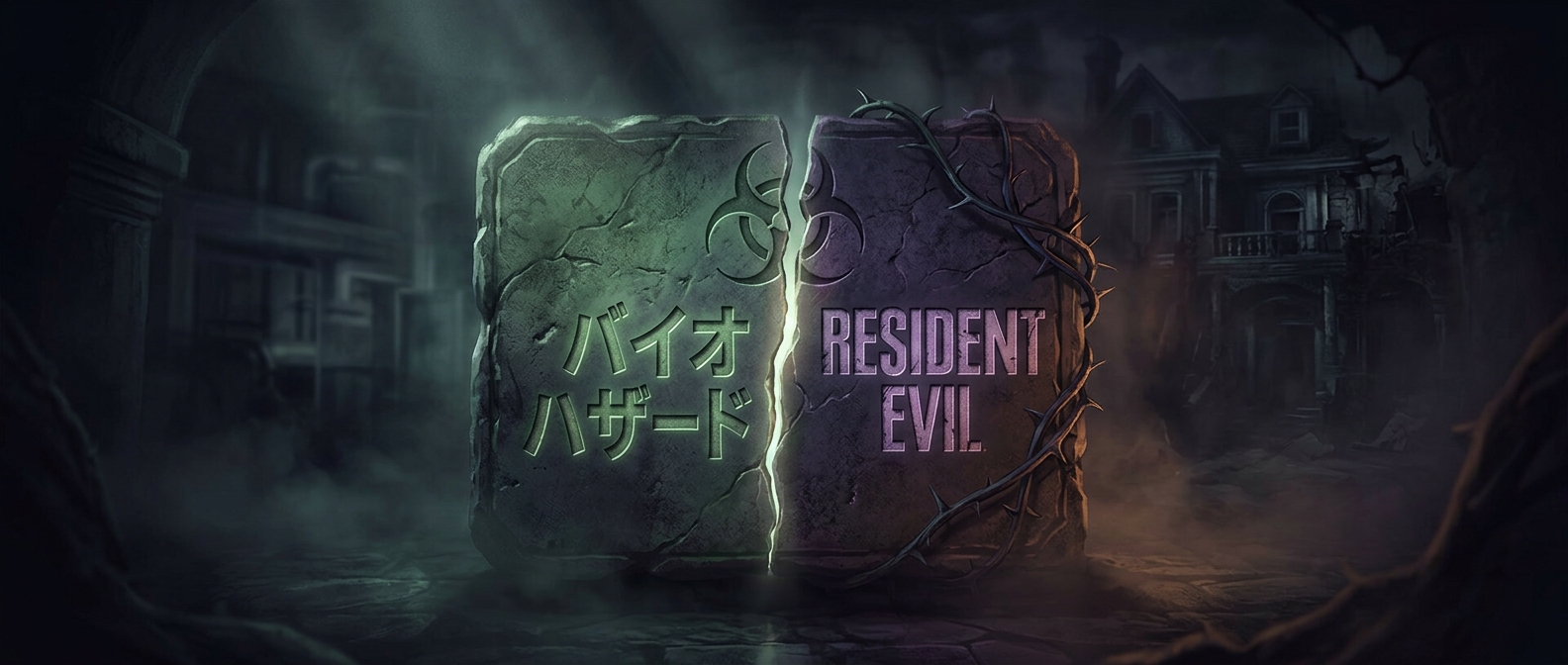
In Japan, Capcom’s game kept the blunt title Biohazard. For the U.S. release, the company needed another name because an American rock band already used Biohazard, creating a rights conflict. The replacement was not a translation: Resident Evil gave the game a title of its own in the American market.
The new name fit the story’s setting. Much of the game unfolds inside a remote mansion where a rescue team encounters lethal creatures and a threat hidden within the building. “Resident” suggests something that lives or remains in a place; “evil” makes the mansion itself feel like more than a backdrop. The title turns the house into part of the menace.
A regional rename that became the series name
The two titles point to the same danger from different angles. Biohazard foregrounds a biological threat, while Resident Evil emphasizes the sinister place and atmosphere surrounding it. That shift helped give the U.S. release a memorable identity without changing the game’s premise.
As the game grew into a series, Resident Evil became the name familiar to players outside Japan, while Biohazard remained the Japanese title. A rights problem at the naming stage thus left the franchise with two enduring names—and with one of them especially well suited to a horror story that begins behind the doors of a mansion.