Acting Against an Unfinished Scene
In many animated productions, dialogue is recorded before the finished images exist. The director and actor may have a script and a rough sense of the scene, but not a completed sequence of movements to follow. That leaves a practical problem: an action line still needs a particular rhythm. A character might shout while ducking, pause to aim, or gasp just after landing—and those beats shape how the scene will feel once animated.
Turning Timing Into a Physical Cue
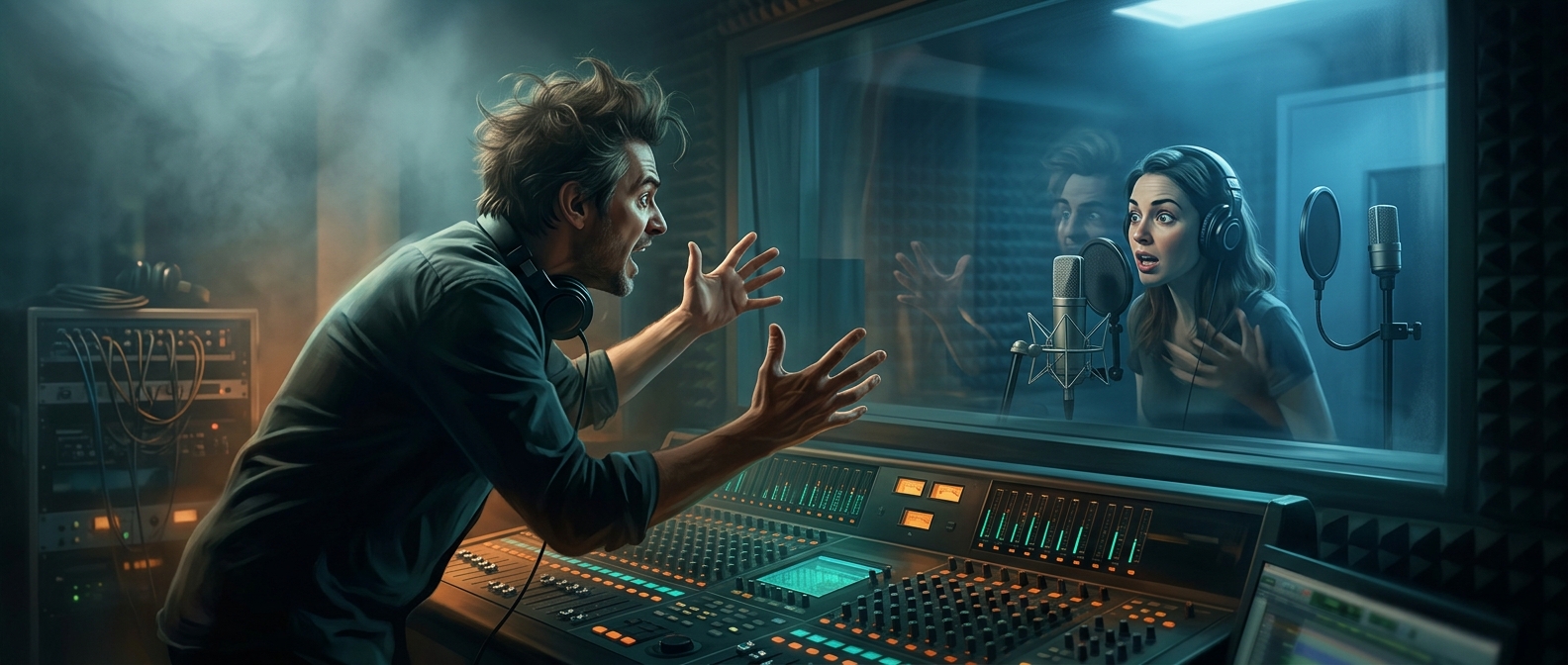
A director can act out the motion to give the performer a readable target. An exaggerated duck or sudden recoil communicates more than “say this line energetically”: it suggests where the voice should tighten, when a breath might break, and how quickly the words should arrive. The gesture is a rough timing map, not a request for the actor to imitate a finished character animation.
That physical demonstration also helps keep action dialogue from sounding detached from the event. A line delivered while imagining a quick dodge will often have a different breath and emphasis from the same line spoken while standing still. Those vocal details give the animation team material to build around later.
A Performance Becomes Part of the Blueprint
After recording, animators can use the actor’s timing, breaths, and emphasis as clues when shaping the character’s movement. The voice does not dictate every pose; the scene still has to be designed and animated. But a clearly marked vocal beat can help align a reaction, impact, or pause with what the audience hears.
So the imaginary laser is doing useful work: it gives everyone in the room a shared event to play, even before there is anything on screen to dodge.