Why a line can fail once it is spoken
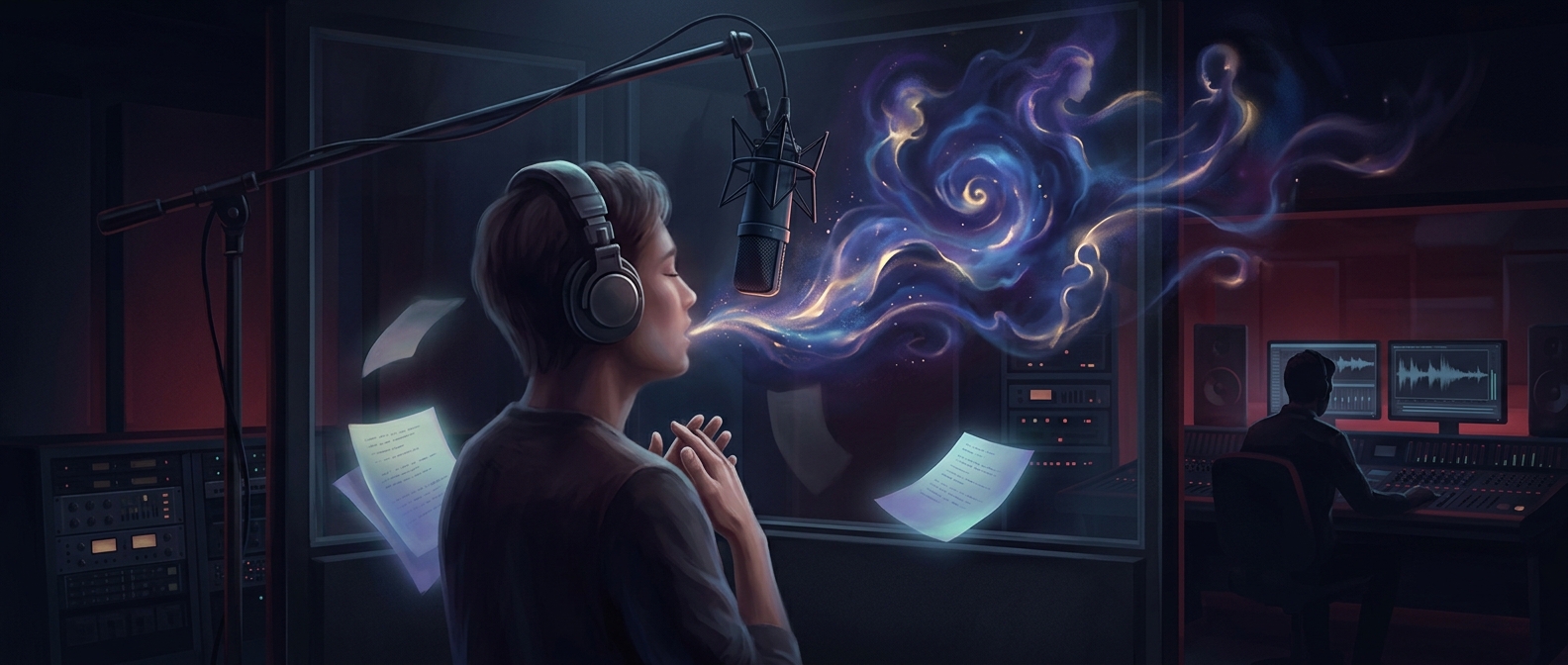
A script is read silently, but a game line has to work at the speed of speech. A sentence that looks clear on the page may feel stiff in an actor’s mouth, put emphasis on the wrong word, or take longer to say than the moment allows. In a booth, those problems become audible: the actor may stumble over a phrase, run out of breath, or make a line sound unlike something the character would naturally say.
The performance reveals what the page hides
Recording lets writers and actors test dialogue in the conditions players will actually hear it. A small change—a shorter phrase, a contraction, or a different word order—can make a character sound more spontaneous while preserving the line’s meaning. The actor’s interpretation matters too: a pause or emphasis may expose an ambiguity the writer did not notice while drafting.
Games add practical constraints. A line may need to fit a brief animation, a combat moment, or a pause in player action. If it runs long, players might miss the end while moving or fighting; if it is too short, it may feel oddly clipped. Rewriting on the day can help match the spoken line to the scene’s timing without rebuilding the scene itself.
A quick edit can have a long tail
A spoken change still has to fit the game around it. Writers may need to preserve plot information, character voice, and continuity with lines recorded elsewhere. The revised wording must also work with the performance and any timing already built into the scene.
That is why booth rewrites are often modest rather than wholesale: the goal is to make the line sound effortless while keeping it usable. When the adjustment works, players hear a character speaking naturally—not the sentence being carefully read from a page.