A dialogue chart is a map of consequences
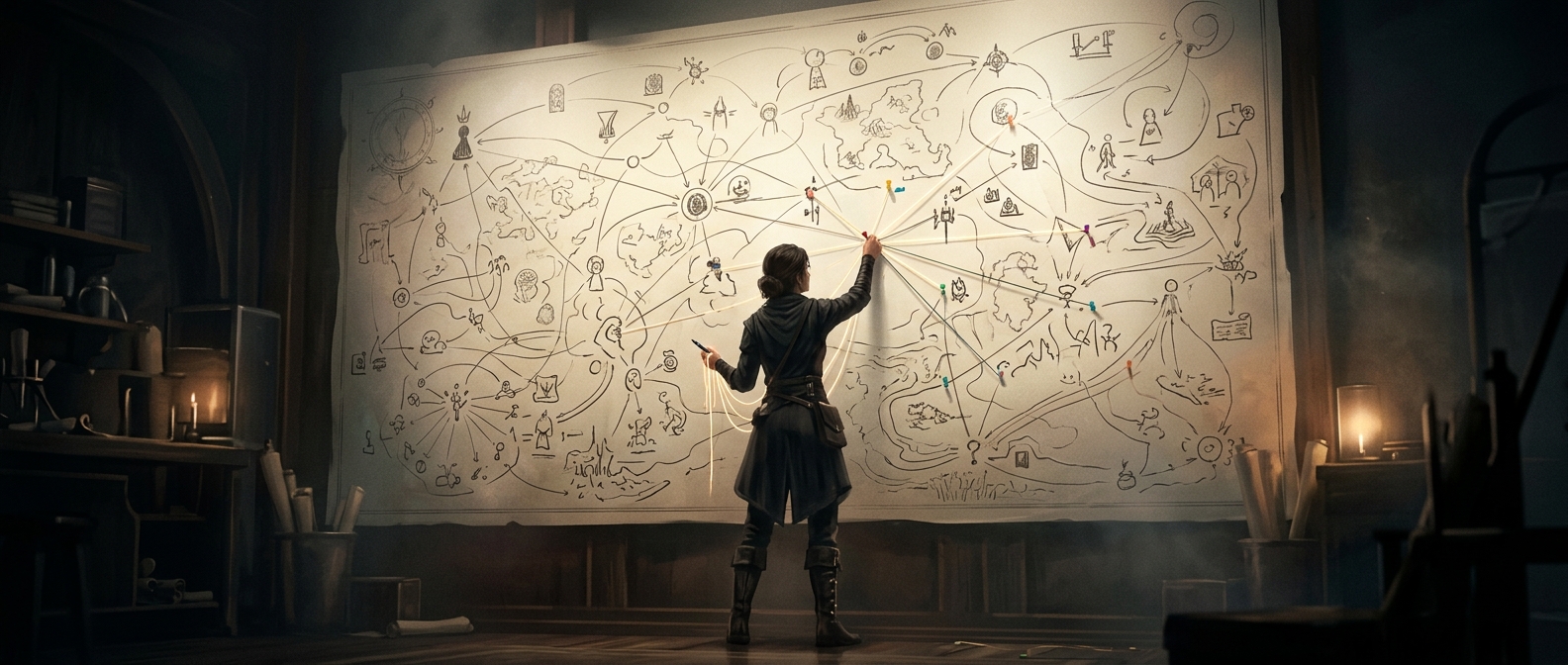
In a branching game, a line of dialogue is rarely just a line. It may be available only after a player has made a particular choice, met a character before, or learned a crucial fact. Writers map these connections as a flowchart: boxes stand for scenes or decisions, and connecting lines show which moments can follow which.
The chart helps expose a problem that is easy to miss while drafting one conversation at a time: a later scene may need to make sense after several different paths. If a character refers to a promise, for example, the writers must know whether every route to that scene includes the promise—or provide different versions of the line.
Choices create continuity work
A branch can split into distinct scenes, then rejoin the main story. Rejoining saves the team from writing a completely separate plot for every choice, but it creates a design tradeoff: the reunion must still feel credible to players whose characters behaved differently.
Games often track remembered choices as state—information the game carries forward, such as whether a character was helped or insulted. Writers can use that information to vary later dialogue. A character’s mood may shift, too, so the team has to consider not only what happened but how the character would now speak. A chart makes those dependencies visible before they are buried in pages of dialogue or implementation notes.
Why put the map on a wall?
A large paper chart gives a team a shared view of the story’s shape. People can follow a route with their eyes, spot an abrupt jump, or see where many branches converge. It is especially useful for discussing structure together, though it cannot by itself capture every line, condition, or performance detail; those still need to be recorded elsewhere.
The practical payoff is consistency: a choice should leave the right traces in the scenes that come after it, even when the plot folds back toward a common path.