Why the Cottage Waits for Its Cue
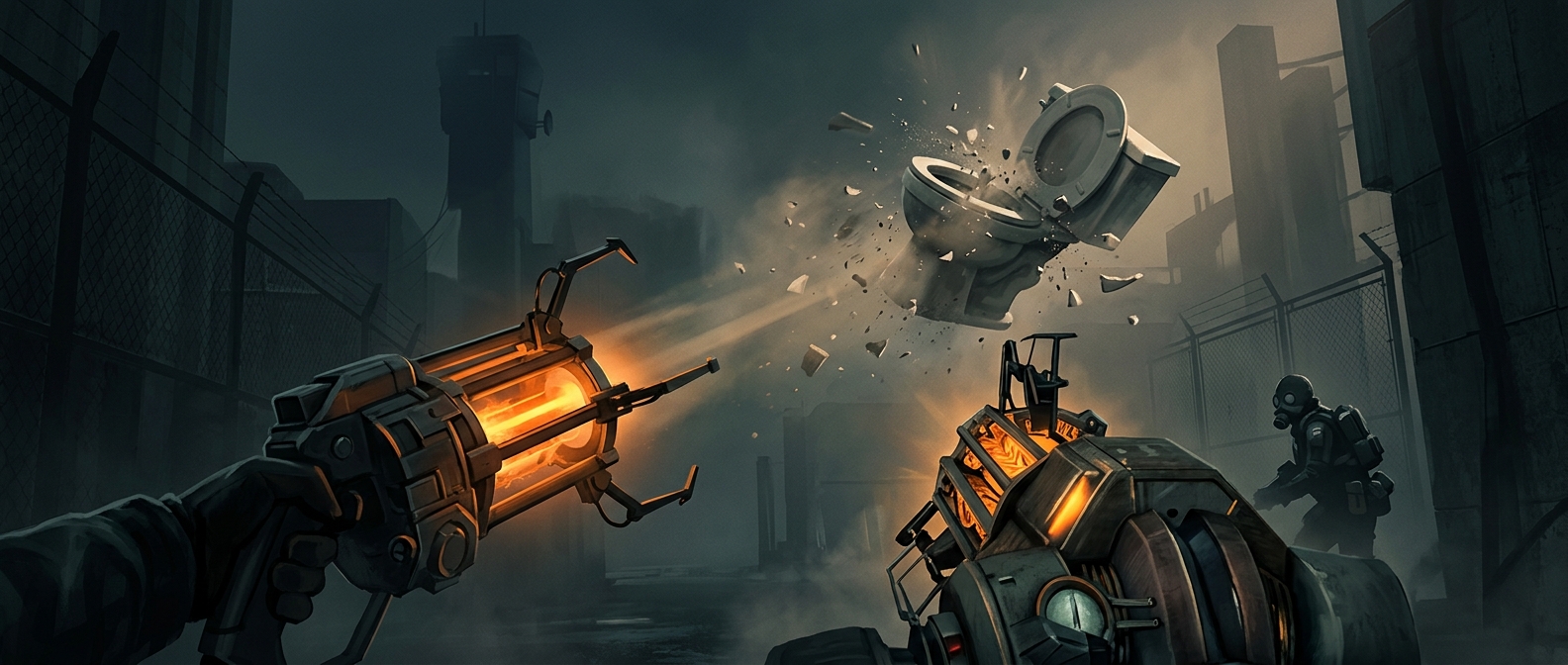
A game can show convincing flames without letting them behave like real fire. The fire may be a visual effect layered over the scene, while the cottage’s walls and roof remain ordinary scenery with no system that can catch fire or collapse. In that setup, a flamethrower can paint the timber with flame and still leave the building intact.
If the story requires the cottage to burn, developers can make that change happen at a chosen moment: after a character reaches a spot, an event begins, or the player completes an objective. That scripted trigger can swap the intact building for a damaged version, start a burning animation, and release smoke and debris together.
What a Scripted Fire Buys the Game
Letting any flame spread freely sounds more realistic, but it gives designers less control. A fire might destroy a landmark before the player sees it, block a route needed for the next mission, or make an important scene play differently on every attempt. A scripted burn keeps the event legible and repeatable: the player sees the cottage catch at the point the designers intended.
A fully simulated fire also needs rules for how heat spreads, what materials ignite, and how burning objects affect nearby spaces. Those rules cost development time and computing resources, and they can create outcomes that are hard to test. For a game focused on a particular story beat, a carefully staged effect may do the job more reliably.
The Tradeoff Behind the Flames
Some games do simulate fire spreading or structures taking damage; others use a mix of simulation and scripted events. The difference is not always visible in the flames themselves. It lies in whether the world is actually changing in response to the player’s actions.
So the cottage’s survival is a clue about the game’s priorities: the flame is present, but the building’s fate belongs to the story’s sequence of events, not to the flamethrower.