A crane made to be seen, not folded
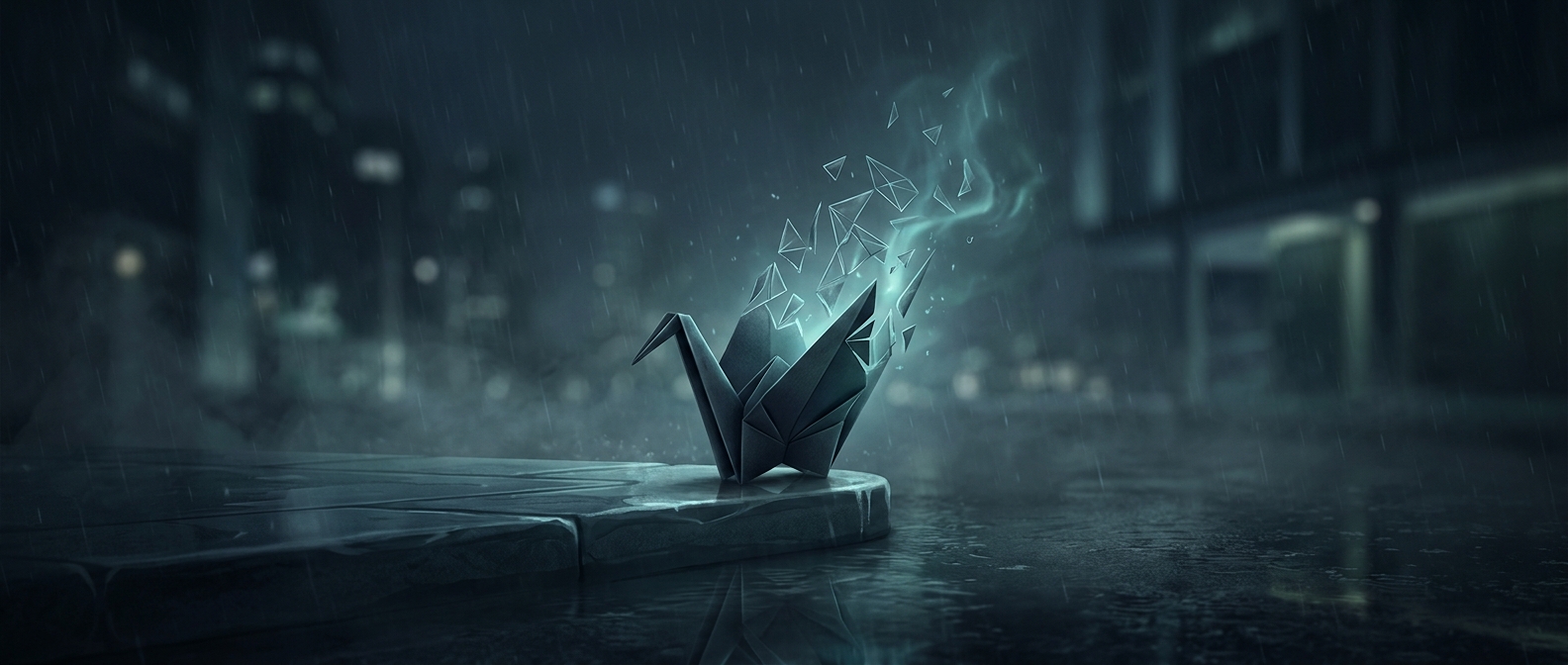
In Heavy Rain, the paper crane looks like a familiar origami figure, but its digital shape is not a single, continuous sheet. Parts of the model overlap: one surface may sit on top of another to create the appearance of a tucked flap or layered fold. That can work perfectly well on screen, where the goal is to show a convincing shape from the camera’s view.
A real crane has to be made by folding one piece of paper through a sequence of moves. Each crease changes how that same sheet lies in space; the paper cannot simply pass through itself or acquire separate overlapping layers. The game model does not preserve those physical constraints, so there is no series of folds that would produce it as shown.
Why the difference matters
A game object is geometry—surfaces arranged to make a shape—not necessarily a blueprint for building that shape in the real world. For a small prop, a designer can create the intended silhouette directly, without ensuring that every surface could emerge from an actual sheet of paper. The result may read instantly as a crane while failing as an origami pattern.
That distinction is easy to miss because the model borrows the visual language of a handmade object. But the crane’s apparent folds are part of its digital construction, not instructions for a human folder: it depicts the result without obeying the process that would make one.