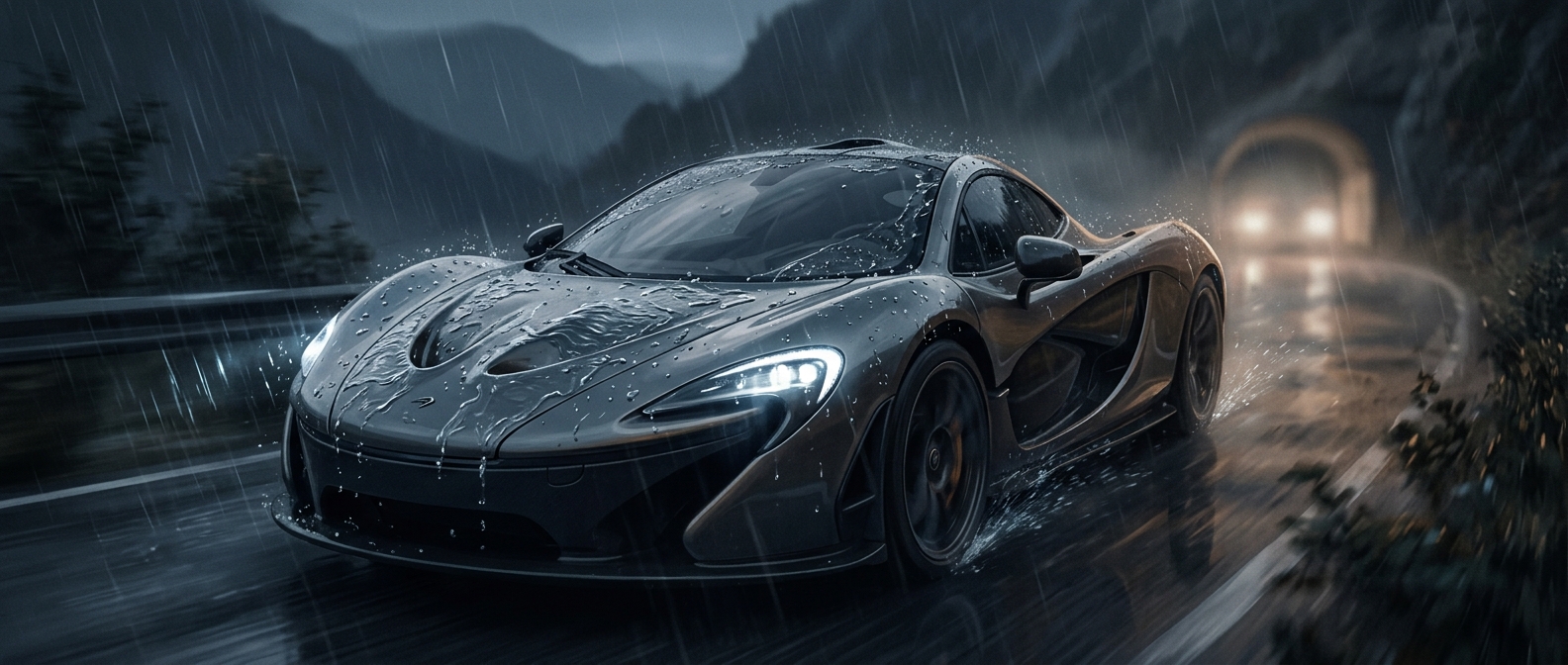
Why rain changes what the driver can see
In Driveclub, rain is more than a visual filter laid over the road. The droplets on the windshield move in response to their motion and the car’s movement, so the glass becomes part of the driving challenge. A drop can slide, stretch, or shift out of the driver’s line of sight instead of staying fixed like a painted effect.
A moving view, not just a wet road
Velocity determines how quickly a droplet travels; wind helps shape its direction; surface tension—the force that makes water cling together—helps determine whether it holds its shape or runs across the glass. Together, those cues make rain look connected to the car’s motion. As droplets cross the windshield, they can briefly blur or cover a useful piece of the track.
That matters because racing depends on reading the road ahead: where a bend tightens, where another car is positioned, and when to brake. The weather effect therefore does two jobs at once. It sells the sensation of driving through a storm, while making visibility itself a changing constraint.
The design tradeoff behind the spectacle
A static layer of water would be cheaper and easier to read, but it would not react convincingly as the car accelerates or changes direction. Simulating individual droplets makes the windshield feel more alive, yet the effect must remain legible enough that players can still judge the course. Driveclub turns that balance into a small piece of racecraft: the rain is scenery, but it can also interrupt the view at exactly the moment a driver needs it.