A fall through a portal is a hidden handoff
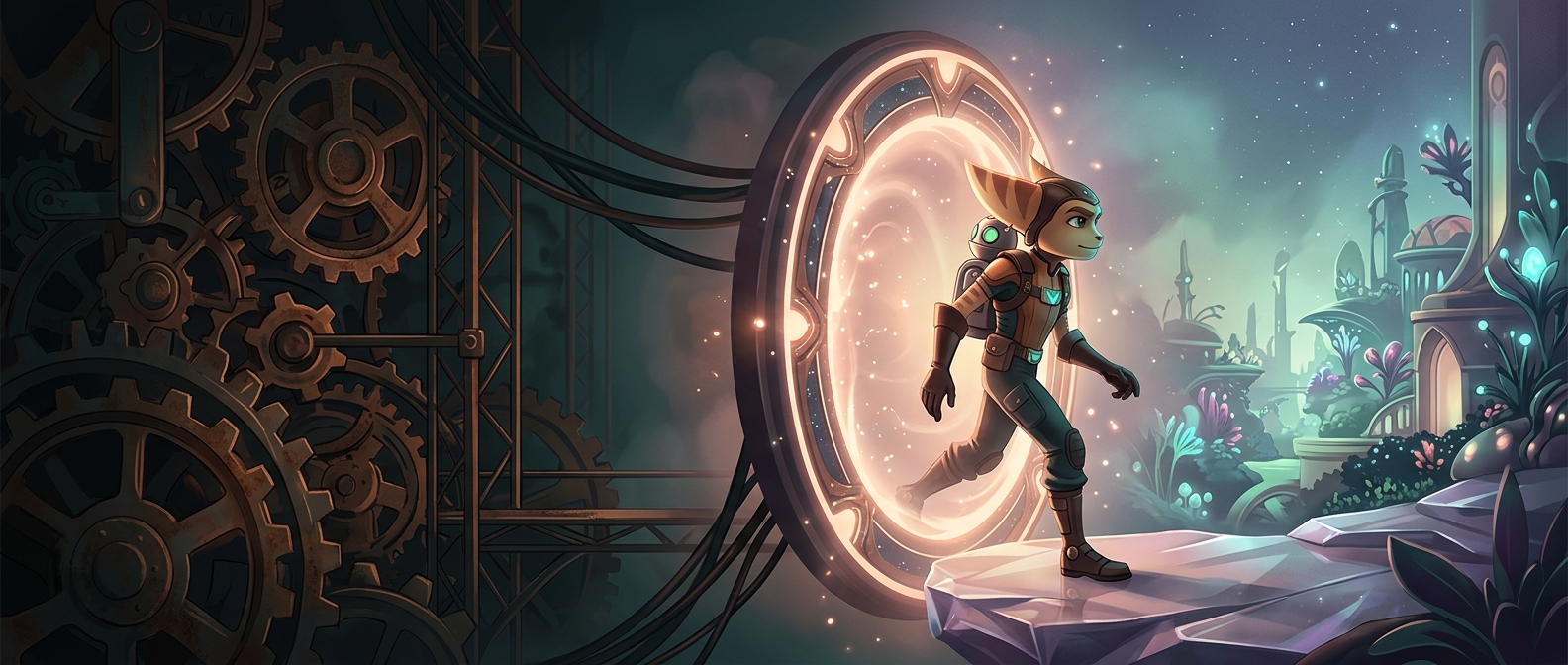
In Ratchet & Clank, a character tumbling through a glowing portal can look like a burst of action. It also gives the game a brief interval to prepare the next area. While the screen is filled with motion, effects, and a changing view, the game can load the scenery and other data the player is about to see.
That matters because a game cannot display an entire world at once. It keeps the information needed for the current moment readily available, then brings in more as the player moves. If the next area is not ready when the camera arrives, the game may have to pause, show a loading screen, or risk a visible hitch.
Motion conceals the wait
A conventional loading screen announces the pause. A portal transition can instead make the time feel like part of the action: the player is falling, the camera is moving, and the scene is changing. The game uses that interval to do work in the background, then presents the next area when it is ready.
It is a design compromise, not a way to make loading disappear altogether. The portal gives the hardware a little time without making the player stop. If the transition is too short for the next area to load, the game still has to manage that delay; the animation only makes the handoff less conspicuous.
The result is that a moment that reads as spectacle also serves a practical purpose: the player keeps moving while the game quietly gets the next destination ready.