The tap is a command, not a force
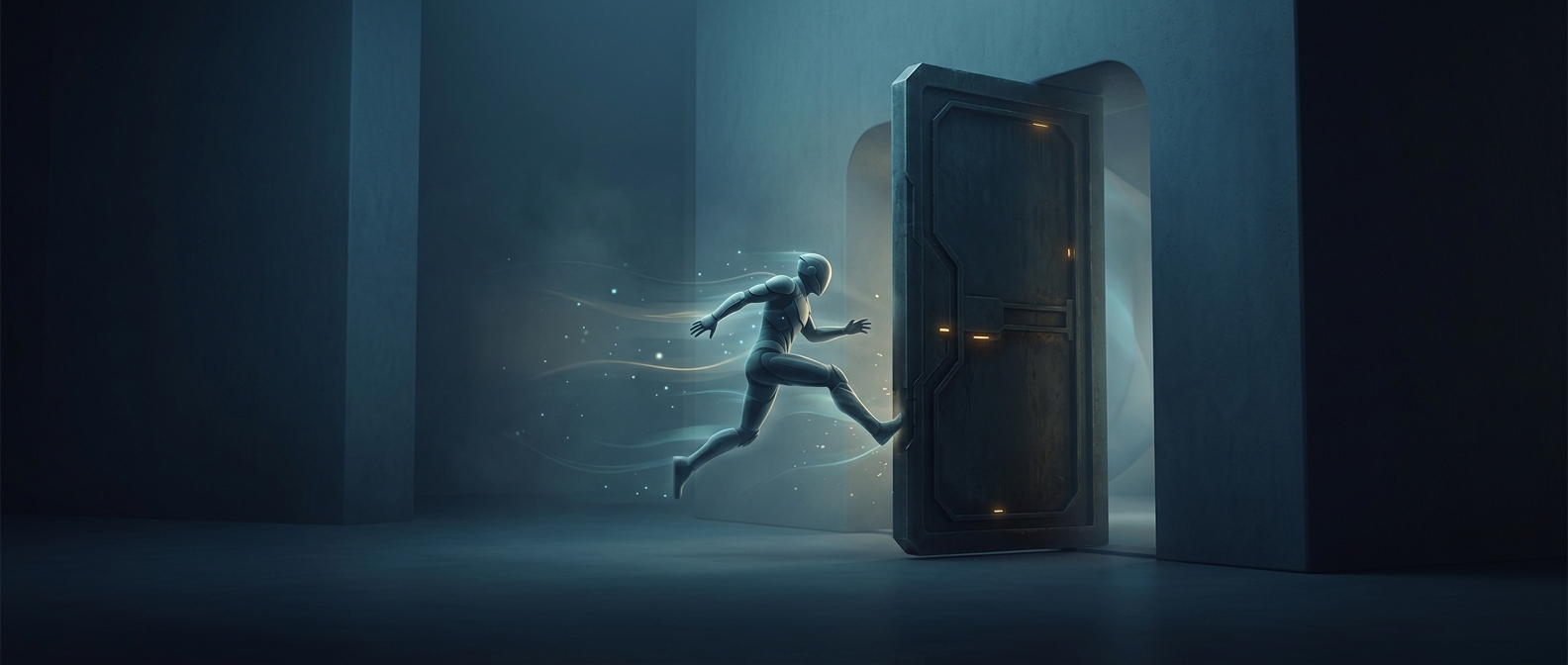
In a game, a quick tap usually tells the door’s animation to begin; it does not simulate a hand delivering enough force to move a slab of oak. The control compresses a complicated physical event—gripping a handle, overcoming the latch, and rotating the door—into one clear action the player can perform at the right moment.
That simplification makes the door legible as part of the challenge. The player needs to know: tap now, and the way opens. A more realistic system might require several inputs or leave the door jammed at an awkward angle, adding friction without adding much to the decision.
Why the exaggeration lands
The comic effect comes from the gap between the tiny input and the oversized result. A heavy door seems to yield to almost no effort, while the runner’s precise timing makes the opening feel like a perfectly arranged escape. The game can preserve the door’s apparent mass in its look or movement while making its response immediate enough for play.
That is a common design tradeoff: simulate the part that helps the moment read, simplify the rest. Here, the important event is not the door’s true weight but the narrow opportunity it creates. One tap turns a bulky obstacle into a brief opening—and makes the runner’s glide through it the punchline.