A landing can be decided by a simple check
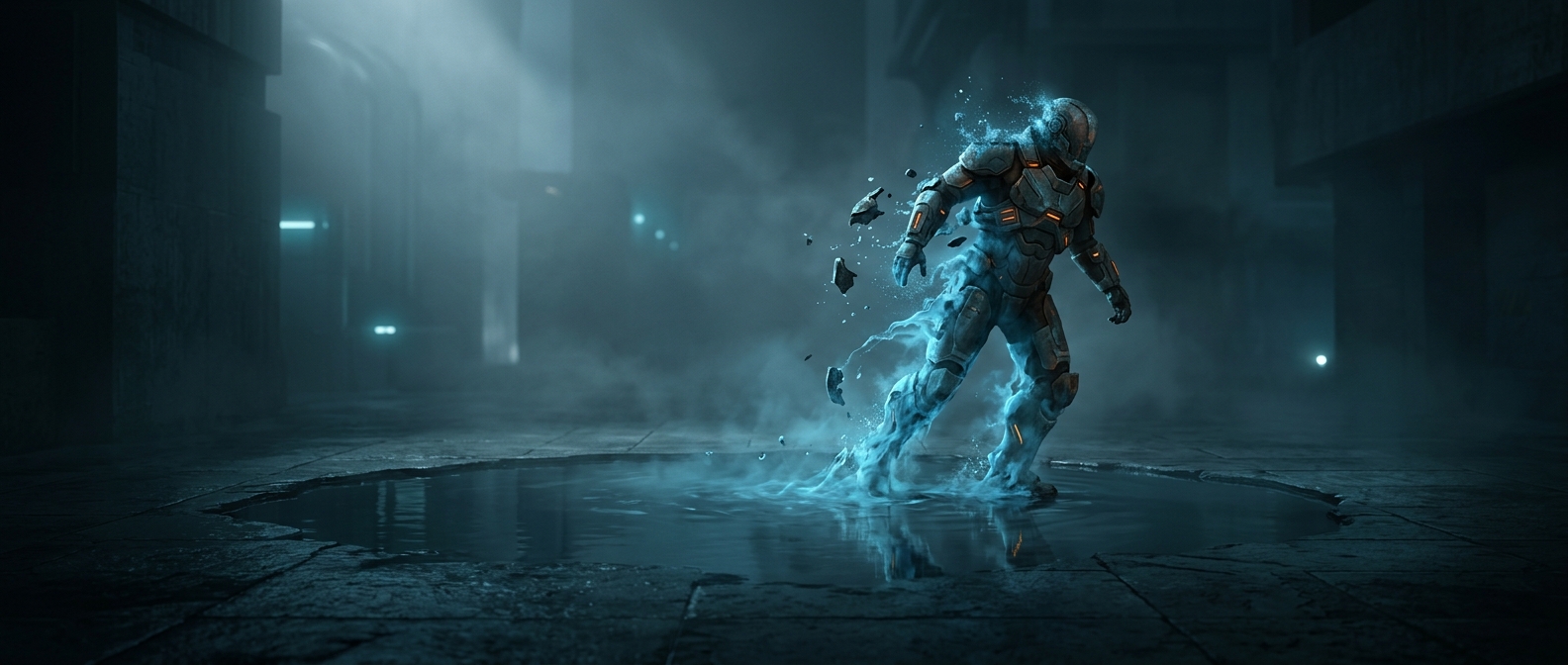
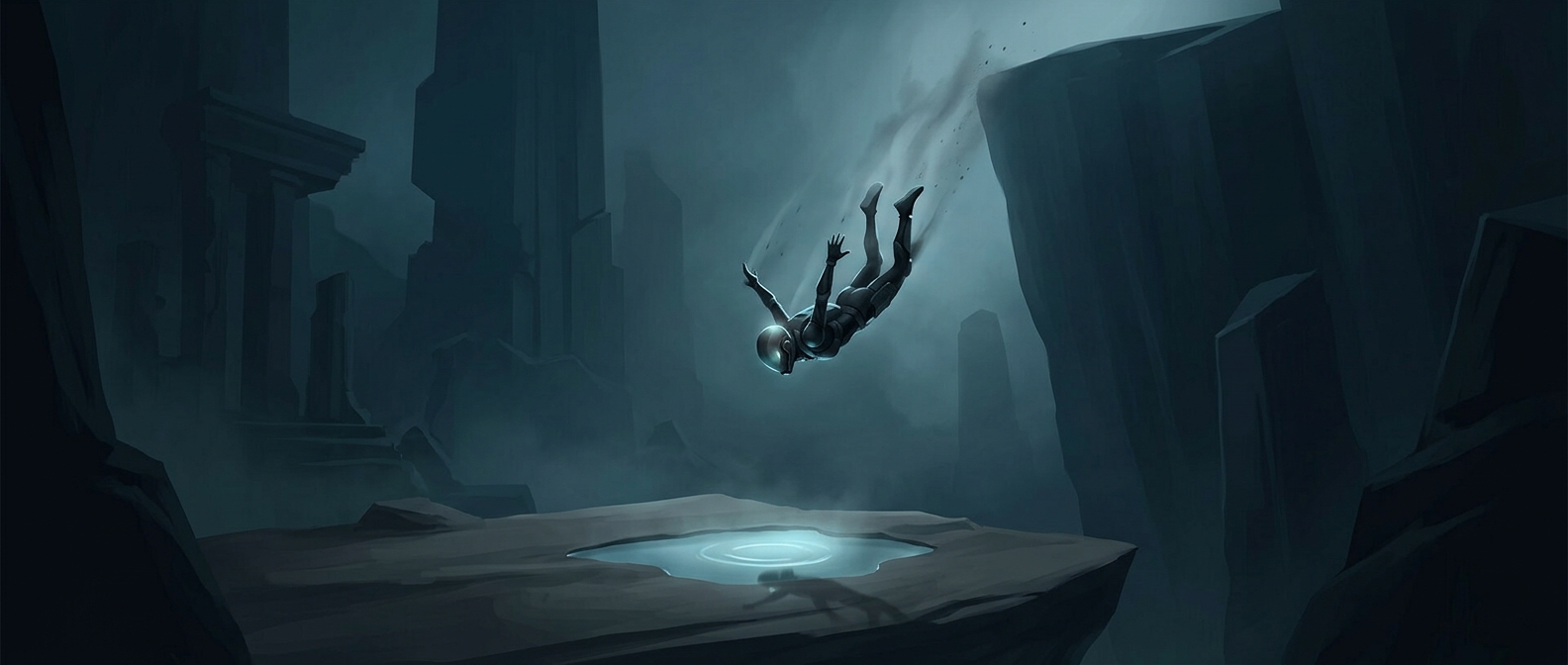
A game usually does not calculate the detailed physics of a person striking a thin layer of water. Instead, it tracks a few useful variables—such as how fast the character is moving and what kind of surface they touch—and applies a damage rule. In some games, touching a water region changes the landing from “dangerous impact” to “safe landing,” even if the water is only a puddle.
That water region may be an invisible volume built into the level, rather than a simulation of the puddle’s depth or surface. The character crosses into it, and the game registers water. The result can look startlingly precise: a tiny target cancels damage that would otherwise follow a fall at terminal velocity, the fastest speed the character can reach while falling.
Why designers accept the shortcut
Simulating water as a real material would require more complicated rules about depth, speed, body position, and impact. A simple surface check is cheaper to build and easier for players to understand: land in the marked water, and you are safe. It also creates a clear challenge, turning a lethal drop into a test of aim.
The tradeoff is that the rule can be exploited—or simply look absurd. A puddle may protect a character because the game recognizes the water category, not because it has enough depth to soften an impact. The safe landing is a property of the game’s rule system, not of the water’s physical behavior.