A fall becomes a recoverable mistake
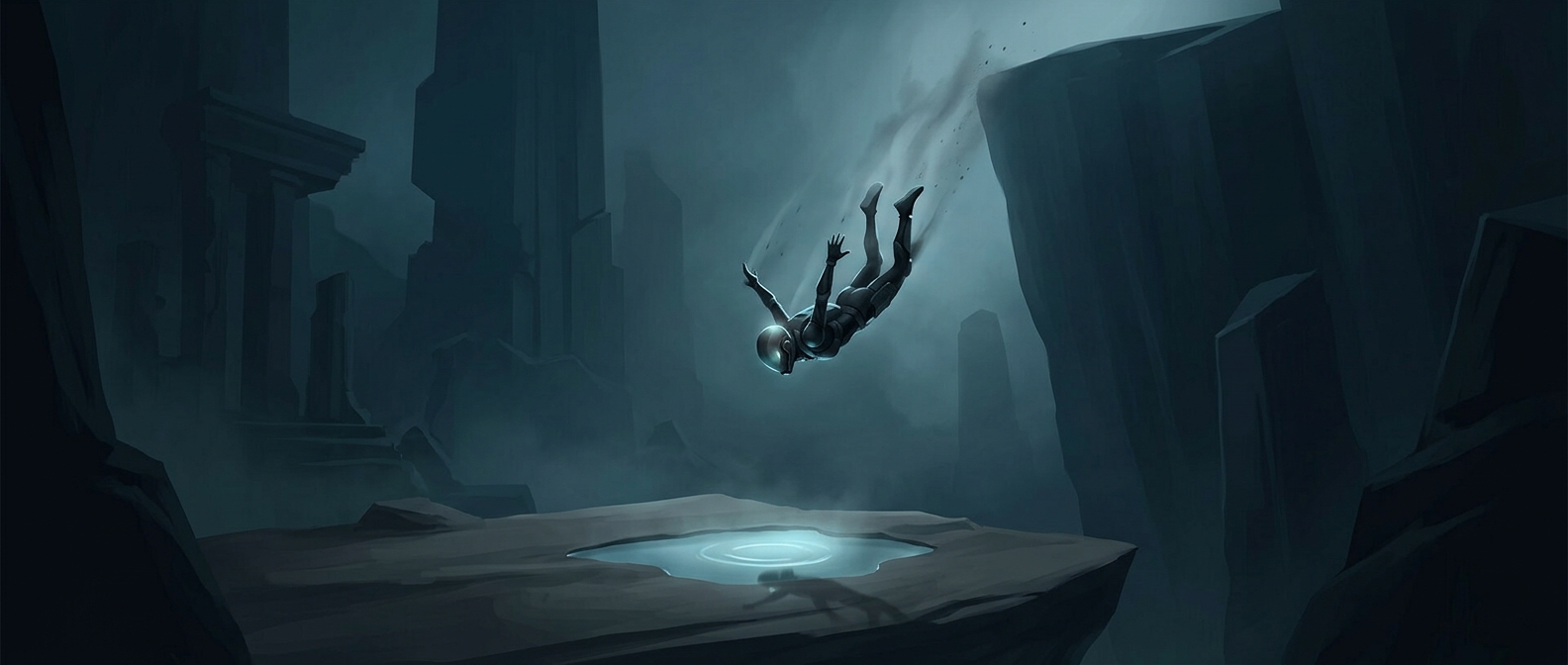
A character that drops below the playable area can end up somewhere the game was never built to support: beneath platforms, outside collision boundaries, or in empty space with no route back. Rather than let the player remain trapped—or treat every such slip as a full death—the game can recognize that the character has crossed a recovery boundary and return them to a safe location.
The fade is doing practical work. It hides the abrupt change from the character’s falling position to solid ground, so the reset feels like a deliberate transition instead of a visible jump across the level. The small health loss then marks the fall as costly without erasing the player’s progress.
A safety net with a price
That balance changes how players explore. A fall is not harmless, so ledges and jumps still demand attention; but it is also not necessarily a restart from the beginning. The penalty gives the mistake weight while letting play continue.
This kind of recovery also protects the game from an awkward failure state. If a player slips through a gap the level design did not intend, the game can restore control instead of leaving them stuck. The useful distinction is between punishing a misstep and making the player recover from it: the health cost supplies the first, while the return to solid ground avoids the second.