Why Ice Changes the Controls
On ordinary ground, a game can make a character stop or turn almost as soon as the player changes direction. Ice calls attention to the difference between steering and slowing down. The character may still respond to the controls, but with less grip: a turn takes longer to take effect, and releasing the directional button may not stop a slide.
Games can model this by reducing the virtual friction between a character and the ground, or create a similar effect with tuned movement rules. Either way, the player’s existing momentum matters more. A quick correction that works on firm ground may come too late on a slick patch.
How Designers Make the Slide a Challenge
Slipperiness is useful because it changes how players approach familiar obstacles without requiring entirely new controls. A narrow platform becomes harder to land on when the character carries sideways momentum; a turn becomes a decision to make early rather than at the last second. Slopes can amplify the effect, while walls, rough patches, or safe stretches give players ways to recover.
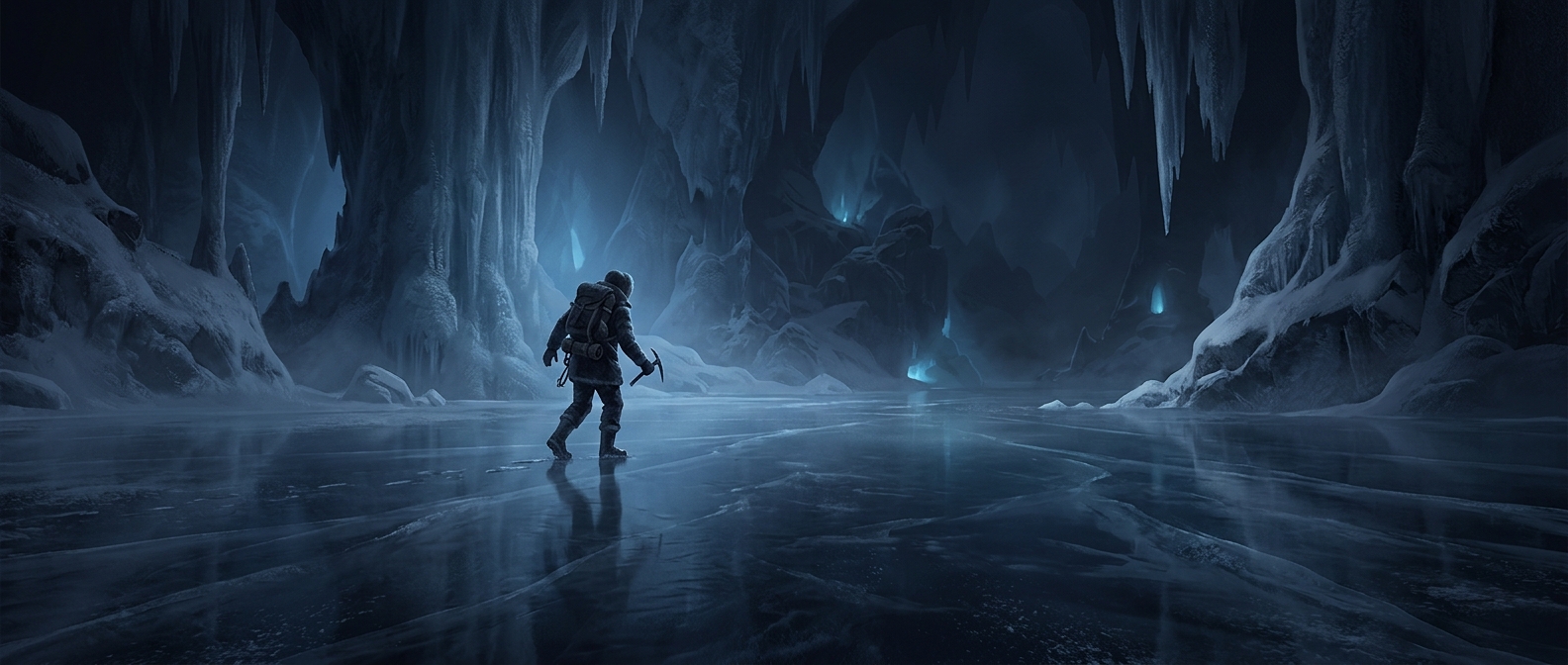
The difficulty depends on how clearly the game signals the change. If a player cannot tell that the surface is icy—or cannot predict how far a slide will carry them—the challenge can feel arbitrary. Visual cues such as a glossy surface or snow-covered ground help set expectations, and a forgiving opening section lets players learn the altered handling before the stakes rise.
That makes ice more than winter scenery: it asks players to plan around momentum, sometimes beginning a turn before they reach the corner.