Why a Blank Domino Can Be a Match
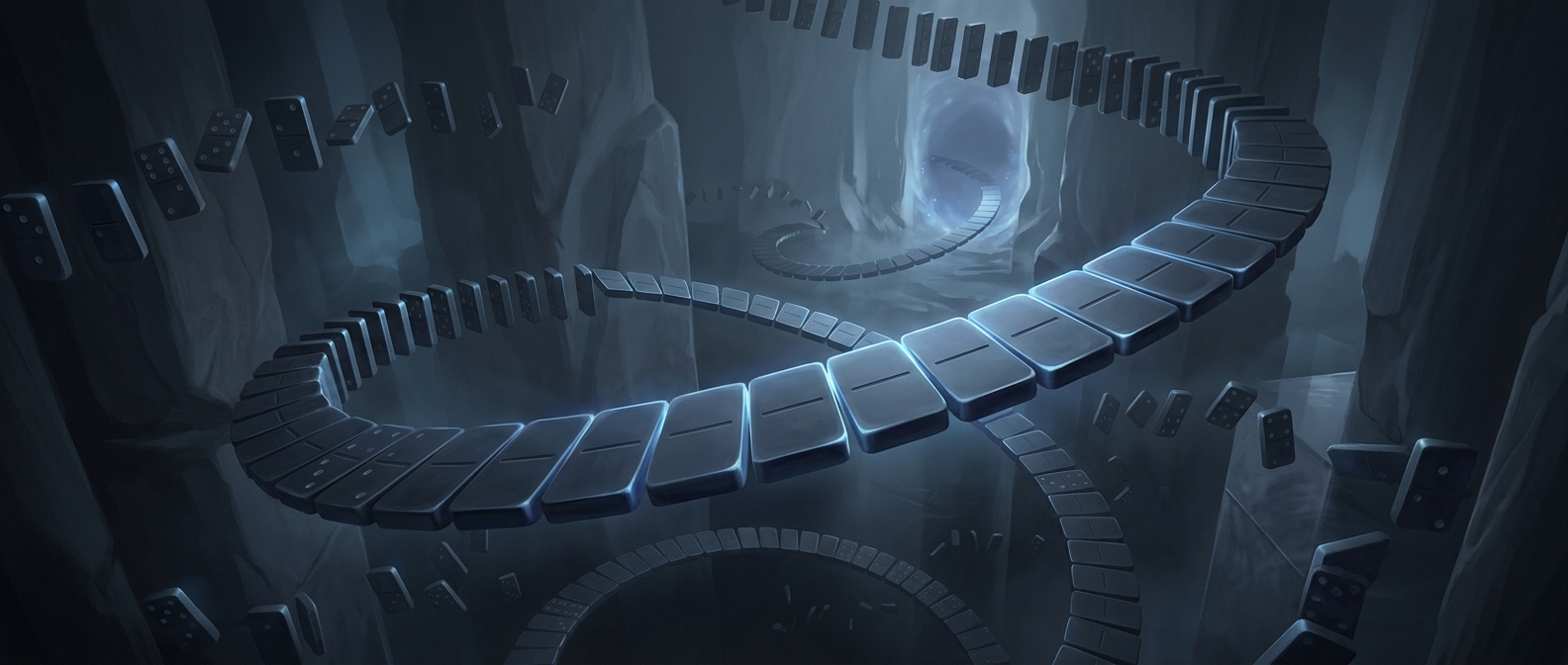
Dominoes are matched by the number of pips—the small dots—on each half. A blank half is treated as a value of zero, not as an unusable space. So when a chain has a blank at its open end, a tile with a blank half can usually be played there; its other half then determines the chain’s new end.
That simple rule makes the blank part of the game’s number system. It behaves like any other value for matching, even though there are no dots to count.
A Zero Can Keep a Turn Moving—or Stop It
A blank can be useful when a player has a tile that fits the open end only at zero. But it can also become a bottleneck: if the chain ends in a blank and a player has no blank half, that player may be unable to play and must follow the game’s rules for passing or drawing.
This gives blank tiles strategic weight. A player may use one to keep a turn going, or hold onto it because it could fit a later opening. The exact consequences depend on the game’s rules, but in many familiar domino games, an empty-looking half is still a precise match: it connects to another zero.