Why a long chemical word can explode in value
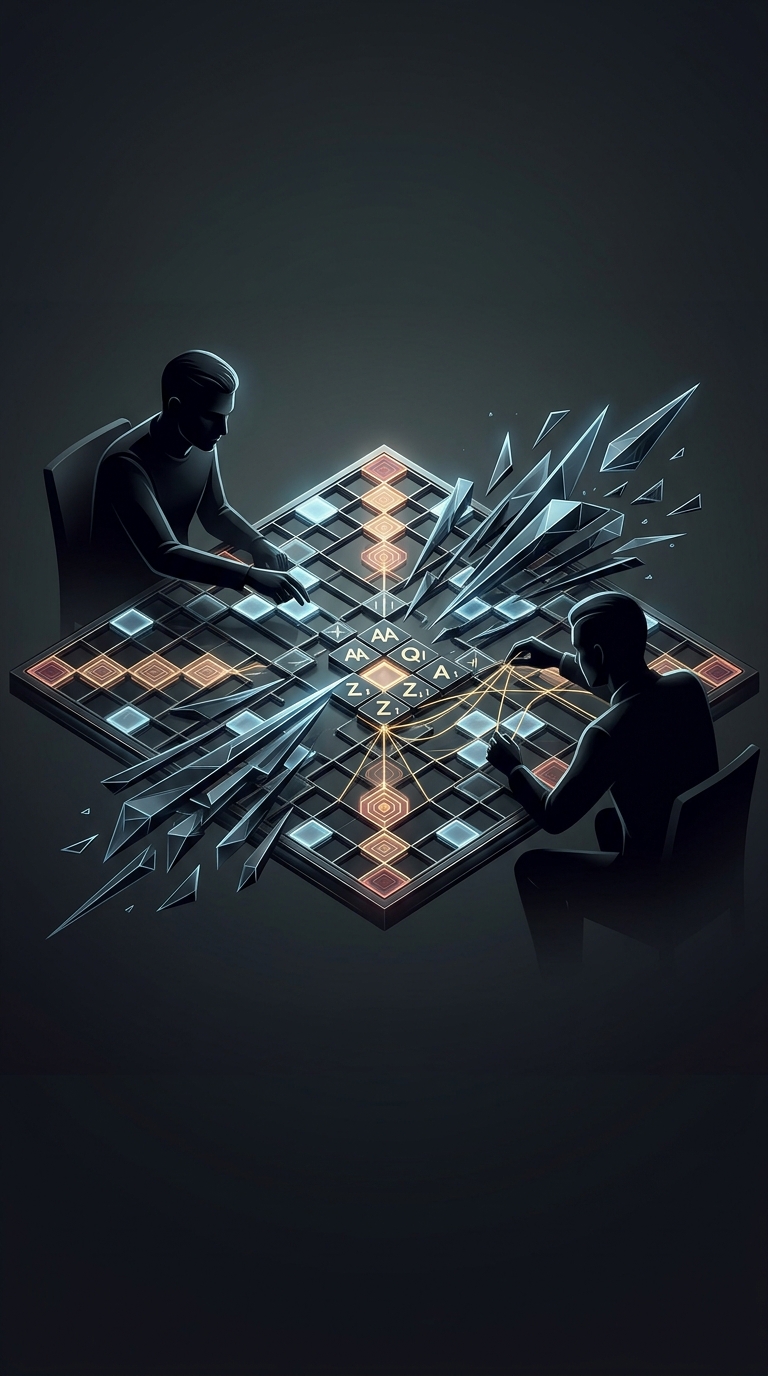
Scrabble rewards more than unusual vocabulary. A word’s score comes from the values printed on its letter tiles, then from premium squares: a double-letter or triple-letter square boosts one tile, while a double-word or triple-word square multiplies the value of the whole word. A long word can collect several bonuses at once, turning a rack of mostly ordinary letters into a remarkable score.
The placement matters as much as the spelling. Premium squares count only when a tile is first placed on them; later words crossing that square do not reuse its bonus. But one new word can cross several unused premiums, and the letters it places may also form smaller crossing words that score separately.
The board sets a hard limit
A standard Scrabble board is 15 squares across, so a word played in a straight line cannot be longer than 15 letters. Players also hold only seven tiles at a time, meaning a long play usually depends on letters already on the board. A chemical name may look like an impossible single move, but a playable segment or extension can still make use of its unusual mix of high- and low-value letters.
There is another catch: a technical-sounding name is not automatically legal. It must be accepted under the dictionary used for the game. And even a valid word needs the right letters, an open line, and bonus squares that have not already been used. That combination is why a huge theoretical score is easier to imagine than to pull off across a real board.